How to Build a Passive Income Affiliate Business on YouTube Without Ads

You upload a video. It gets 500 views. YouTube sends you $1.50 in ad revenue.
Meanwhile, another creator with the same view count earns $200 from a single affiliate link in the description. The difference? They built an affiliate business instead of waiting for the YouTube Partner Program to approve them.
According to MilX, affiliate commissions for video creators often outpace ad revenue, especially for channels under 100,000 views. Better yet, affiliate income keeps working long after a video is posted, making it a true passive income stream. A video you published six months ago can still generate sales today.
This guide shows you how to set up an affiliate business on YouTube that earns money whether you have 100 subscribers or 100,000. You will learn which programs pay the most, how to pick products your audience actually wants, and how to structure videos that convert viewers into buyers without sounding like a sales pitch.
Why Affiliate Marketing Works Better Than Ads for Small Channels
The YouTube Partner Program requires 1,000 subscribers and 4,000 watch hours before you can run ads. For most new creators, that takes 6 to 18 months of consistent uploads.
Affiliate marketing has no such barrier. According to Kan Do Creators Community, most affiliate programs have no subscriber minimum. Amazon Associates, Bluehost, and ShareASale accept creators at any size. You can join these programs the same day you start your channel.
The math favors affiliates even after you qualify for ads. A channel earning $3 per 1,000 views from AdSense would make $300 on a video with 100,000 views. Kan Do Creators Community notes that a channel with just 1,000 views per month promoting a $65-per-sale hosting program could out-earn a 100,000-view channel with a 1% commission product. The key is matching high-value offers to engaged audiences.
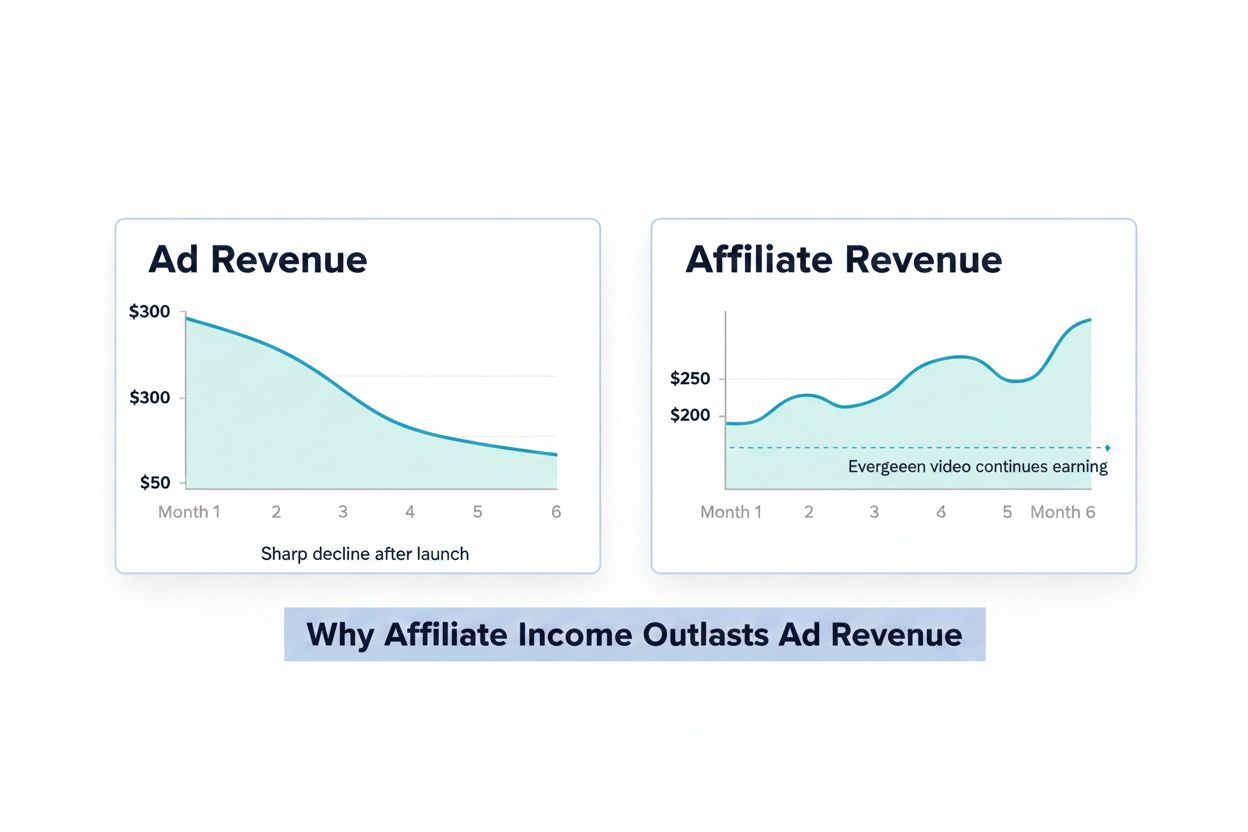
Affiliate revenue also compounds over time. A video published in January can generate sales in July, December, and beyond. Ad revenue stops when views drop off. Affiliate links keep working as long as people find your content through search.
Choosing the Right Affiliate Programs for Your Channel
Not all affiliate programs pay the same. Amazon Associates offers 1-3% commissions on most products. TubeBuddy points out that their affiliate program offers up to 30% commission, a significant difference when you are promoting software or digital products.
The best programs for YouTube creators fall into three categories:
Recurring commission programs pay you every month a customer stays subscribed. MilX reports that Sellfy offers 25% recurring revenue for as long as a referred user stays subscribed. If you refer someone who pays $29/month, you earn $7.25 every month they remain a customer. Over a year, that single referral generates $87.
TubeBuddy notes that some recurring affiliate programs pay creators for as long as 7 years if the referred customer stays subscribed. One referral can turn into hundreds of dollars in passive income.
High-ticket programs pay large one-time commissions. Web hosting, online courses, and business software often pay $50 to $200 per sale. A tech channel promoting a $200/year hosting plan at 50% commission earns $100 per referral. Ten sales per month equals $1,000, achievable with a few thousand targeted views.
Physical product programs work well for review and unboxing channels. While Amazon's commissions are low, the conversion rate is high because viewers trust product recommendations from creators they follow. A camera gear channel might earn 3% on a $1,500 camera ($45), but if the video gets 50,000 views and converts 0.5%, that is 250 sales and $11,250 in commissions.
Match programs to your content. A productivity channel should promote task management software, not kitchen gadgets. A gaming channel fits perfectly with gaming chairs, headsets, and streaming equipment. The tighter the match between your content and the product, the higher your conversion rate.
Setting Up Your Affiliate Links the Right Way
Most affiliate programs give you a unique tracking link. When someone clicks your link and makes a purchase, the sale is credited to you. The setup process is simple, but small mistakes cost you money.
Join the affiliate program through their official website. For Amazon Associates, apply at affiliate-program.amazon.com. For software companies, look for an "Affiliate Program" or "Partners" link in the website footer. Fill out the application with your channel URL and basic information about your content.
Once approved, you will access a dashboard where you generate affiliate links. Copy the full link, including your unique ID. Shortened links are fine, but make sure they still contain your tracking code. Some creators use bit.ly or TinyURL to make links cleaner, but always test the shortened link to confirm it tracks properly.
Place links in your video description, pinned comment, and any related blog posts or social media. YouTube descriptions allow clickable links, so viewers can go directly from your video to the product page. Put your most important affiliate link near the top of the description. Many viewers never scroll down.
Disclose your affiliate relationships. YouTube and the FTC require transparency. Add a simple line like "This video contains affiliate links, which means I may earn a commission if you make a purchase through these links at no additional cost to you." This builds trust and keeps you compliant with regulations.

Creating Videos That Convert Viewers Into Buyers
A product review that just lists features does not sell. Viewers want to know how the product solves a specific problem they have.
Start with the problem. If you are reviewing project management software, open with a scenario: "You have six projects running at once, deadlines are slipping, and you are losing track of who is doing what." This hooks viewers who are experiencing that exact pain point.
Show the product in action. Screen recordings, unboxings, and real-world tests prove the product works. A fitness channel promoting a workout program should film themselves doing the workouts, not just talk about the program. Viewers buy when they see results.
Address objections before viewers think of them. If the product is expensive, explain why the price is justified. If it has a learning curve, show how long it takes to get comfortable. If there are cheaper alternatives, explain what this product does better. Honest reviews convert better than hype.
Include a clear call to action. Tell viewers exactly what to do next: "If this looks like it would help your workflow, the link is in the description. They are offering 20% off this week, so now is a good time to try it." Specific instructions increase click-through rates.
Structure your videos for search. People searching "best budget microphone for YouTube" are closer to buying than people watching "my daily vlog." Tutorials, comparisons, and "best of" lists attract high-intent viewers. Kan Do Creators Community emphasizes that a single video recommending the right product can earn more than months of AdSense revenue, especially when optimized for buyer keywords.
Picking Products Your Audience Actually Wants to Buy
The biggest mistake new affiliate marketers make is promoting products they think are cool instead of products their audience needs.
Look at your comments and community posts. What questions do viewers ask repeatedly? A cooking channel where viewers constantly ask "What knife is that?" should promote kitchen knives. A gaming channel where viewers ask about frame rates should promote graphics cards or monitors.
Check your analytics to see which videos get the most engagement. If your tutorial on email marketing outperforms your other content, your audience cares about email tools. Promote email software, not random products.
Use products you actually own and recommend. Authenticity shows through. Viewers can tell when you are reading a script versus sharing genuine experience. If you have not used the product, do not promote it. Your credibility is worth more than a one-time commission.
Test different products to see what converts. You might assume your audience wants the premium version, but data might show they prefer budget options. Track which affiliate links get the most clicks and sales. Double down on what works.
Avoid promoting too many products in one video. Three to five recommendations is the maximum before viewers get overwhelmed. A "50 best products" video sounds comprehensive but rarely converts well. Focus on fewer, better-matched products.
How to Structure Your Channel for Long-Term Affiliate Income
One-off product reviews generate short-term income. A content strategy built around affiliate revenue generates income for years.
Create evergreen content that stays relevant. A video titled "Best Laptops for Video Editing 2024" becomes outdated in a year. A video titled "How to Choose a Laptop for Video Editing" stays useful and continues ranking in search. Update the description with current product links, and the video keeps earning.
Build a content library around a product category. If you promote web hosting, create videos on "How to Start a Blog," "WordPress vs. Squarespace," and "How to Speed Up Your Website." Each video links to your hosting affiliate program from a different angle, capturing viewers at different stages of the buying process.
Use playlists to guide viewers through a buying journey. A playlist titled "Starting a YouTube Channel" might include videos on equipment, editing software, and thumbnail design. Each video includes relevant affiliate links. Viewers who watch the whole playlist are more likely to buy multiple products.
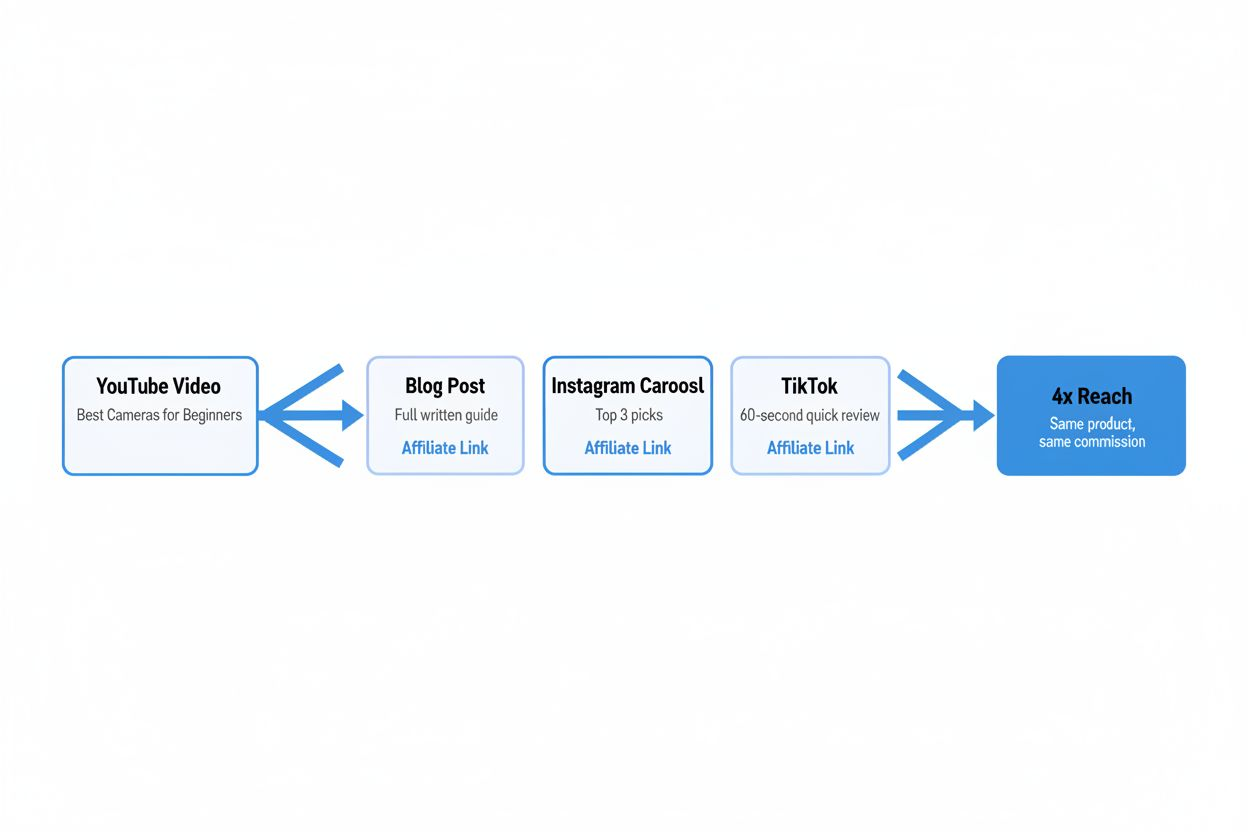
Repurpose content across platforms. Turn a YouTube video into a blog post, Instagram carousel, or TikTok series. Each platform includes your affiliate links, multiplying your reach without creating entirely new content.
Tracking What Works and Scaling Your Earnings
Guessing which videos drive sales wastes time. Tracking data tells you exactly where your money comes from.
Most affiliate programs provide a dashboard showing clicks, conversions, and earnings per link. Check this weekly. If one video generates 80% of your affiliate income, make more videos like it. If a product gets clicks but no sales, the product might not fit your audience or the price point is wrong.
Use UTM parameters to track which videos drive the most sales. Add a unique code to each affiliate link so you can see in Google Analytics which video sent the traffic. This is especially useful if you promote the same product across multiple videos.
Compare commission rates across programs. If you are promoting two similar products and one pays 10% while the other pays 30%, test both and see which converts better. Sometimes the lower commission product sells more often, making it more profitable overall. Sometimes the higher commission wins. Data decides.
Reinvest earnings into better content. Affiliate income can fund better equipment, outsourced editing, or paid promotion. A creator earning $500/month in affiliate commissions can hire a thumbnail designer and video editor, freeing up time to create more high-converting content.
Scale by adding more affiliate programs in related niches. A fitness channel promoting workout programs can expand into supplements, meal prep services, and fitness equipment. Each new program adds another income stream without requiring a complete content pivot.
Common Mistakes That Kill Affiliate Earnings
Promoting products you do not use destroys trust. Viewers can tell when you are reading a script versus sharing real experience. Once trust is gone, conversions drop permanently.
Overloading videos with affiliate links makes you look desperate. A video with 20 affiliate links in the description signals that you care more about commissions than helping viewers. Stick to the products that genuinely fit the video topic.
Ignoring disclosure requirements can get your channel penalized or demonetized. Always include a clear statement that you earn commissions from affiliate links. This is legally required in most countries and builds credibility with your audience.
Chasing high commissions on bad products backfires. A product that pays 50% commission but has terrible reviews will generate refunds and damage your reputation. Promote quality products even if the commission is lower.
Forgetting to update old videos leaves money on the table. If you promoted a product in 2022 that is now discontinued, update the description with a current alternative. Old videos still get views, and updated links turn those views into sales.
Building Relationships With Affiliate Managers for Better Deals
Most affiliate programs have managers who work with top-performing affiliates. Once you start generating consistent sales, reach out.
Email the affiliate manager with your results. "I have driven 50 sales in the past two months and would like to discuss a higher commission rate or exclusive discount code for my audience." Managers want to keep successful affiliates happy and often approve custom deals.
Ask for exclusive promo codes. A unique discount code like "YOURCHANNEL20" gives your audience a deal and makes tracking easier. You can see exactly how many sales came from your promotion. Some programs offer higher commissions when you use a custom code.
Negotiate higher commission rates after proving your value. If you are driving significant sales, ask for a bump from 20% to 30%. The worst they can say is no. Many say yes, especially if you are outperforming other affiliates.
Request early access to new products. Being the first to review a product gives you a ranking advantage in search. Affiliate managers often send free products to top affiliates before the public launch.
What to Do When Your First Affiliate Sale Happens
Your first affiliate sale proves the system works. You created content, someone trusted your recommendation, and you earned money while you slept.
Analyze what worked. Which video drove the sale? What product did they buy? What was different about that video compared to others? Replicate the elements that converted.
Reinvest the earnings. Your first $50 in affiliate commissions can pay for a better microphone, a thumbnail template, or a month of editing software. Each improvement makes future videos more professional, which increases conversions.
Keep creating. One sale is not a business. Consistent income comes from building a library of content that converts. Your goal is to reach a point where multiple videos generate sales every week without new uploads.
According to TubeBuddy, creators can start affiliate marketing without needing 1,000 subscribers or 4,000 watch hours required for the YouTube Partner Program. This means your affiliate business can grow while you are still building toward ad revenue eligibility. By the time you qualify for ads, you might already be earning more from affiliates.
Turning Affiliate Revenue Into a Full-Time Income
Reaching $1,000/month in affiliate income is possible with a focused strategy. A channel with 10,000 views per month promoting products with $50 commissions needs 20 sales. At a 2% conversion rate, that requires 1,000 clicks on affiliate links, or 10% of total views.
Increase earnings by raising any of these numbers: more views, higher conversion rates, or higher-value products. A channel that grows to 50,000 views per month with the same conversion rate would earn $5,000/month. A channel that improves conversion from 2% to 4% doubles income without increasing views.
Diversify across multiple affiliate programs to reduce risk. Relying on one program means you are vulnerable if they cut commissions or shut down. Promoting 5-10 different programs spreads your income across multiple sources.
Some creators build entire businesses around affiliate marketing. They hire editors, writers, and researchers to scale content production. A one-person channel uploading twice a week might grow into a team producing daily videos, each optimized for affiliate conversions.
The path from first sale to full-time income is not fast, but it is predictable. Create valuable content, promote products your audience needs, track what works, and scale the winners. Affiliate revenue grows as your content library grows, building a passive income stream that works long after you hit publish.