YouTube Affiliate Marketing Income: How Creators Are Building Six-Figure Businesses

Sarah Chen uploaded her first product review video in January 2023. By December, she had earned $87,000 from affiliate commissions alone. She is not an outlier anymore.
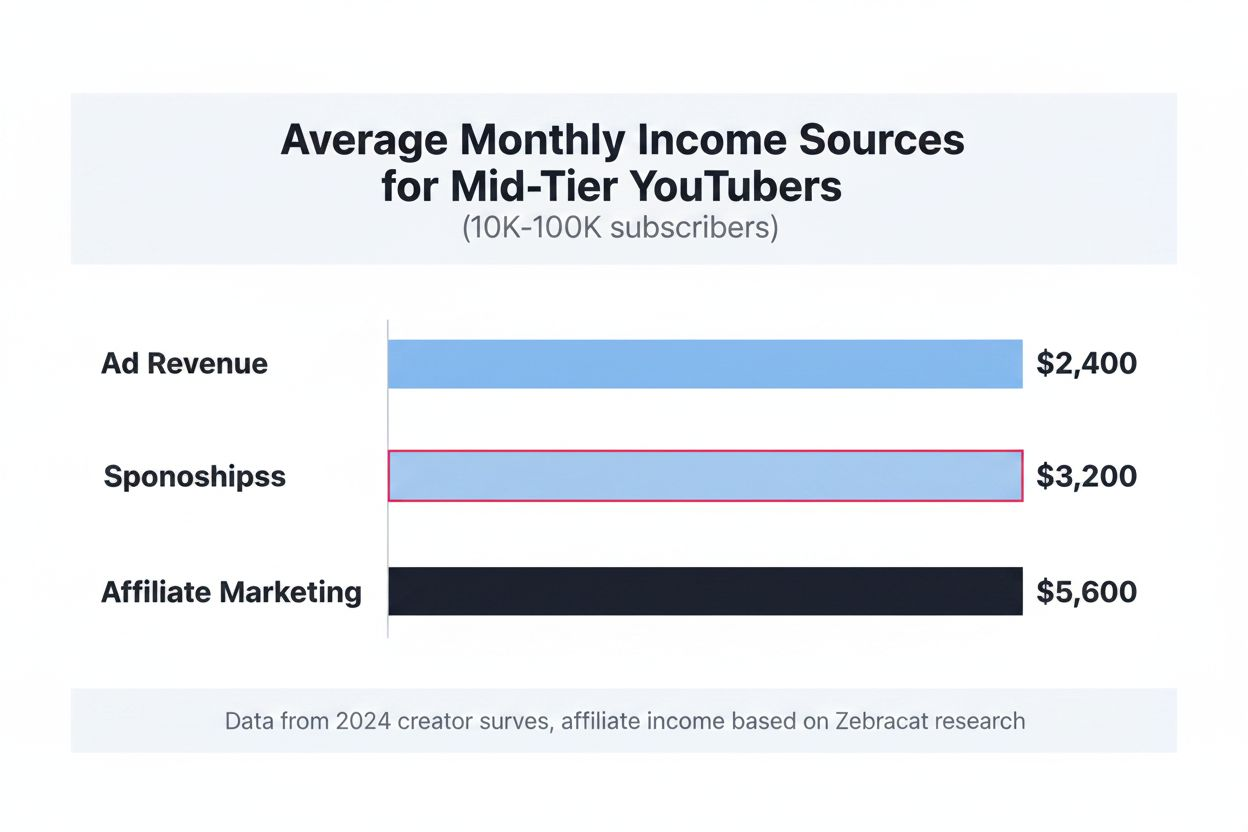
YouTube affiliate marketing has created a new income tier for video creators, one that operates independently of traditional ad revenue and brand sponsorships. According to Zebracat, YouTube affiliate marketing generated over $2.6 billion in revenue globally in 2024. More importantly for individual creators, the average YouTuber now earns around $5,600 per month through affiliate links alone, excluding ad revenue or sponsorships.
This shift represents a fundamental change in how creators monetize. You no longer need millions of subscribers to build a sustainable income. You need the right products, the right audience, and the right approach to affiliate integration.
The New Six-Figure Blueprint
Top-performing affiliate creators on YouTube make over $312,000 per year from product links integrated into regular video content, according to Zebracat. That figure comes from affiliate commissions alone, not counting other revenue streams.
What separates these top earners from average performers? Three factors appear consistently:
Commission structure matters more than volume. Creators using affiliate programs with recurring commissions report earning 38% more over six months than those using one-time payout models, Zebracat found. A single customer who subscribes to a software tool can generate $20-$60 per month in recurring commissions for years.
Platform choice drives higher returns. The average commission earned per YouTube affiliate link is around $6.80, more than double the average across all affiliate platforms at $3.20, according to Zebracat. YouTube's format allows for deeper product demonstrations and trust-building that shorter-form platforms cannot match.
Conversion rates outperform other channels. After viewing a YouTube video with affiliate links, 70% of consumers are inclined to purchase, wecantrack reports. The combination of visual demonstration, creator credibility, and extended watch time creates a buying environment that static content cannot replicate.
Platform Growth Is Accelerating
The number of creators participating in YouTube affiliate marketing is expanding rapidly. In the last 12 months, over 340,000 YouTube channels earned income from affiliate marketing, an increase of 42% from the year before, Zebracat found.
This growth is not just existing creators adding affiliate links. New entrants are choosing YouTube as their primary affiliate platform. In 2024, 49% of new affiliate marketers chose YouTube as their primary platform, followed by TikTok at 33% and Instagram at 18%, according to Zebracat.
The five-year trend is even more pronounced. There has been a 200% increase in content creators using affiliate marketing on YouTube over the last five years, wecantrack reports.
Why the surge? Two factors stand out:
Lower barriers to entry compared to traditional sponsorships. You do not need 100,000 subscribers to join most affiliate programs. Many accept creators with as few as 1,000 subscribers if the audience matches the product category.
Better alignment with audience interests. Creators can recommend products they genuinely use without negotiating contracts or meeting minimum follower thresholds. The authenticity gap that plagues some sponsorship content does not exist when you are sharing tools you already pay for.

Revenue Impact for Active Creators
The income effect is measurable. Among YouTubers who used affiliate marketing, 75% reported increased monthly revenue, according to wecantrack.
That percentage represents creators across all subscriber levels, from micro-creators with 5,000 followers to established channels with millions. The common thread is active integration of affiliate products into content strategy, not passive link-dropping.
The revenue increase is not marginal. For creators who treat affiliate marketing as a core monetization strategy rather than a side experiment, the income can exceed ad revenue within the first year. The $5,600 average monthly affiliate income Zebracat reports would translate to $67,200 annually, which surpasses the ad revenue most channels under 500,000 subscribers generate.
Brand Investment Is Growing
Corporate budgets are following creator success. According to wecantrack, 85% of brands anticipate increasing their budgets for YouTube affiliate marketing in the next two years.
This investment signals a shift in how companies view affiliate partnerships. Instead of treating YouTube creators as supplementary to traditional advertising, brands are building affiliate programs specifically designed for video content.
The budget increases mean:
Higher commission rates as brands compete for creator attention. Software companies now commonly offer 20-30% recurring commissions, up from 10-15% three years ago.
More creator-friendly terms. Longer cookie windows (the time between click and purchase that still earns commission) and credit for assisted conversions are becoming standard.
Dedicated creator support teams. Larger affiliate programs now assign relationship managers to top-performing YouTube creators, providing early product access and custom discount codes.
Content Formats That Convert
Not all YouTube content performs equally for affiliate marketing. The data shows clear patterns in what drives conversions.
Review videos make up 45% of all affiliate marketing videos on YouTube, wecantrack reports. The format works because it directly addresses purchase intent. Someone searching "Canon R6 Mark II review" is already considering the camera. Your job is to provide the information that tips the decision.
But reviews alone are not optimal. Content creators who use a mix of product reviews and tutorials witness a 30% increase in their affiliate revenue, according to wecantrack. The combination works because tutorials demonstrate real-world application. A review tells viewers what a product does. A tutorial shows them what they could do with it.
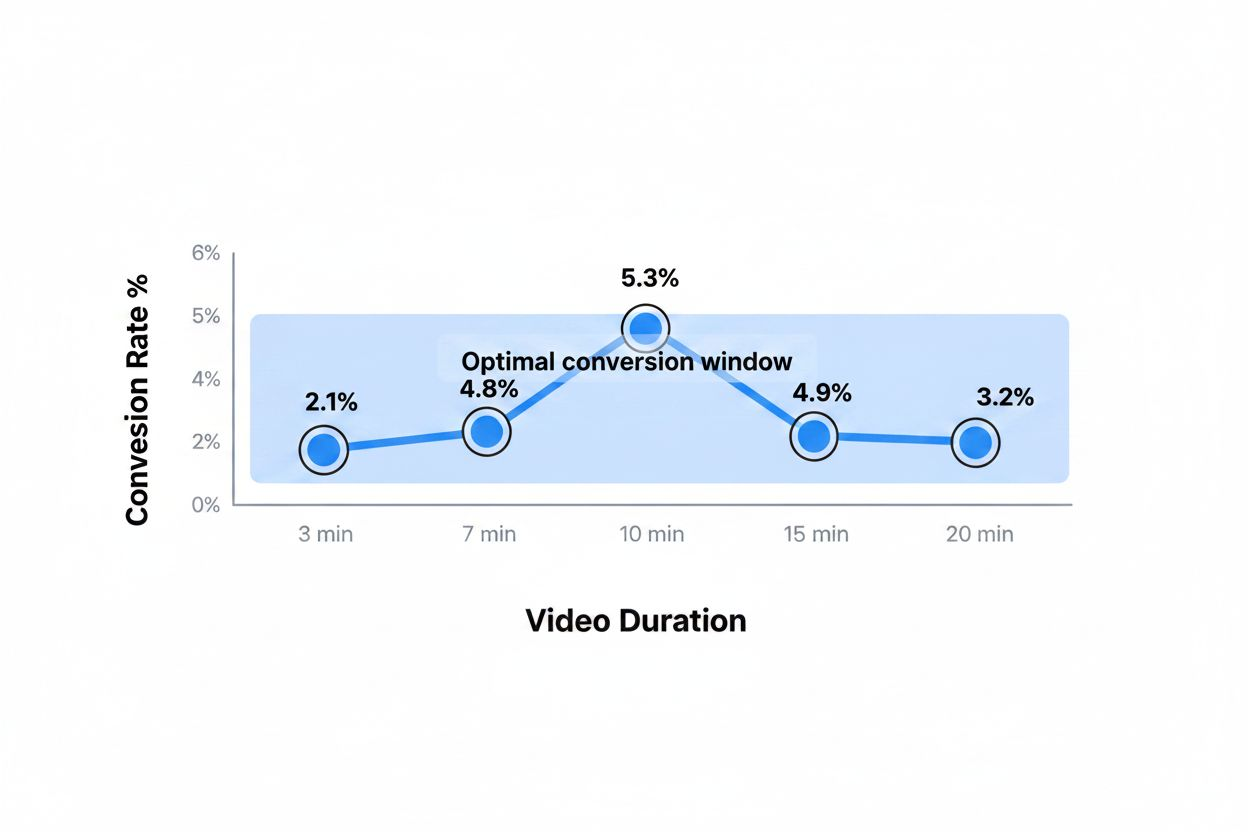
Video length matters for conversions. Videos between 7 and 15 minutes have the highest affiliate link conversion rates, wecantrack found. Shorter videos do not provide enough information to overcome purchase hesitation. Longer videos lose viewers before the call to action.
The sweet spot allows you to:
- Introduce the product and establish credibility (first 2 minutes)
- Demonstrate key features with real examples (middle 5-8 minutes)
- Address common objections and provide the affiliate link (final 2-3 minutes)
Income Benchmarks by Channel Size
The relationship between subscriber count and affiliate income is not linear. A channel with 50,000 engaged subscribers in a high-value niche can out-earn a channel with 500,000 subscribers in a low-commission category.
Here is what the data suggests about income potential at different levels:
Micro creators (1,000 to 10,000 subscribers): Typically earn $200-$800 per month from affiliate links if they focus on a specific product category. The key is audience match. A channel about budget travel that recommends specific luggage, booking tools, and travel insurance can convert at high rates even with a small audience.
Mid-tier creators (10,000 to 100,000 subscribers): This is where the $5,600 monthly average Zebracat reports becomes realistic. Creators in this range who post consistently (2-4 videos per month) and integrate affiliate products naturally can build sustainable five-figure annual income from commissions alone.
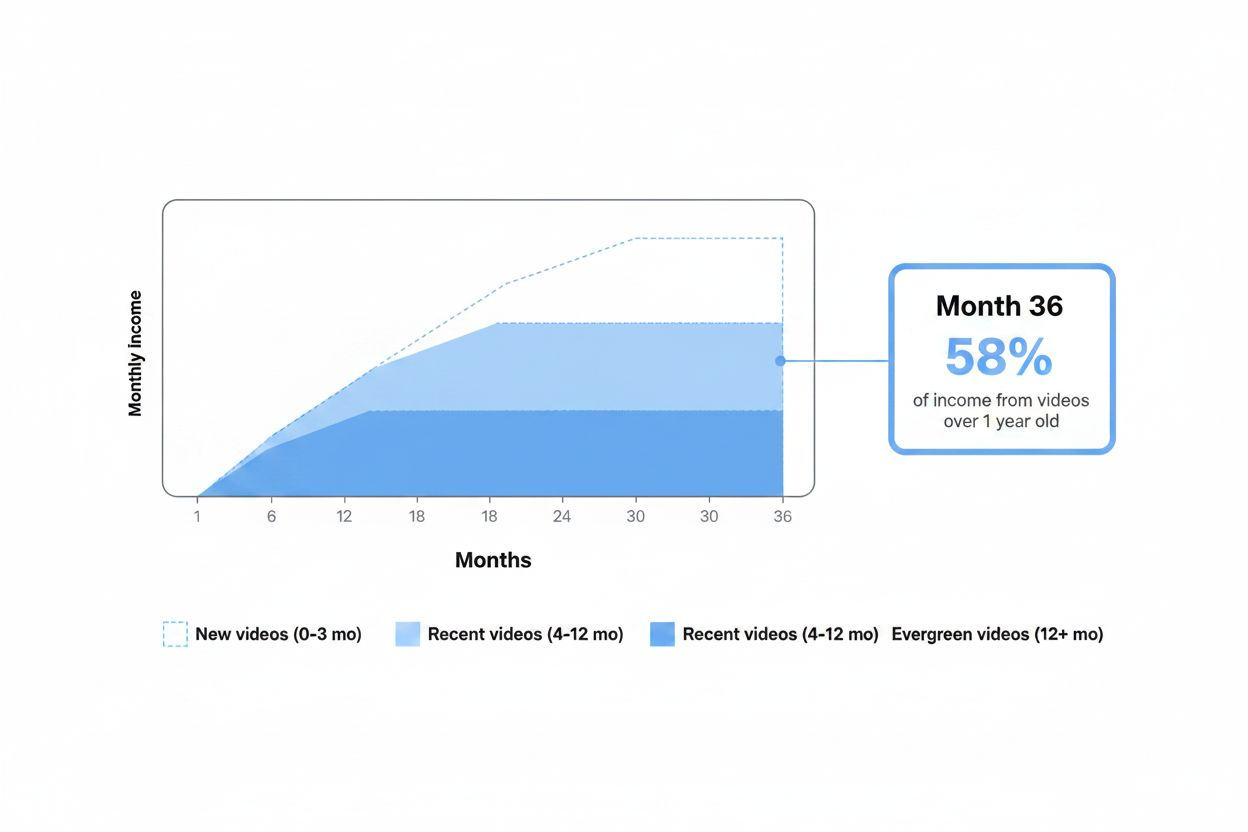
Established creators (100,000+ subscribers): The $312,000+ annual earnings Zebracat identifies for top performers typically come from channels in this range. At this level, older videos continue generating affiliate income months or years after publication, creating a compounding effect.
The outliers who exceed these benchmarks share common traits: they promote products with recurring commissions, they create evergreen content that continues attracting search traffic, and they diversify across multiple affiliate programs rather than relying on a single partnership.
Strategic Approaches That Scale
Successful affiliate creators treat their channels as recommendation engines, not ad platforms. The distinction matters.
Product integration, not interruption. The highest-earning creators mention affiliate products as natural parts of their workflow. A video about podcast editing does not stop mid-tutorial to pitch an audio interface. Instead, the creator uses that interface throughout the video, mentions it when relevant to the technique being demonstrated, and includes the link in the description.
Solve problems, then recommend solutions. Start with the viewer's challenge. A video titled "How to Remove Background Noise from Audio" attracts people with that specific problem. When you demonstrate the solution using a particular software tool and include an affiliate link, the recommendation feels helpful rather than promotional.
Build comparison content. Videos comparing multiple products in the same category perform well for affiliate marketing because they capture viewers at the decision stage. Someone watching "Best Budget Microphones Under $100" is ready to buy. Your job is to provide enough information to make them confident in their choice.
Create product ecosystems. Instead of promoting random products, successful creators build coherent setups. A photography channel might recommend a specific camera body, lens, tripod, editing software, and storage solution. Viewers who buy one item often return for the others, and each purchase generates a commission.

Niche Selection and Commission Rates
Not all product categories generate equal affiliate income. Commission structures vary dramatically by industry.
High-ticket, low-volume products (cameras, laptops, furniture) typically offer 2-5% commissions but can generate $20-$100 per sale. You need fewer conversions to hit income targets, but your audience must be ready to make significant purchases.
Software and digital products often provide 20-40% commissions, sometimes recurring monthly. A single customer who subscribes to a $50/month tool at 30% commission generates $15/month for as long as they remain subscribed. Ten such customers create $150 in monthly recurring revenue.
Physical products in competitive categories (supplements, beauty products, fitness equipment) usually offer 5-15% commissions. Volume matters more here. You need consistent conversions to build meaningful income.
Financial products and services (credit cards, investment platforms, insurance) can offer $50-$500 per conversion but face stricter disclosure requirements and higher viewer skepticism. The income potential is high, but trust-building takes longer.
The creators earning $312,000+ annually Zebracat reports typically focus on software, online courses, or high-ticket physical products. The combination of reasonable commission rates and products that solve expensive problems creates the income ceiling needed to reach six figures from affiliate marketing alone.
Disclosure and Trust Management
Transparency is not just legally required, it is economically smart. Creators who clearly disclose affiliate relationships maintain higher long-term conversion rates than those who hide them.
The Federal Trade Commission requires clear disclosure when you earn commissions from product recommendations. But beyond legal compliance, disclosure builds trust. Viewers understand that creators need to earn income. What damages trust is deception, not compensation.
Effective disclosure practices:
Mention it verbally in the video. A simple "This video contains affiliate links, which means I may earn a commission if you purchase through them at no extra cost to you" in the first minute sets expectations.
Include it in the description. Place disclosure above the fold, before the affiliate links themselves.
Be specific about your experience. If you have used a product for six months, say so. If you received it free from the company, disclose that too. Specificity builds credibility.
The 70% purchase intent rate wecantrack reports for YouTube affiliate content suggests that proper disclosure does not kill conversions. Viewers expect creators to earn money. They just want to know how and why you are recommending something.
Long-Term Income Compounding
One advantage YouTube affiliate marketing has over sponsorships is evergreen income. A sponsored video pays once. An affiliate link in that same video can generate commissions for years.
Creators who started affiliate marketing on YouTube three to five years ago often report that 40-60% of their current affiliate income comes from videos published more than a year ago. This compounding effect happens because:
Search traffic is consistent. Someone searching "best budget DSLR camera" in 2025 will find videos from 2023 if they rank well. If your recommendation is still relevant and the affiliate link still works, you earn the commission.
Recommended videos drive ongoing views. YouTube's algorithm surfaces older content to viewers watching related videos. A tutorial from two years ago can suddenly get 10,000 views in a month if YouTube decides it matches current viewer interests.
Product lifecycles are long in many categories. Software tools, camera equipment, furniture, and kitchen appliances do not become obsolete quickly. A review from 18 months ago can still drive purchases if the product is still available.
This creates a snowball effect. Each new video you publish adds to your catalog of potential commission generators. After two years of consistent publishing (assuming 2-3 videos per month), you might have 50-70 videos with affiliate links. Even if each only generates $50-$200 per month, the aggregate income becomes substantial.
Platform Algorithm and Affiliate Content
YouTube's recommendation algorithm does not penalize affiliate content, but it does not reward it either. What matters is viewer behavior.
If viewers click away quickly after you mention a product, the algorithm interprets that as low-quality content and reduces distribution. If viewers watch through your product demonstration and click the affiliate link (which YouTube can track through cards and end screens), the algorithm sees engagement and promotes the video.
This creates a quality filter. Forced product mentions that interrupt the content flow hurt both conversions and algorithmic performance. Natural integrations where the product is central to the content help both.
Practical implications:
Make the product the content, not an interruption. A video about "How I organize my desk for productivity" where you show and link to specific organizers performs better than a generic productivity video with a sudden desk organizer pitch.
Use YouTube's built-in features. Cards and end screens that link to products are tracked by YouTube and can signal to the algorithm that viewers find your recommendations valuable.
Optimize for watch time, not just clicks. A viewer who watches 90% of your video and then clicks your affiliate link is more valuable than one who clicks at 30% and leaves. Structure content to maintain engagement throughout.
Income Diversification Strategy
The creators earning six figures from YouTube affiliate marketing rarely rely on a single program or product category. Diversification protects against program changes and seasonal fluctuations.
Multiple affiliate networks. Join Amazon Associates for physical products, ShareASale or CJ Affiliate for broader product ranges, and direct affiliate programs for software tools. If one network changes commission rates or terms, you have others generating income.
Product category spread. Recommend products across different price points and categories within your niche. A tech channel might promote budget accessories (high volume, low commission), mid-range peripherals (moderate both), and premium software (low volume, high recurring commission).
Seasonal balance. Some products sell heavily in specific seasons. Fitness equipment spikes in January, travel gear in summer, gift items in November and December. A mix of seasonal and year-round products smooths income fluctuations.
The 38% higher earnings for creators using recurring commission programs Zebracat reports suggests that software and subscription products should be part of your mix, but not your only focus. Balance recurring revenue with one-time commissions from physical products.
Tracking and Optimization
You cannot improve what you do not measure. Successful affiliate creators track performance at the video level, not just channel level.
Which videos drive the most affiliate revenue? Often it is not the videos with the most views. A tutorial with 5,000 views might generate more commissions than a vlog with 50,000 views if the tutorial attracts viewers with purchase intent.
Which products convert best? Track conversion rates by product, not just total commissions. A product with a 15% conversion rate at $5 commission might be more valuable long-term than one with 5% conversion at $15 commission, because you can create more content around it.
What traffic sources drive buyers? YouTube search, suggested videos, and external traffic (Google search, social media) behave differently. Search traffic often converts better because viewers are actively looking for solutions.
Most affiliate networks provide detailed analytics. Use them. The difference between a creator earning $2,000/month and one earning $8,000/month is often optimization based on data, not just more content.
What the Next Two Years Look Like
The 85% of brands planning to increase YouTube affiliate budgets wecantrack reports suggests the opportunity is expanding, not contracting.
Several trends are emerging:
Higher commission rates as competition for creator attention increases. Brands are realizing that top YouTube creators drive more sales than traditional advertising in many categories. They are willing to pay more to secure those partnerships.
More sophisticated tracking and attribution. Affiliate networks are improving their ability to track multi-touch conversions, giving creators credit for sales that happen days or weeks after the initial video view.
Integration with other monetization methods. Creators are bundling affiliate recommendations with their own digital products, memberships, and courses. Someone who buys through your affiliate link might also join your membership or buy your course.
The income potential is real. The $312,000+ top earners Zebracat reports are not anomalies. They are creators who treated affiliate marketing as a core business strategy, not a side hustle. They built content systems around product recommendations, optimized based on data, and gave their audiences genuine value.
The path to six-figure affiliate income on YouTube is not mysterious. Create helpful content, recommend products you actually use and believe in, disclose your affiliate relationships clearly, and track what works. The 340,000+ channels already earning from YouTube affiliate marketing Zebracat reports prove the model works. The question is whether you will build a content strategy that captures the opportunity.