How to Launch a Referral Campaign as a YouTuber: Mechanics, Rewards, and Placement Strategies That Convert

You have a camera, an editing timeline, and a growing list of subscribers. But between uploads, your channel earns nothing. While you wait for the YouTube Partner Program's 1,000-subscriber threshold, rent still comes due.
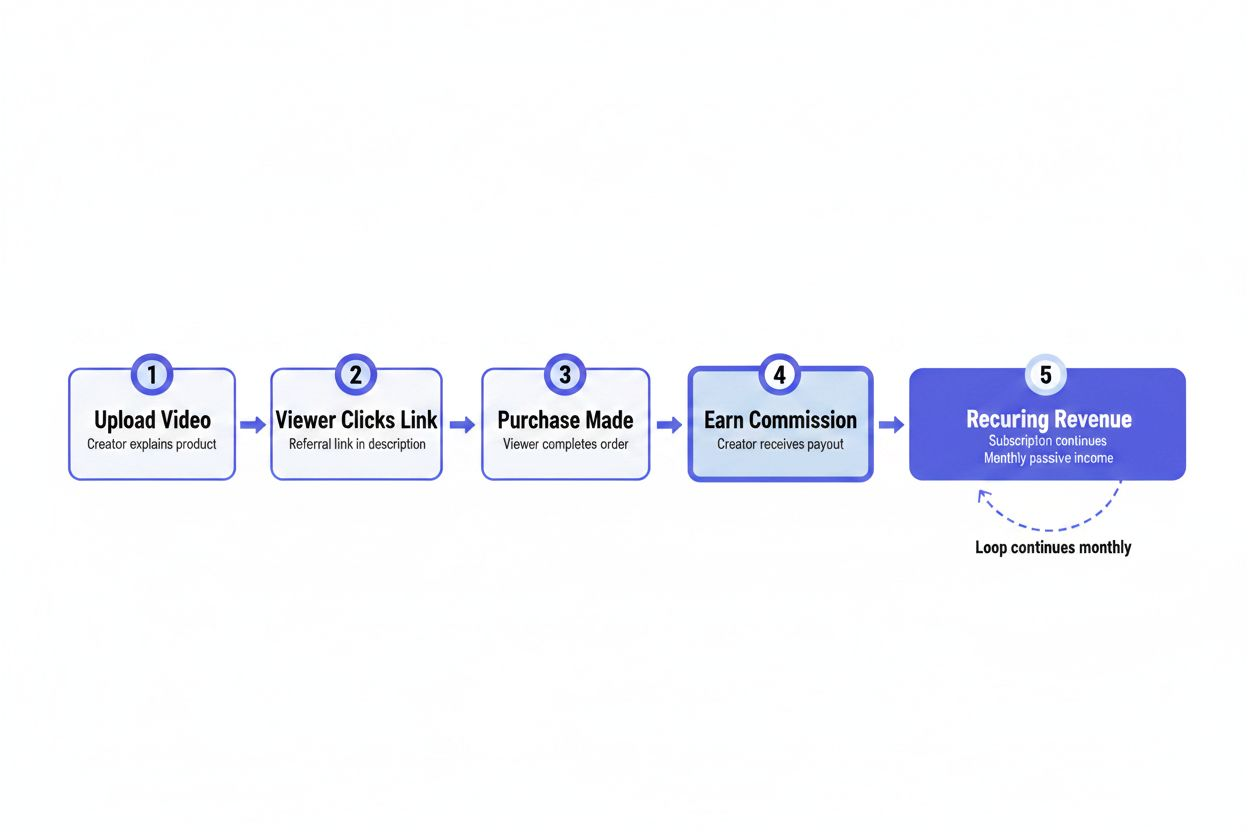
Referral campaigns solve this. According to TubeBuddy, creators can start earning through referral marketing before they qualify for ad revenue. Some programs pay recurring commissions for as long as the referred customer stays subscribed, which can mean years of passive income from a single video.
This guide walks through the exact mechanics of launching a referral campaign as a video creator. You will learn how to structure rewards, where to place links so viewers actually click them, and how to maintain trust while earning.
Why Referral Campaigns Work for Video Content
Video creates trust faster than text. When viewers watch you unbox a product, walk through software, or explain a service for 10 minutes, they form a parasocial relationship. They see your face, hear your voice, and watch you solve problems in real time.
That trust converts. wecantrack reports that over 50% of viewers are more likely to trust a referral link if the YouTuber explains the product in-depth. The format itself does the heavy lifting.
Referral campaigns also scale without additional work. A video you publish today can generate clicks and commissions for years. Authority Hacker notes that top creator Marques Brownlee earns over $2 million per year from all online business activities, including referral links embedded in his videos. His older content continues to drive revenue long after upload.
The economics favor creators. You produce the video once. The referral link sits in the description, working 24/7. If you join a recurring commission program, a single viewer can generate income for months or years.
Choosing the Right Referral Programs for Your Niche
Not all referral programs pay the same. Some offer one-time commissions. Others pay recurring percentages. Your niche determines which programs make sense.
Software and SaaS products typically offer recurring commissions. If you review project management tools, video editors, or hosting platforms, you can earn 20-40% of the monthly subscription fee for as long as the customer stays active. TubeBuddy emphasizes that these recurring programs can generate passive income for years from a single referral.
Physical products usually pay one-time commissions, often 3-10% of the sale price. Tech reviewers, unboxers, and lifestyle creators fit here. Amazon Associates is the default, but direct brand partnerships often pay higher rates.
Digital products like courses, ebooks, and templates pay 30-50% commissions, sometimes more. If your channel teaches skills (photography, coding, design), promoting relevant courses can earn more per sale than physical goods.
Service platforms (freelance marketplaces, booking sites, financial apps) vary widely. Some pay per signup, others per completed transaction. Read the terms carefully.
Match the program to your content style. If you create tutorials, software referrals make sense. If you do product reviews, physical goods fit. If you teach, digital products align naturally.
Look for programs that allow you to use your links in video descriptions and social posts. Some restrict placement to blogs only. Those won't work for video-first creators.
Structuring Your Referral Campaign: Rewards and Incentives
You need to give viewers a reason to use your link instead of searching for the product themselves.
Exclusive discounts work best. Negotiate with the brand for a unique code that saves viewers 10-20%. When you say "Use code YOURNAME for 15% off," you create urgency and give viewers a tangible benefit for clicking your link.
Bonus content adds value without costing money. Offer a PDF guide, template, or bonus video to anyone who purchases through your link. This requires setting up a landing page where buyers can claim the bonus, but it differentiates your referral from others.
Honest reviews function as their own incentive. wecantrack found that 85% of viewers appreciate transparency about affiliate partnerships. When you clearly state "I earn a commission if you use this link, and here are the actual pros and cons I found," viewers trust you more, not less.
Comparison content helps viewers decide. If you compare three email marketing platforms and link to all three, viewers get value regardless of which they choose. You earn a commission either way, and the viewer gets an informed decision.
Avoid fake urgency. Do not claim a discount expires in 24 hours if it renews weekly. Do not exaggerate product benefits to boost conversions. TubeBuddy puts it clearly: "Solve for viewers first and you'll build trust. Solve for commissions first and you'll erode trust."

Where to Place Referral Links for Maximum Clicks
Placement determines whether viewers see your links at all.
Video descriptions are the default location. Authority Hacker confirms that descriptions, pinned comments, and the Community tab all work for referral links. But descriptions have a problem: YouTube truncates them after three lines. Most viewers never click "Show more."
Put your most important link in the first two lines. Use a clear call-to-action: "Get 20% off with this link:" followed by the URL. Do not bury it under a paragraph of text.
Pinned comments get more visibility. Pin a comment with your referral link and a brief reminder of the discount or bonus. Viewers scroll comments while watching or immediately after. A pinned comment sits at the top of that scroll.
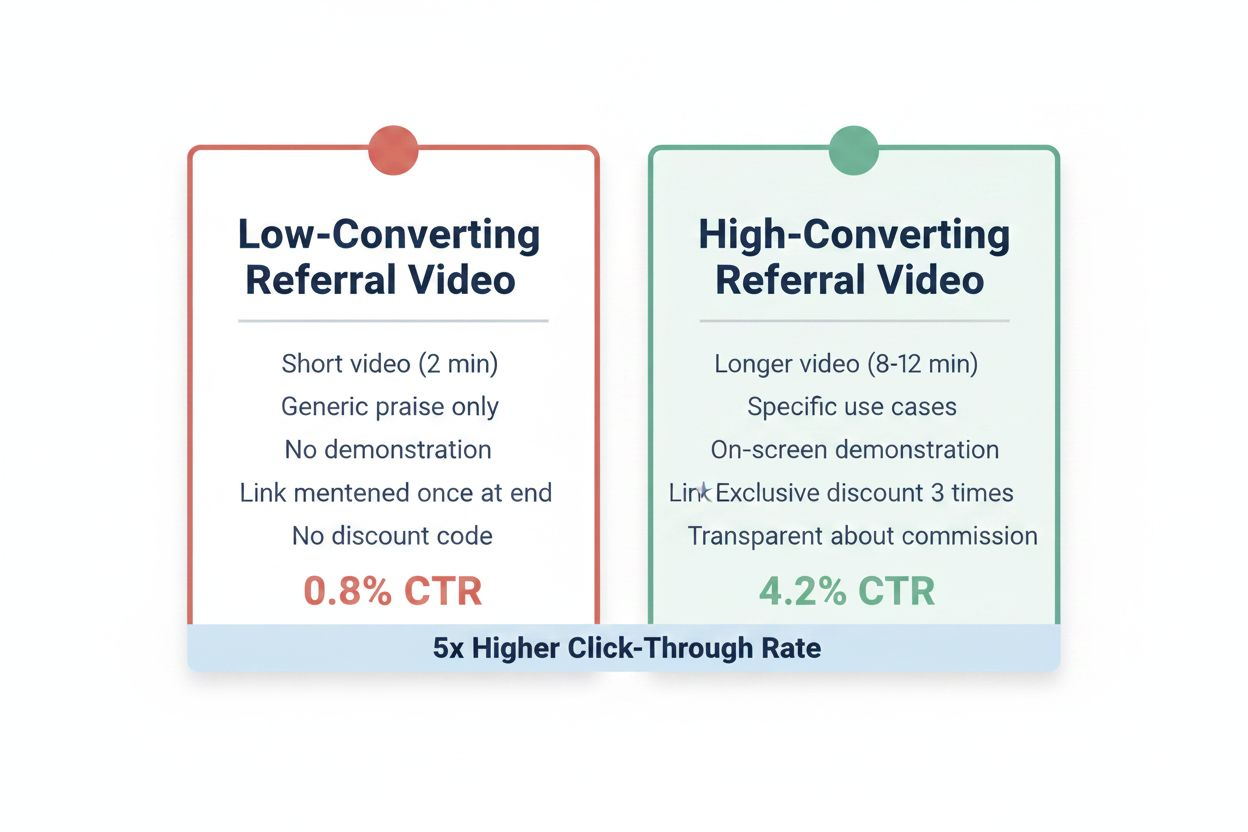
In-video mentions drive the most clicks. wecantrack found that presenting referral links within the first 30% of content increases click likelihood by 34%. When you verbally tell viewers "Link in the description" at the 3-minute mark of a 10-minute video, they are more likely to act than if you mention it only at the end.
Say it multiple times. Mention the link early when introducing the product. Mention it again mid-video when demonstrating a key feature. Mention it once more in your outro. Repetition works.
On-screen graphics reinforce the message. Add a lower-third graphic with your discount code when you mention the link verbally. Viewers who are not listening closely will still see the code.
Community tab posts extend reach beyond individual videos. If you have 1,000 subscribers (the threshold for Community access), post about the product with your referral link. This reaches subscribers who have not watched your latest video yet.
End screens can link to related videos that also contain your referral link, creating multiple touchpoints. If someone watches your camera review, the end screen can suggest your lens review, which has its own referral link.
Avoid link overload. Do not list 15 different referral links in one description. Pick the two or three most relevant to the video content. More links dilute attention and reduce clicks on all of them.
Creating Content That Converts Viewers Into Referrers
The video itself determines whether viewers click. A boring review with a great referral link earns nothing. A compelling video with a mediocre link still converts.
In-depth explanations build trust. wecantrack reports that over 50% of viewers are more likely to trust a referral link if the YouTuber explains the product in-depth. Spend time on details. Show the interface. Walk through setup. Demonstrate real use cases.
Surface-level overviews do not convert. If you spend 90 seconds saying "This product is great, link below," viewers assume you have not actually used it. They will not click.
Show problems and solutions. Start the video by identifying a specific problem your audience faces. Then demonstrate how the product solves it. This structure makes the referral feel like a helpful recommendation, not a sales pitch.
For example: "If you are tired of manually editing captions, this tool auto-generates them in under two minutes. Here is how it works." You have identified the pain point (manual caption editing) and positioned the product as the solution.
Use the product on camera. Screen recordings, unboxings, and live demonstrations prove you own and use the product. Viewers can see it working. They can judge quality for themselves.
Address downsides honestly. Every product has limitations. If you pretend otherwise, viewers assume you are lying. When you say "The battery life is only four hours, which is fine for my use but might not work if you are shooting all day," you sound credible.
wecantrack found that 85% of viewers appreciate transparency about affiliate partnerships. Disclosing the referral relationship does not hurt conversions. Hiding it does.
Repurpose existing content. Authority Hacker notes that creators can repurpose existing blog content as YouTube videos to multiply referral touchpoints at no extra cost. If you wrote a detailed product review on your blog, turn it into a video. You now have two places where viewers can click your referral link.
Disclosure Requirements and Staying Compliant
Referral campaigns are legal and common, but you must disclose them.
The Federal Trade Commission (FTC) requires clear disclosure when you earn money from a recommendation. This applies to YouTube videos, descriptions, and pinned comments.
In the video itself, say something like: "This video contains affiliate links. If you purchase through my link, I earn a small commission at no extra cost to you." Say this early, not buried at the end.
In the description, include a disclosure above or near your referral links: "Links below are affiliate links. I may earn a commission if you make a purchase."
In pinned comments, repeat the disclosure if the comment contains a referral link.
The disclosure must be clear and unambiguous. Do not use vague language like "I may be compensated" or "Some links support the channel." Say directly that you earn a commission.
YouTube also requires disclosure. When uploading, check the box that says the video contains paid promotion if you received free products or payment from the brand. If you are only using a standard referral link and received nothing else, you typically do not check this box, but read YouTube's current guidelines to be sure.
Failure to disclose can result in FTC fines, loss of brand partnerships, and audience backlash. It is not worth the risk.
Tracking Performance and Optimizing Your Campaigns
You cannot improve what you do not measure.
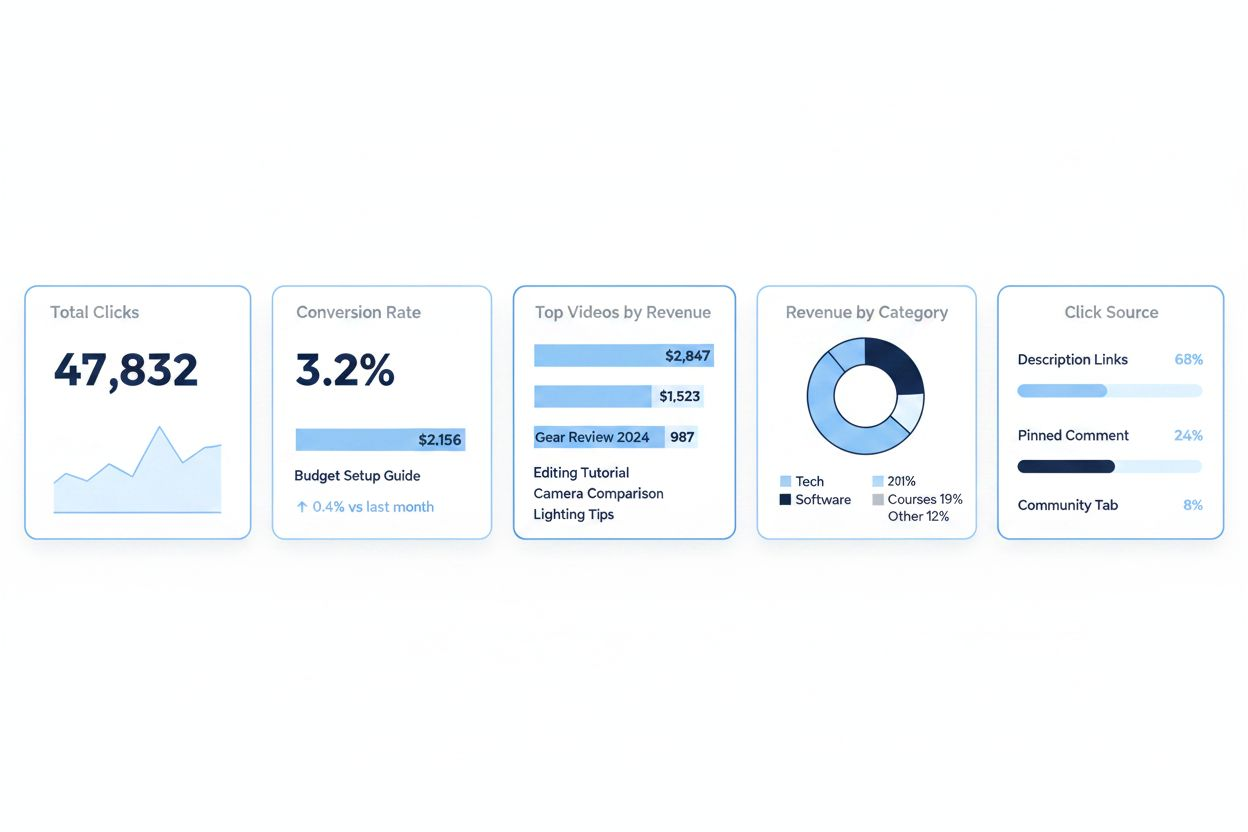
Most referral programs provide a dashboard showing clicks, conversions, and earnings. Check this weekly. Look for patterns.
Which videos drive the most clicks? If your tutorial videos convert better than your vlogs, make more tutorials. If product comparisons outperform single-product reviews, shift your content strategy.
Which products convert best? If you promote five different tools and one accounts for 80% of your referral income, consider making more content about that tool or similar products.
When do viewers click? Some referral dashboards show the time delay between video upload and click. If most clicks happen in the first 48 hours, focus on promoting new videos. If clicks stay steady over months, older content is still working.
What placement works best? Test different approaches. Try putting the link in the first line of the description for one video, in a pinned comment for another, and mentioned early in the video for a third. Compare click-through rates.
wecantrack found that engaging affiliate content can lead to a 35% increase in channel revenue. The key word is engaging. Boring content with perfect link placement still fails.
Use YouTube Analytics alongside your referral dashboard. If a video has high watch time and audience retention but low referral clicks, the content is good but the call-to-action is weak. If a video has low watch time but high referral clicks, you might be overselling and underselling the actual content.
Adjust based on data, not assumptions.
Common Mistakes That Kill Referral Campaign Performance
Even experienced creators make these errors.
Promoting too many products at once. If every video has five different referral links, viewers tune out. Pick one or two products per video. Make them genuinely relevant to the content.
Recommending products you have not used. Viewers can tell. Your explanations will be vague. Your demonstrations will be awkward. You will lose credibility fast.
Ignoring audience fit. Just because a product offers a high commission does not mean your audience wants it. If you run a gaming channel, promoting accounting software makes no sense, even if it pays well.
Mentioning the link only at the end. wecantrack found that presenting referral links within the first 30% of content increases click likelihood by 34%. If you wait until the outro, many viewers have already left.
Using generic descriptions. "Link below" is weak. "Get 15% off with code CREATOR15, link below" is specific and actionable.
Forgetting to update links. Referral programs change. Links expire. Discount codes end. Check your descriptions quarterly to make sure everything still works.
Overselling. If you claim every product is "the best" or "life-changing," viewers stop believing you. Be selective. Promote products you genuinely use and recommend.
Advanced Strategies: Recurring Revenue and Audience Growth
Once basic referral campaigns are running, you can layer in more sophisticated tactics.
Focus on recurring commission programs. TubeBuddy highlights that some programs pay creators for as long as the referred person remains a customer, potentially years of passive income. A single video promoting a $50/month software tool at 30% commission can generate $15/month per referral. Ten referrals from one video equal $150/month in recurring income.
Prioritize these programs. They compound over time. A video from two years ago can still generate monthly income if the referrals stay subscribed.
Create comparison and roundup videos. Instead of reviewing one product, compare three or five. Link to all of them. Viewers get more value, and you have multiple chances to earn a commission.
For example: "Best Budget Microphones for YouTube in 2025" with links to five different mics. No matter which one the viewer chooses, you earn.
Build a referral landing page. Create a simple webpage listing all your recommended tools with referral links. Mention this page in every video: "For a full list of my gear and software, visit [yoursite.com/tools]." This centralizes your referrals and gives you one URL to promote repeatedly.
Use email to extend reach. If you have an email list, send occasional product recommendations with your referral links. This reaches subscribers who might have missed the video.
Collaborate with other creators. If another YouTuber in your niche promotes the same product, you can cross-promote each other's content. You both earn commissions, and both audiences get exposed to new creators.
Leverage the Community tab. Post updates about products you are using, new tools you have discovered, or limited-time discounts. Include your referral link. This keeps your referral campaigns active between video uploads.
Building Long-Term Trust While Earning Referral Income
The tension is real. You want to earn money. You also want to keep your audience's trust.
TubeBuddy offers the clearest guidance: "Solve for viewers first and you'll build trust. Solve for commissions first and you'll erode trust."
This means recommending products that genuinely help your audience, even if they pay lower commissions. It means being honest about downsides. It means saying "I do not recommend this" when a product is bad, even if you could earn money promoting it.
wecantrack found that 85% of viewers appreciate transparency about affiliate partnerships. Disclosure does not hurt you. Deception does.
Over time, your referral income will grow if you maintain credibility. Viewers will click your links because they trust your judgment. They know you test products thoroughly. They know you disclose commissions. They know you prioritize their needs over your earnings.
That trust is worth more than any single commission. Protect it.

Your First Referral Campaign: A Step-by-Step Launch Plan
If you are starting from zero, here is the sequence:
Choose one product you already use and recommend. Do not pick something new. Pick a tool, service, or product you have used for months and genuinely like.
Apply to the referral program. Most programs approve creators quickly. Some require a minimum subscriber count or website. Read the requirements.
Create a detailed review or tutorial video. Spend 8-12 minutes explaining how the product works, what problems it solves, and who it is best for. Show it in action. Address limitations.
Mention your referral link early in the video. Around the 2-3 minute mark, say: "If you want to try this, I have a link in the description that gives you 15% off. I earn a small commission if you use it, at no extra cost to you."
Put the link in the first line of your description. Use a clear call-to-action: "Get 15% off [Product Name]: [your referral link]"
Pin a comment with the link. Repeat the discount code and link in a pinned comment for visibility.
Disclose the referral relationship. In the video, in the description, and in the pinned comment.
Promote the video. Share it on your social channels, email list, and Community tab. The more views, the more potential clicks.
Check your referral dashboard after one week. See how many clicks and conversions you got. Note which parts of the video drove the most engagement.
Repeat with another product. Once you have one successful referral campaign running, add another. Build gradually.
Do not try to launch ten referral campaigns at once. Start with one. Learn what works. Scale from there.
What Success Looks Like at Different Stages
Your referral income will grow in stages.
0-1,000 subscribers: You can start earning before you qualify for the YouTube Partner Program. TubeBuddy confirms this. Expect modest income, maybe $50-200/month if you promote relevant products consistently.
1,000-10,000 subscribers: Referral income can match or exceed ad revenue at this stage. If you are in a niche with high-value products (software, courses, premium gear), referral commissions often pay more than YouTube ads.
10,000-100,000 subscribers: Referral income becomes substantial. Creators in this range often earn $1,000-5,000/month from referrals, depending on niche and product fit.
100,000+ subscribers: Top creators like Marques Brownlee earn millions annually, with referral income as a significant component. Authority Hacker notes that Brownlee earns over $2 million per year from all online business activities, including referral links.
Your results depend on niche, audience engagement, and product selection. A creator with 5,000 engaged subscribers in a high-value niche (business software, investing, professional gear) can earn more than a creator with 50,000 subscribers in a low-value niche (general entertainment).
Next Steps: Launch, Learn, and Scale
You now have the mechanics. You know how to structure rewards, where to place links, and how to create content that converts.
The next step is action. Pick one product. Make one video. Place one link. See what happens.
Check your referral dashboard in a week. Did anyone click? Did anyone convert? If yes, make another video about a related product. If no, review your video. Was the call-to-action clear? Did you mention the link early enough? Did you explain the product in depth?
Referral campaigns are not passive from day one. They require testing, iteration, and optimization. But once you find what works, they scale. Old videos continue to earn. Recurring commissions compound. Your income grows while you sleep.
Start small. Build trust. Solve for viewers first. The commissions will follow.