Best YouTube Channels to Study: Reverse-Engineering the Fastest Growth Strategies of 2025

If you want to grow on YouTube in 2025, stop guessing. Start studying the channels that are adding millions of subscribers every month.
The fastest-growing YouTube channels are not succeeding by accident. They are using specific, repeatable strategies: niche selection, multilingual content, algorithmic optimization, and cross-platform promotion. By analyzing what is working for them, you can build a data-backed plan for your own channel.
This guide breaks down the tactics behind explosive YouTube growth in 2025, using real examples and subscriber data from channels that are dominating the platform right now.
Why Growth Speed Matters More Than Total Subscribers
Total subscriber count tells you who is big. Growth rate tells you who is doing something right, right now.
A channel with 10 million subscribers that adds 50,000 per month is coasting. A channel with 500,000 subscribers that adds 200,000 per month is executing a strategy that works in the current algorithm and cultural moment.
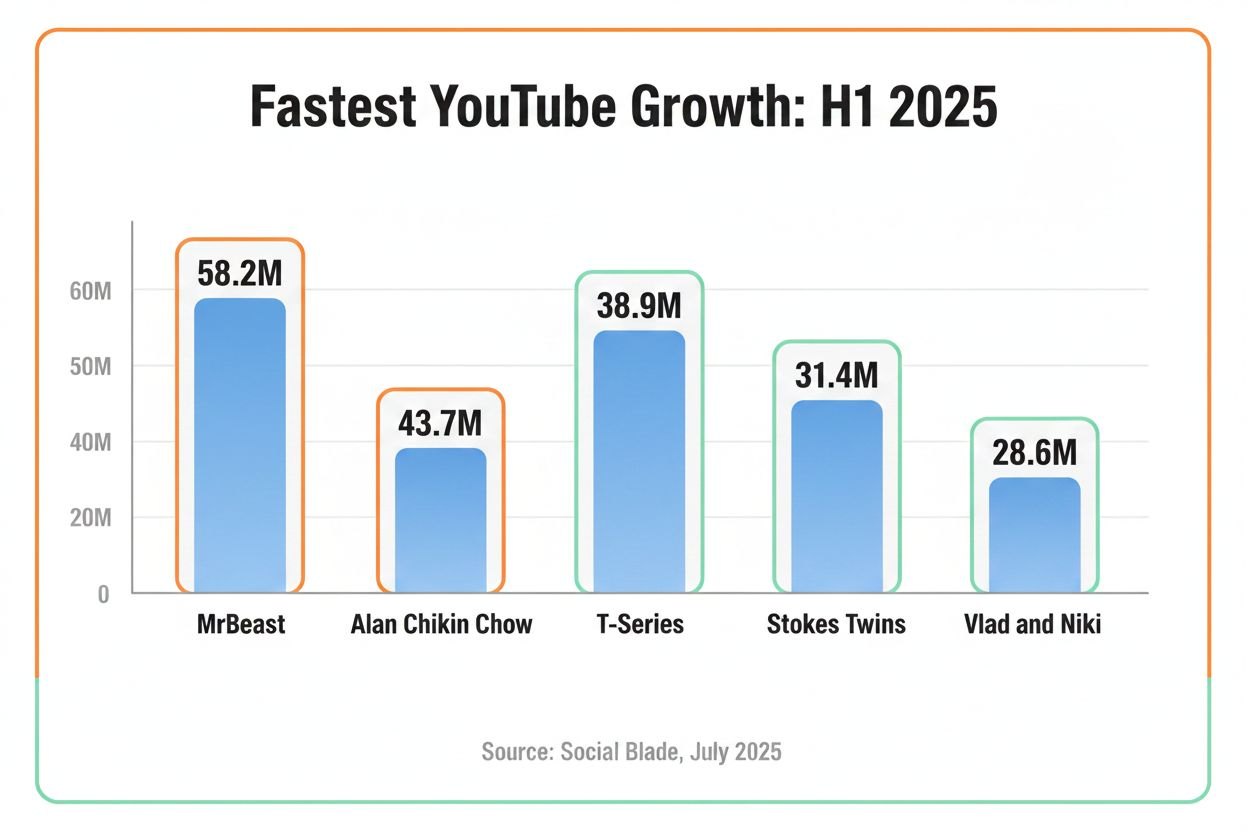
According to AIR Media-Tech, Alan Chikin Chow gained 7 million subscribers in a single month (March 2025) with comedic scripted Shorts. That is not luck. That is a format, niche, and production style aligned with what YouTube is pushing and what audiences want.
When you study fast-growing channels, you learn what is working today, not what worked three years ago.
The MrBeast Blueprint: Multilingual Dubbing and Global Reach
MrBeast remains the fastest-growing individual creator on YouTube. According to MiniTool, he gained 39 million new subscribers in the first half of 2025 alone. His total subscriber count now sits at 442 million.
The key tactic: MrBeast dubs his videos into 23 languages. He does not just add subtitles. He creates separate audio tracks for Spanish, Portuguese, Hindi, Japanese, and 19 other languages. This turns a single video into 23 localized versions, each optimized for a different regional audience.
Why it works:
- YouTube serves dubbed videos to users based on their language settings
- Non-English speakers are more likely to watch, share, and subscribe when content is in their native language
- The algorithm treats each dubbed version as engagement for the original video, compounding reach
You do not need MrBeast's budget to apply this. Start with one additional language. If your content appeals to Spanish-speaking audiences, dub your top 10 videos into Spanish. Test whether it drives measurable subscriber growth. If it does, expand.
The Alan Chikin Chow Formula: Scripted Shorts with High Rewatch Value
Alan Chikin Chow is a case study in how to dominate YouTube Shorts. His channel gained 7 million subscribers in March 2025, one of the fastest single-month growth spurts on record.
His format: scripted comedy Shorts with a punchline or twist ending. Each video is 30 to 60 seconds. The humor is visual and physical, which works across languages. The endings are surprising enough that viewers rewatch to catch details they missed.
Why this format wins:
- Shorts are YouTube's priority format. The algorithm pushes them aggressively.
- Scripted content has higher rewatch value than vlog-style Shorts
- A twist ending encourages comments, which signals engagement to the algorithm
- Short runtime means viewers watch multiple videos in one session, increasing session time
To replicate this: write your Shorts like jokes. Set up, build, punchline. Make the first three seconds visually arresting so viewers do not swipe away. Test different endings to see which ones drive the most comments and shares.

T-Series and the Power of Consistent Upload Volume
T-Series is the largest YouTube channel by subscriber count. It gained 6.8 million subscribers in the first half of 2025 despite already having over 250 million subscribers.
T-Series is a music label. It uploads dozens of videos per week: music videos, lyric videos, behind-the-scenes clips, and promotional content. The strategy is volume. More uploads mean more chances to appear in recommendations, more content for the algorithm to test, and more reasons for subscribers to return.
This is not a strategy most solo creators can copy directly. But the principle applies: consistency beats sporadic viral hits.
If you upload once a month, you are giving the algorithm 12 chances per year to promote your content. If you upload twice a week, you are giving it 104 chances. Even if each video performs worse on average, the cumulative reach is higher.
The key is sustainable consistency. Do not burn out trying to upload daily. Find a schedule you can maintain for a year. Three videos per week is better than seven videos for two months followed by silence.
Cross-Platform Promotion: Using TikTok and Instagram to Drive YouTube Growth
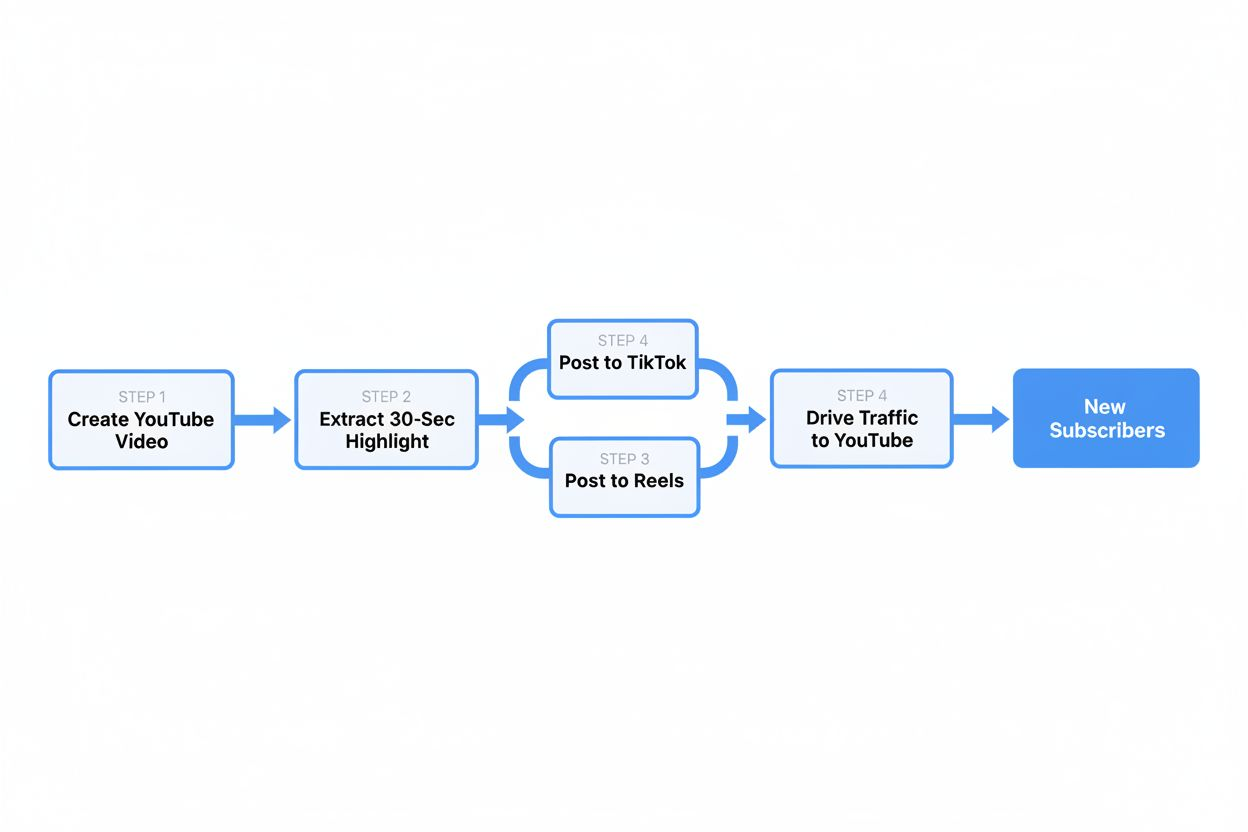
According to MiniTool, the fastest-growing channels in 2025 are using cross-promotion on TikTok, Instagram, and Facebook to drive traffic back to YouTube.
The strategy: post a teaser or highlight clip on TikTok or Instagram Reels. In the caption or pinned comment, direct viewers to YouTube for the full video. This works because TikTok and Instagram have powerful discovery algorithms that can expose your content to millions of people who have never heard of you.
Example workflow:
- Upload a 10-minute YouTube video
- Cut a 30-second highlight that works as a standalone clip
- Post that clip to TikTok and Instagram Reels with a caption like "Full video on YouTube (link in bio)"
- Pin a comment with the YouTube link
- Respond to comments to boost engagement, which increases the chance the algorithm shows your clip to more people
This creates a funnel. TikTok and Instagram are the top of the funnel (awareness). YouTube is the bottom of the funnel (subscription and long-term audience building).
You are not splitting your audience. You are using short-form platforms as a discovery engine for your long-form content.
Niche Selection: Which Categories Are Growing Fastest in 2025
Not all niches grow at the same rate. Some are saturated. Others are exploding.
According to Boss Wallah, the top trending categories in 2025 are finance, regional comedy, and gaming. AIR Media-Tech reports that Education and Science CPMs jumped from $2.80 in 2021 to $5.20 in 2022, indicating a boom period for educational content. Gadgets and Tech CPMs surged from $1.69 in 2021 to $4.19 in 2023, showing that tech content remains highly competitive and lucrative.
Why CPM matters: CPM (cost per thousand impressions) is what advertisers pay to show ads on your videos. Higher CPMs mean more revenue per view. Niches with rising CPMs are niches where advertisers are competing for attention, which usually means audience demand is high.
High-growth niches in 2025:
- Finance and investing: Personal finance, stock market analysis, crypto, and side hustles
- Education and science: Explainers, tutorials, and deep dives into complex topics
- Tech and gadgets: Product reviews, comparisons, and how-to guides
- Regional comedy: Comedy in non-English languages, especially Hindi, Spanish, and Portuguese
- Gaming: Let's plays, walkthroughs, and esports commentary
If you are starting a new channel, pick a niche where CPMs are rising. If you are already in a niche, double down on the subtopics within that niche that are performing best.
Algorithm Optimization: What YouTube Wants You to Do
YouTube's algorithm has one goal: keep people on YouTube as long as possible. It promotes videos that increase session time.
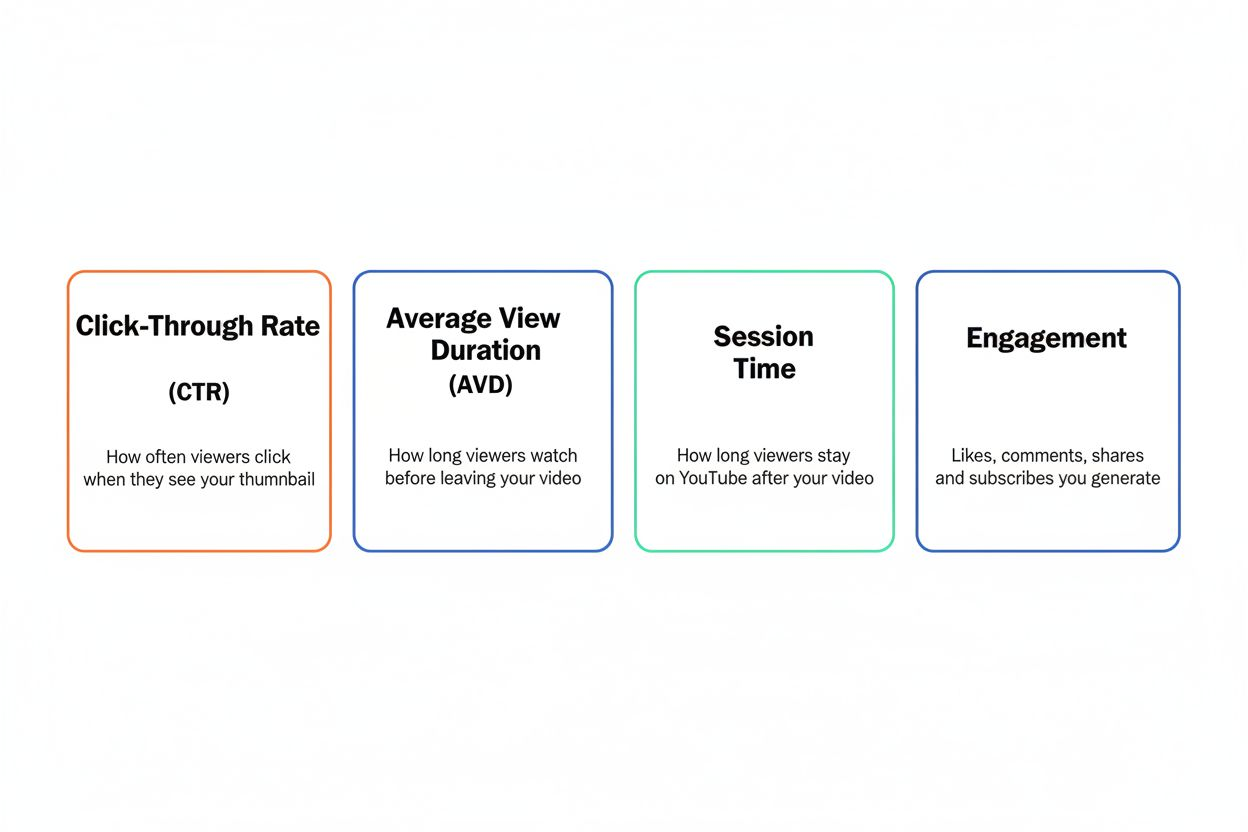
According to MiniTool, channels that optimize for the YouTube algorithm and produce high-quality content grow fastest. Here is what "optimize for the algorithm" means in practice:
Click-through rate (CTR): The percentage of people who see your thumbnail and click on it. Aim for 8% or higher. Test different thumbnails to see which ones perform best.
Average view duration (AVD): How long viewers watch before clicking away. Longer is better. Hook viewers in the first 10 seconds. Cut out slow intros.
Session time: How long viewers stay on YouTube after watching your video. End your videos with a call to action to watch another video on your channel. Use end screens and cards to suggest related content.
Engagement: Comments, likes, shares, and saves. Ask questions in your videos to encourage comments. Respond to comments to boost engagement signals.
The algorithm does not care about your upload schedule or production quality in isolation. It cares about whether your videos keep people watching. Optimize for that, and growth follows.
Production Quality: How Much Does It Actually Matter?
High production quality does not guarantee growth. Low production quality does not prevent it.
Alan Chikin Chow films Shorts on a smartphone. MrBeast spends millions per video. Both are growing fast. The difference is not production budget. It is content strategy.
What matters more than production quality:
- Concept: Is the video idea interesting enough to make someone click?
- Pacing: Does the video move fast enough to hold attention?
- Value: Does the viewer learn something, laugh, or feel something by the end?
Production quality matters when it affects those three things. If bad audio makes your tutorial hard to follow, that is a problem. If shaky camera work makes your vlog nauseating, that is a problem. But if your lighting is not perfect and your editing is basic, that is fine as long as the content delivers.
Start with good audio. Invest in a decent microphone before you invest in a camera. Viewers will tolerate mediocre video quality, but they will click away from bad audio.
Regional Languages and Shorts: The Two Biggest Growth Drivers
According to Boss Wallah, Shorts and regional languages are the two major drivers of growth in 2025.
YouTube has over 2.7 billion monthly active users globally. Most of them do not speak English as a first language. Creators who make content in Hindi, Spanish, Portuguese, Arabic, and other widely spoken languages are tapping into massive, underserved audiences.
Regional language content also faces less competition. If you make finance videos in English, you are competing with thousands of other channels. If you make finance videos in Hindi, you are competing with dozens.
Shorts are the other major lever. YouTube is pushing Shorts aggressively to compete with TikTok. The algorithm gives Shorts more reach than long-form videos, especially for new channels. If you are starting from zero subscribers, Shorts are the fastest way to get your first 10,000.
The strategy: use Shorts to grow your subscriber base, then convert those subscribers into long-form viewers. Post Shorts consistently (3-5 per week). Every few Shorts, mention your long-form content and encourage viewers to check out your main channel.

Clear Niches Beat Generalist Content
According to Boss Wallah, channels with clear niches and consistent uploads are outperforming generalists in 2025.
A generalist channel posts vlogs, gaming videos, tech reviews, and cooking tutorials. A niche channel posts only tech reviews. The niche channel grows faster because:
- The algorithm knows who to recommend it to
- Viewers know what to expect, so they subscribe
- Advertisers pay more for targeted audiences
If you are a generalist now, you do not have to delete your old content. Just pick one niche and commit to it for the next 50 videos. See if your growth rate improves. It probably will.
How to Apply These Strategies to Your Channel
You cannot copy MrBeast's budget or T-Series' upload volume. But you can apply the principles behind their growth.
Here is a practical action plan:
Step 1: Pick a high-growth niche. Use the CPM data as a guide. Finance, education, tech, and regional comedy are all strong choices.
Step 2: Commit to a format. Shorts, long-form tutorials, or scripted comedy. Pick one and master it before branching out.
Step 3: Set a sustainable upload schedule. Twice a week is a good starting point. Daily Shorts if you can manage it.
Step 4: Optimize for CTR and AVD. Test thumbnails. Hook viewers in the first 10 seconds. Cut out filler.
Step 5: Cross-promote on TikTok and Instagram. Post highlights and teasers. Drive traffic back to YouTube.
Step 6: Consider multilingual content. If your niche has global appeal, dub your top videos into one additional language. Measure the results.
Step 7: Engage with your audience. Respond to comments. Ask questions. Build a community, not just a subscriber count.
Growth is not random. It is the result of repeatable, testable strategies. Study what is working, adapt it to your niche, and execute consistently.
What Comes Next: Staying Ahead of Algorithm Changes
The strategies that work in 2025 will not work forever. YouTube changes its algorithm. Audience preferences shift. New formats emerge.
The creators who stay on top are the ones who treat YouTube like a laboratory. They test new formats, analyze their analytics, and adapt quickly when something stops working.
Watch your CTR and AVD for every video. If a video underperforms, figure out why. Was the thumbnail weak? Did the intro drag? Did the topic miss the mark? Use that data to improve the next video.
Follow the channels that are growing fastest in your niche. What are they doing differently? Can you adapt their tactics without copying them outright?
YouTube rewards creators who pay attention, experiment, and iterate. The fastest-growing channels in 2025 are not the ones with the best ideas. They are the ones who execute well, measure results, and adjust based on what the data tells them.