Enhancing Brand Partnerships Through Collaborative Content

Why Most Brand Collaborations Fall Flat
Two brands announce a partnership. They swap logo placements, co-sign a press release, and call it a collaboration. Six months later, neither side can point to a meaningful result. No audience growth, no memorable content, no lasting connection between the two brands in anyone's mind.
This happens constantly, and the reason is almost always the same: the partnership was built around visibility, not value. Real collaborative content does something different. It creates something neither brand could have made alone, and it gives audiences a reason to pay attention.
The brands that get this right treat content collaboration as a creative project, not a marketing transaction. The result is content that feels genuine, reaches further, and builds something that outlasts the campaign itself.
What a Content Partnership Actually Is
A content partnership is a formal or informal agreement between two brands to produce and distribute content together. That content might be a video series, a podcast, a research report, a newsletter, a live event, or any other format where both parties contribute meaningfully and share the output with their respective audiences.
The key word is "meaningfully." A brand partnership where one company just pays another to appear in their content is sponsorship. That has its place, but it is not the same thing. In a genuine content partnership, both sides bring something to the creative process: expertise, audience access, production capability, or a point of view that the other lacks.
The Difference Between Sponsorship and Collaboration
Sponsorship is transactional. Brand A pays Brand B for exposure. The content belongs to Brand B, and Brand A's involvement is essentially decorative.
Collaborative content is creative. Both brands shape what gets made. Both have a stake in its quality. Both distribute it. And ideally, both audiences come away with a stronger impression of each brand than they would have from seeing either one alone.
This distinction matters because it changes how you plan, pitch, and execute the partnership. Sponsorships are negotiated. Collaborations are built.
Finding the Right Partner
The instinct is often to look for the biggest brand willing to say yes. That is usually the wrong approach. A large partner with a mismatched audience or a conflicting brand voice will produce content that feels awkward and reaches the wrong people.
The better question is: which brand shares your audience without competing for your customers?
A cycling apparel company and a sports nutrition brand serve the same people and have no reason to compete. A software company that serves small businesses and an accounting firm that works with the same clients are natural fits. A travel magazine and a luggage brand have obvious overlap. These pairings work because the collaboration adds something real for a shared audience.
Research on brand association match finds that consumers with strong overlap between what they expect from a brand and what it actually delivers show more positive brand responses, which is one more reason to choose partners whose positioning genuinely complements your own rather than simply chasing name recognition.
Beyond audience overlap, look at a few other factors:
- Production values should be roughly compatible. If one brand produces polished video content and the other publishes occasional blog posts, the gap in expectations will create friction.
- Brand voice should be compatible, not identical. Two brands with similar tones will produce content that feels coherent. Two brands with wildly different voices will produce content that feels like a negotiation.
- The partner should have something to contribute that you genuinely cannot replicate. If you could make the same content without them, the partnership adds little.
How to Approach a Brand About Collaborating
The pitch is where most potential collaborations die. Brands receive vague outreach all the time: "We'd love to explore a partnership." That phrase means nothing and signals that you have not thought seriously about what you want to make.
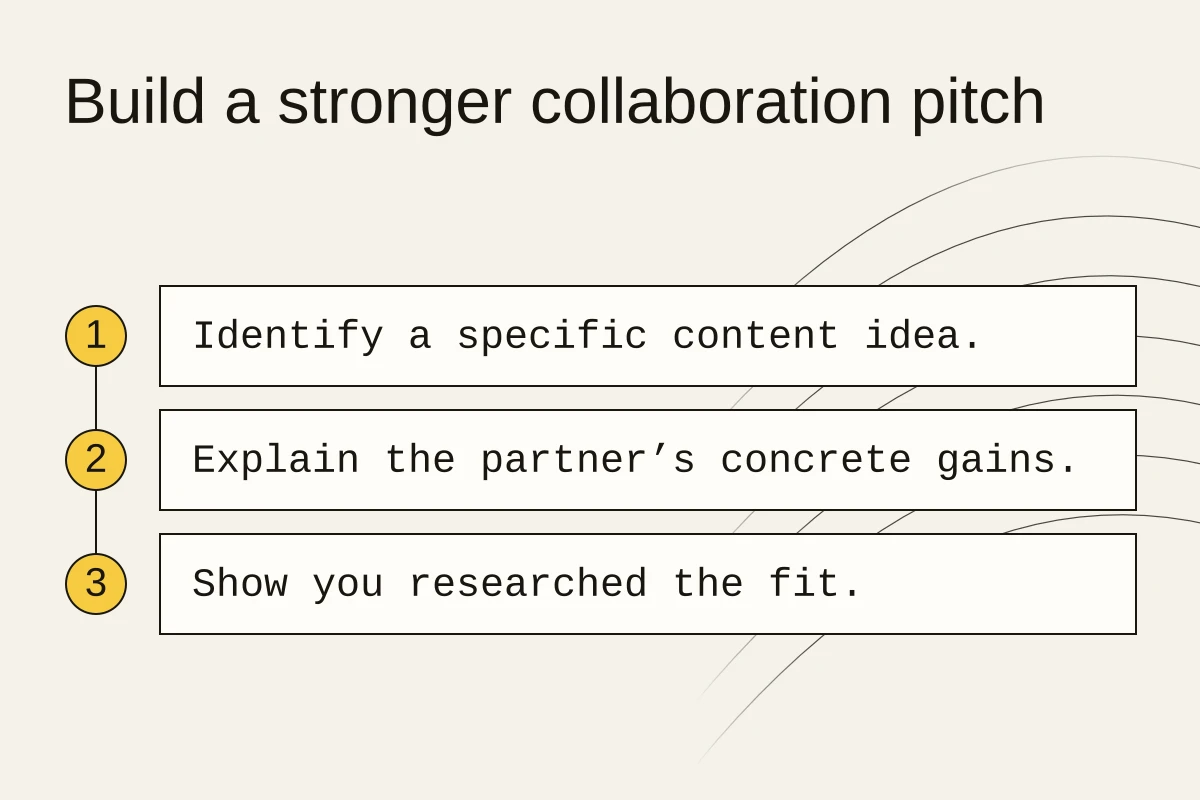
A strong approach does three things. First, it identifies a specific content idea, not just a category. Not "a video series" but "a six-part video series about how independent retailers are adapting to changing consumer habits, featuring your retail clients and ours." Second, it explains what the other brand gains, in concrete terms: audience reach, content they could not produce alone, association with a topic their customers care about. Third, it shows that you have done enough research to know this is a good fit.
You do not need a fully developed proposal at the first contact. You need enough specificity to show that you are serious and that you have thought about their interests, not just your own.
Starting Small
If you are new to brand collaborations, starting with a smaller, lower-stakes project makes sense. A co-authored article, a joint webinar, or a single social media series is much easier to execute than a multi-month content program. It also gives both sides a chance to see how the other works before committing to something larger.
Many long-term brand partnerships started with a single piece of content that went well. The first project is as much an audition as it is a deliverable.
Building the Content Together
Once both brands agree to move forward, the actual creative work begins. This is where the partnership either develops into something genuinely good or collapses into a series of compromises.
The most common failure mode is design by committee. Each brand sends feedback through their marketing team, legal reviews every line, and the final content has been sanded down to something inoffensive and forgettable. Avoiding this requires agreeing upfront on how decisions get made. Poor marketing approval workflows make this worse: feedback trickles in over days instead of arriving in one consolidated round, stalling the whole process.
A few structures that work:
- Assign a lead creator from one side, with the other side serving as a collaborator and reviewer. The lead has final say on creative decisions; the reviewer can flag anything that misrepresents their brand.
- Define the editorial boundaries early. What topics are in scope? What is off-limits? What claims can each brand make? Sorting this out before writing starts saves significant time.
- Agree on a revision process with a fixed number of rounds. Open-ended revision cycles are where content goes to die.
Letting Each Brand's Expertise Show
The best collaborative content is structured so that each brand contributes what they actually know. If a financial planning firm partners with a real estate company to produce content about buying a first home, the financial firm should own the sections on mortgage planning and credit, while the real estate company handles market conditions and the buying process. The content is better because each side is speaking from genuine expertise, and the audience gets more than either brand could have delivered alone.
This is also what makes collaborative content credible. Readers and viewers can tell when a brand is speaking outside its knowledge. Keeping each contributor in their lane produces content that feels authoritative. Studies on self-brand connection and co-creation find that consumers who feel a strong connection to a brand show greater motivation to participate when the activity has high knowledge potential, leading to stronger brand engagement overall.
Distribution: The Part Most Brands Underinvest In
Creating good collaborative content is only half the job. How it reaches audiences determines whether the partnership actually delivers results.
Both brands should distribute the content to their own audiences, and that distribution should be planned before the content is finished, not after. This means agreeing on which channels each brand will use, what the messaging will look like, and roughly when each brand will publish or share.
The combined reach is one of the main reasons to do collaborative content in the first place. If one brand distributes aggressively and the other barely mentions it, the partnership underperforms and creates resentment. Setting clear expectations upfront prevents this.
Cross-Promotion That Feels Natural
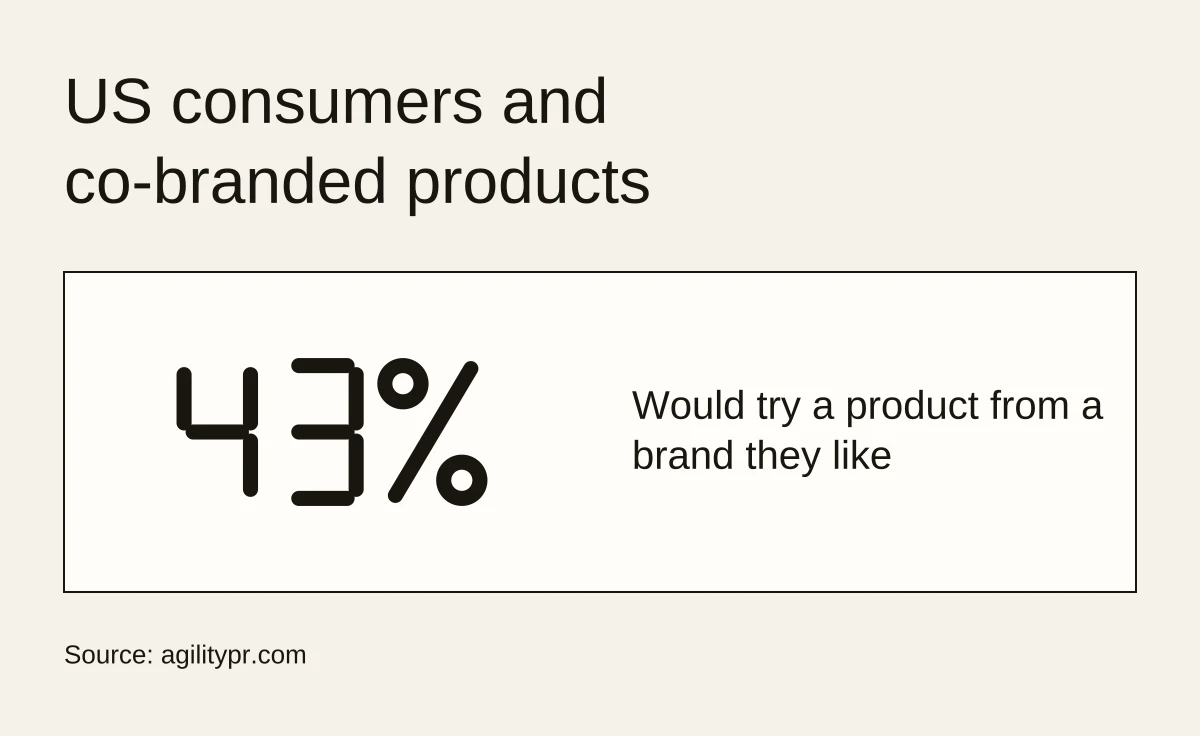
The distribution should feel like a genuine recommendation, not an obligation. When a brand shares collaborative content with their audience, the framing matters. "We worked with [Partner] on this because they know things about X that we don't" is more compelling than "Check out our new partnership content."
Source: www.agilitypr.com
Audiences respond to honesty about why the collaboration exists. If the reason is clear and makes sense, the content lands better.
Measuring Whether It Worked
The metrics you track should connect to the reason you did the collaboration in the first place. As guidance on content marketing metrics puts it, views, likes, and shares are not goals in themselves but a way to indicate whether you are on the right path to achieving your goals. If the goal was audience growth, track new followers, subscribers, or email signups that came through the partner's distribution. If the goal was content quality or authority, track engagement rates and time spent with the content. If the goal was lead generation, track conversions.
What you should not do is measure everything and declare success because some numbers went up. Pick two or three metrics that actually reflect your goals before the content launches, and evaluate against those.
Both brands should share their results with each other. This is partly about transparency and partly practical: understanding how the content performed across both audiences tells you more than either side's data alone. It also builds the trust that makes future collaborations possible.
Making Partnerships Last
A single piece of collaborative content can be valuable, but the real payoff comes from ongoing partnerships where both brands develop a creative rhythm and a shared audience comes to associate them together.
Sustaining a partnership requires a few things that brands often skip. Regular check-ins between the teams, not just when a deliverable is due. Honest feedback after each project about what worked and what did not. A willingness to evolve the content format as both brands and their audiences change.
The brands that build lasting content partnerships treat them like any other important creative relationship: with attention, honesty, and a genuine interest in making something worth making.
Turning One Collaboration Into a Content Strategy
The most sophisticated approach is to build collaborative content into your broader content strategy rather than treating each partnership as a one-off project. This means identifying two or three brands you want to develop ongoing relationships with, rather than pursuing many small collaborations that never deepen.
It also means thinking about how collaborative content fits alongside the content you produce independently. Collaborative pieces can introduce your brand to new audiences, while your own content deepens the relationship with people who already know you. The two types of content serve different purposes and work better together than either does alone.
What Makes the Difference
The brands that consistently produce strong collaborative content share a few habits. They are specific about what they want to make before they approach a partner. They choose partners based on audience fit rather than brand size. They give the creative process enough room to produce something genuinely good. And they invest in distribution with the same energy they put into production.
None of this is complicated, but it requires treating the collaboration as a creative commitment rather than a marketing checkbox. The content that results from that commitment is the kind that audiences actually remember, share, and associate with both brands long after the campaign ends.