How to Buy YouTube Promotion the Right Way: A Step-by-Step Guide for Creators
You upload a video. You wait. Nothing happens. Your view count sits at 47, and 32 of those are probably you refreshing the page. Meanwhile, other creators in your niche seem to explode overnight.
This is where most creators start Googling "buy YouTube promotion." The problem? The promotion services market is a minefield. Some services deliver real growth. Others will get your channel flagged or waste your money on bot views that vanish within days.
This guide walks you through how to buy YouTube promotion safely, what to look for in a service, and how to avoid the traps that hurt more channels than they help.
Why Creators Buy YouTube Promotion (And When It Makes Sense)
Buying promotion is not cheating. It is advertising. When you buy YouTube promotion, you are paying to get your content in front of people who might actually care about it.
The YouTube algorithm rewards engagement. Videos that get early traction get pushed to more viewers. But breaking through that initial barrier is brutal, especially for new channels. Promotion services can provide that first push.
According to VeeFly, YouTube videos appear in up to 30% of the top 10 Google search results. That means your video is not just competing on YouTube—it is competing across the entire web. Paid promotion helps you claim that space.
Here is when buying promotion makes sense:
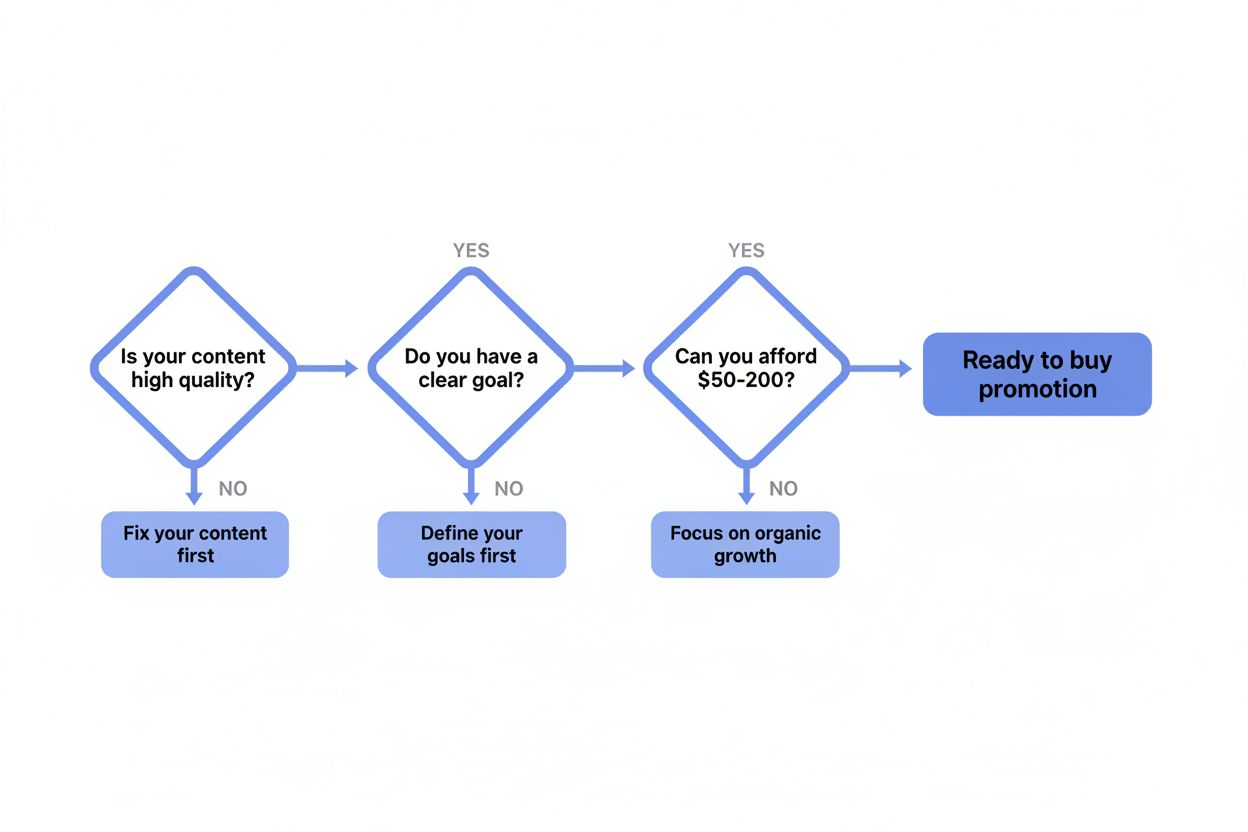
- You have high-quality content that is not getting discovered organically
- You are launching a new channel and need to overcome the cold start problem
- You have a video with strong hook and retention, but it needs initial momentum
- You are promoting a product or service and need measurable ROI
Here is when it does not:
- Your content is low quality and you think views will fix it (they will not)
- You want to inflate numbers to look impressive without caring about real engagement
- You are trying to game the system with bot views (YouTube will catch you)
What "Buying YouTube Promotion" Actually Means
The phrase covers several different services. Understanding the difference will save you money and frustration.
Google Ads for YouTube: You pay Google directly to show your video as an ad. This is the most legitimate form of paid promotion. You target specific audiences, pay per view or impression, and get real people watching your content. The downside is cost and complexity—you need to understand ad targeting, bidding strategies, and conversion tracking.
Promotion Services: Third-party companies that run campaigns on your behalf. They use various methods (mostly Google Ads, sometimes influencer networks or social media promotion) to drive views. Services like Prodvigate, Viralyft, and Media Mister fall into this category. Quality varies wildly.
View/Subscriber Sellers: Companies that sell raw numbers—1,000 views for $X, 500 subscribers for $Y. Some use real promotion methods. Others use bots or click farms. The latter will hurt your channel.
Influencer Promotion: Paying other YouTubers or social media accounts to share your video. This can work if the influencer's audience matches your target demographic. It is expensive and hard to scale.
For most creators, promotion services offer the best balance of cost, ease, and results. You pay a flat fee, they handle the campaign, and you get views from real users.
Red Flags: How to Spot Services That Will Hurt Your Channel
YouTube's algorithm is smart. It can detect fake engagement. If you buy bot views, you risk getting your video demoted or your channel penalized. Here is how to spot the bad actors.
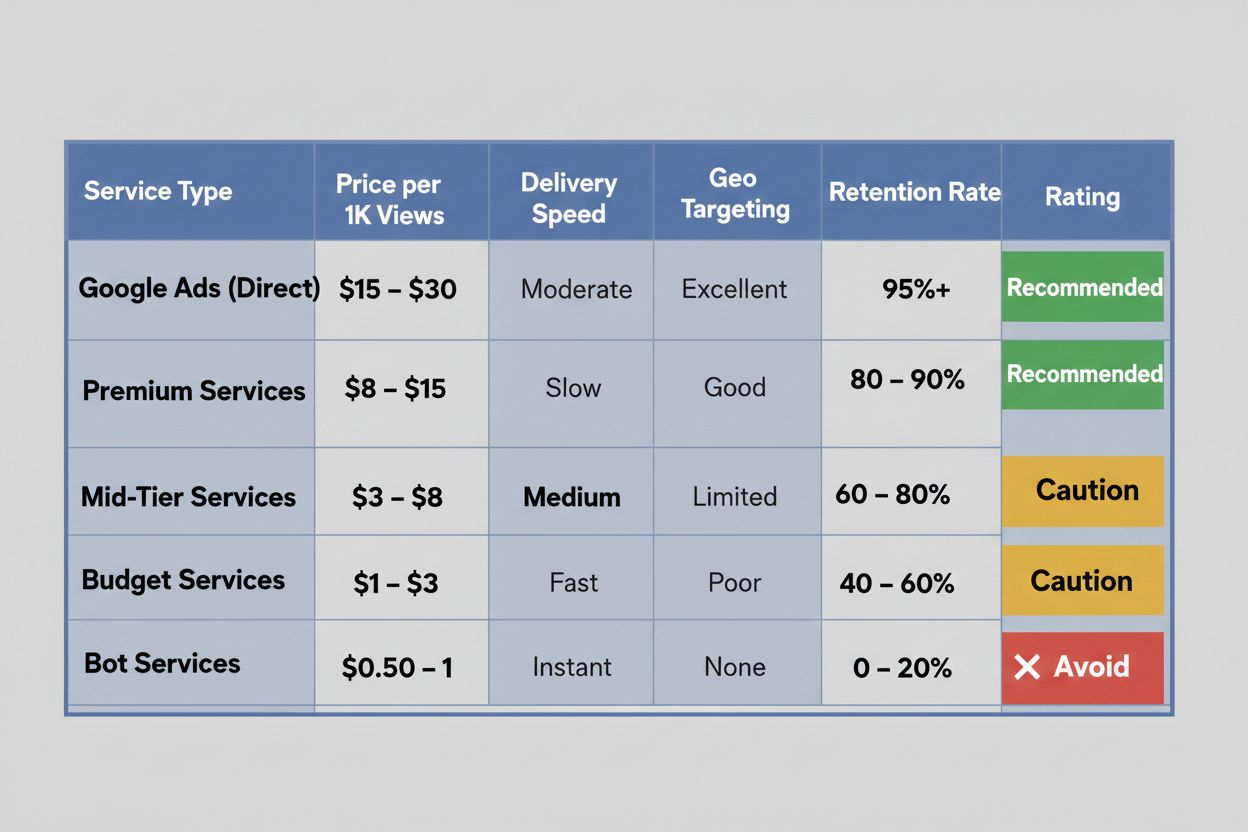
Instant Delivery: If a service promises 10,000 views delivered in 24 hours, run. Real promotion takes time. Views should trickle in over days or weeks as your ad runs. A sudden spike of 10,000 views overnight screams "bot farm."
Unrealistic Prices: According to Analytics Insight, Media Mister delivered 1,000 views for $16 with worldwide targeting. That is a reasonable benchmark. If someone offers 10,000 views for $10, the math does not work unless they are using bots.
No Targeting Options: Legitimate services let you target by geography, interests, or demographics. If a service just asks for your video link and delivers generic views, those views are not coming from real promotion.
Guaranteed Subscribers or Likes: No legitimate service can guarantee that viewers will subscribe or like your video. They can promote your video to targeted audiences, but the decision to engage is up to the viewer. Guarantees mean bots.
No Refund or Retention Policy: Real services stand behind their work. Social Mention notes that Social Wick offers a 60-day refill plan option. If views drop off (which can happen), they replace them. Services with no retention guarantee are selling low-quality traffic.
Requires Your Password: Never give anyone your YouTube password. Legitimate promotion services only need your video URL. If they ask for account access, they are either incompetent or malicious.
What to Look for in a Quality Promotion Service
Now for the positive signals. These indicate a service that will actually help your channel.
Transparent Methods: Good services explain how they promote your video. Most use Google Ads. Some use Facebook or Instagram ads. A few use influencer networks. If they will not tell you their method, assume the worst.
Gradual Delivery: Views should arrive over several days or weeks. According to Analytics Insight, Prodvigate can deliver approximately 2,500 views for $49 within one week. That is a realistic timeline.
Targeting Options: You should be able to specify who sees your video. Geography is basic (US views cost more than worldwide views because they are more valuable). Interest targeting is better. Demographic targeting is best.
Real Customer Support: Can you reach a human if something goes wrong? Check for live chat, email support, or a phone number. Read reviews to see if they actually respond.
Proven Track Record: Look for case studies, testimonials, or verifiable results. Social Mention reports that Prodvigate has delivered over 327 million promoted video views and 12 million real interested subscribers. Those numbers are auditable.
Reasonable Pricing: Expect to pay $15-50 per 1,000 views for quality traffic. US-targeted views cost more. Worldwide views cost less. Subscribers are more expensive than views because they require higher engagement.
Step-by-Step: How to Buy YouTube Promotion Safely
Here is the process, from research to purchase to tracking results.
Step 1: Define Your Goal
What do you want? More views? More subscribers? Traffic to your website? Sales of a product?
Different goals require different strategies. If you want subscribers, you need to promote videos with strong calls to action and content that makes people want more. If you want sales, promote product reviews or tutorials. If you just want views to boost algorithmic ranking, any engaging video works.
Write down your goal and the metric you will use to measure success.
Step 2: Set a Budget
Start small. Your first campaign is a test. Budget $50-100 to see how a service performs before committing more.
According to Analytics Insight, a $200 budget on Prodvigate was projected to yield 9,300 views. Use that as a baseline. If you are getting significantly fewer views for the same money, the service is overpriced or low quality.
Step 3: Research Services
Read reviews. Check Reddit, Trustpilot, and YouTube creator forums. Look for creators who have used the service and shared results.
Compare pricing. Social Mention notes that Viralyft offers view packages ranging from 500 views up to 1 million views. Check if bulk discounts make sense for your budget.
Make a shortlist of 2-3 services that meet the quality criteria above.
Step 4: Check Your Video First
Before you spend money promoting a video, make sure it is worth promoting. Watch the first 30 seconds. Would you keep watching? Check your audience retention in YouTube Analytics. If viewers drop off in the first 10 seconds, fix your hook before buying promotion.
Promoting a bad video is like buying ads for a product nobody wants. You will get views, but they will not convert to subscribers or engagement.
Step 5: Place Your Order
Most services have a simple order process:
- Select your package (number of views, subscribers, or likes)
- Enter your video URL
- Choose targeting options (geography, interests, demographics)
- Pay via credit card or PayPal
- Wait for campaign approval
According to VeeFly, campaigns go active within 24 hours of checkout completion. Some services are faster, some slower. Read the fine print about delivery timelines.
Step 6: Monitor Results
Do not just watch your view count. Check these metrics in YouTube Analytics:
- Average View Duration: Are promoted viewers watching as long as organic viewers? If promoted views have 10-second watch times, the traffic is low quality.
- Traffic Source: You should see a spike in "External" or "YouTube Advertising" traffic. If all your new views show up as "Direct or unknown," something is off.
- Subscriber Conversion: What percentage of promoted viewers subscribe? Compare this to your organic rate. A huge drop suggests poor targeting.
- Engagement Rate: Are promoted viewers liking, commenting, or sharing? Real viewers engage. Bots do not.
Give the campaign at least a week before judging results. Views trickle in over time.
Step 7: Evaluate and Adjust
After the campaign ends, calculate your cost per result:
- Cost per view: Total spent / views gained
- Cost per subscriber: Total spent / subscribers gained
- Cost per engagement: Total spent / (likes + comments + shares)
Compare these numbers to your goals. If you paid $50 for 2,000 views and gained 30 subscribers, that is $1.67 per subscriber. Is that acceptable for your channel's monetization potential?
If results are good, scale up. If they are mediocre, try a different service or adjust your targeting. If they are terrible, request a refund and move on.

How Much Should You Spend on YouTube Promotion?
There is no universal answer, but here are guidelines based on your channel size and goals.
New Channels (0-1,000 Subscribers)
Budget: $50-100 per month
At this stage, you are testing. You need to learn what content resonates and how promotion affects your growth. Keep spending low until you have proven content that converts viewers to subscribers.
Focus on promoting your best-performing organic videos. If a video already has good retention and engagement, promotion will amplify those results.
Growing Channels (1,000-10,000 Subscribers)
Budget: $100-300 per month
You have enough data to know what works. Now you are scaling. Promote videos that align with your channel's core topic and have strong calls to action.
At this level, you can test different services and targeting options. Split your budget: $150 on a proven service, $150 on a new service to compare results.
Established Channels (10,000+ Subscribers)
Budget: $300-1,000+ per month
Promotion becomes part of your marketing mix. You are not just buying views—you are strategically amplifying content that drives business results (sponsorships, product sales, course enrollments).
At this scale, consider hiring someone to manage Google Ads directly. You will get better targeting and lower costs than using third-party services.
One-Time Campaigns
If you are promoting a specific video (product launch, course release, event announcement), budget based on expected ROI. If you are selling a $200 course and your conversion rate is 2%, you need 50 views to make one sale. If views cost $0.03 each, you will spend $1.50 to make $200. That math works.
Alternatives to Buying Promotion
Paid promotion is one tool. It is not the only tool. Here are other ways to grow your channel that might make more sense depending on your situation.
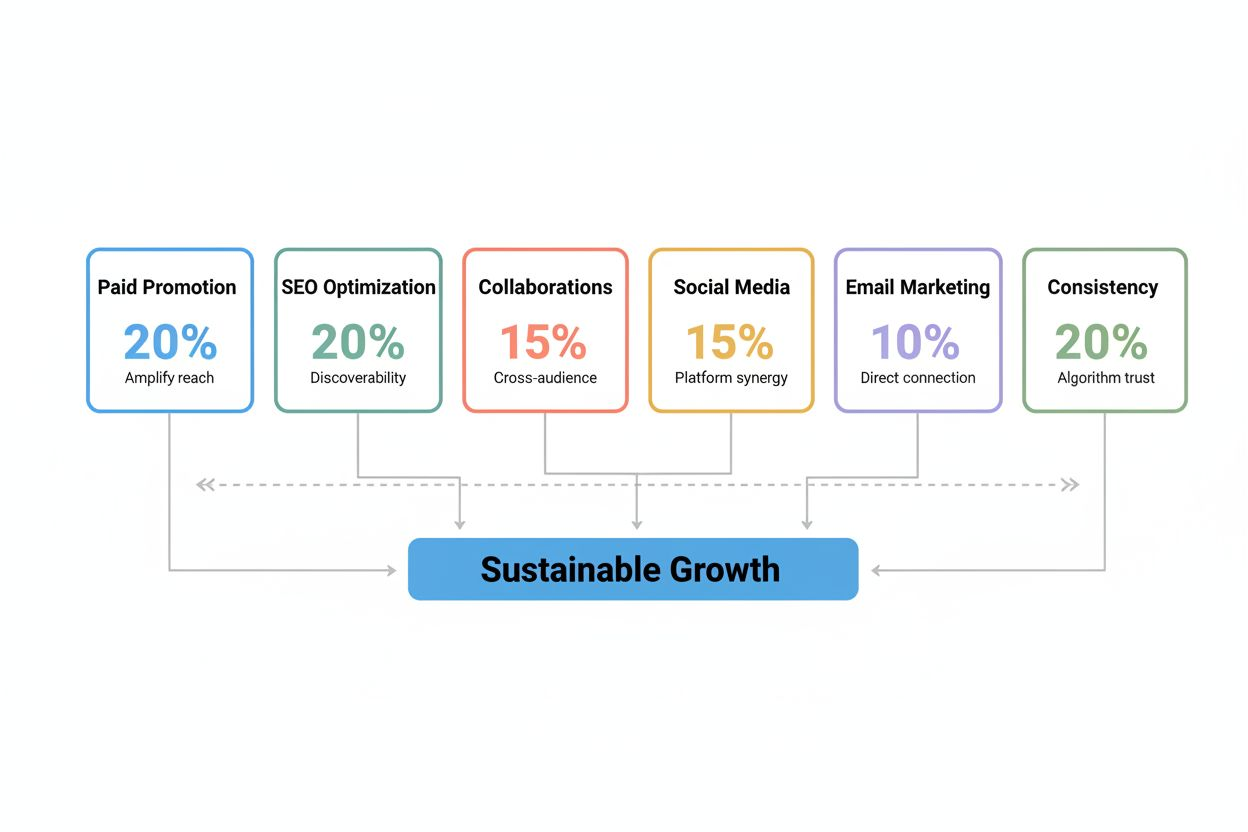
Collaborations: Partner with creators in your niche. You appear on their channel, they appear on yours. This is free promotion to an already-engaged audience. It works best when both channels are similar in size.
SEO Optimization: According to VeeFly, YouTube videos appear in up to 30% of the top 10 Google search results. Optimize your titles, descriptions, and tags for search. This is free and compounds over time.
Social Media Cross-Promotion: Share your videos on Twitter, Instagram, TikTok, Reddit, or Facebook groups. If you already have an audience on another platform, direct them to YouTube.
Email List: If you have an email list (from a blog, course, or product), send new video announcements. Email subscribers are highly engaged and more likely to watch, like, and comment.
Community Engagement: Comment on other videos in your niche. Answer questions in forums. Be helpful. People will check out your channel if you provide value without being spammy.
Consistency: Upload on a schedule. The algorithm favors channels that publish regularly. Consistency builds audience expectations and keeps your channel active in recommendations.
These methods take more time than buying promotion, but they build sustainable growth. The best strategy combines organic tactics with strategic paid promotion.
Common Mistakes Creators Make When Buying Promotion
Even when using legitimate services, creators sabotage their own campaigns. Avoid these errors.
Promoting Low-Quality Content: No amount of promotion will fix a boring video. If your organic audience retention is below 30%, improve your content before spending money.
Ignoring Targeting: Worldwide views are cheap, but they are often useless. If you run a channel about US tax law, views from countries where your content is not relevant will not convert to subscribers. Pay more for targeted traffic.
Buying Subscribers Directly: Services that sell subscribers are almost always using bots or inactive accounts. YouTube's algorithm detects this. You will get subscribers who never watch your videos, which tanks your engagement rate and hurts your reach.
Promoting Every Video: Not every video deserves promotion. Promote your best content—videos with strong hooks, good retention, and clear calls to action. Save your budget for winners.
Expecting Instant Virality: Promotion gives you a boost. It does not make you go viral. Viral videos happen when content is so good that organic sharing takes over. Promotion can start that process, but it cannot force it.
Not Tracking Results: If you do not measure what happens, you cannot improve. Use YouTube Analytics to track every campaign. Know your cost per view, cost per subscriber, and engagement rate.
Giving Up After One Campaign: Your first campaign might flop. Maybe you chose the wrong service, targeted the wrong audience, or promoted the wrong video. Test multiple approaches before deciding promotion does not work.
What Happens After You Buy Promotion
You bought promotion. Views are coming in. Now what?
Engage With New Viewers: Respond to comments on the promoted video. Pin a comment welcoming new viewers and directing them to your best content. Ask questions to encourage more comments.
Create a Follow-Up Video: If the promoted video is performing well, create a sequel or related video. Mention the first video and link to it in the description. Capture momentum.
Analyze Traffic Sources: In YouTube Analytics, check where your promoted views are coming from. If a specific geography or demographic is engaging more, create content tailored to that audience.
Optimize Your Channel Page: New viewers will check out your channel. Make sure your banner is professional, your About section is clear, and your featured video is your best work. Create playlists to keep people watching.
Build on What Works: If promotion drove 50 new subscribers, those subscribers expect more content like what they just watched. Deliver it. Consistency after a promotion campaign is critical.
According to VeeFly, almost 70% of users have bought a product after seeing it in a YouTube ad. If you are promoting a product or service, have a clear funnel. Drive viewers to a landing page, email signup, or product link. Track conversions, not just views.
Is Buying YouTube Promotion Worth It?
For most creators, yes—if done correctly.
Buying promotion is not a shortcut. It is an accelerant. If your content is good, promotion helps it reach the audience it deserves. If your content is bad, promotion exposes that fact faster and costs you money.
The key is starting small, tracking results, and scaling what works. Test services with $50-100 before committing hundreds. Promote videos that already show organic traction. Target audiences that match your content.
Social Mention reports that Prodvigate has delivered over 327 million promoted video views and 12 million real interested subscribers. Those numbers prove that legitimate promotion services exist and deliver results.
But promotion is one piece of a larger strategy. Combine it with strong content, consistent uploads, SEO optimization, and community engagement. That combination builds channels that last.
The creators who succeed with paid promotion are the ones who treat it like a business investment. They measure ROI, adjust based on data, and reinvest profits into better content and more promotion. They do not expect magic. They expect results they can scale.
If you approach buying YouTube promotion with realistic expectations, a clear strategy, and a commitment to quality, it can be the push your channel needs to break through the noise.