How to Create a Referral Program: A Complete Guide for YouTubers and Video Creators

You have built an audience. People watch your videos, trust your recommendations, and engage with your content. Now you want to turn that influence into a structured referral program—one that rewards your viewers for spreading the word while growing your channel or business.
Building a referral program as a YouTuber is different from traditional business referral programs. Your platform is visual, your audience expects authenticity, and your promotional space is limited to video content, descriptions, and pinned comments. This guide walks through every step of creating a referral program specifically designed for video creators, from setting goals to tracking results.
Define What Success Looks Like for Your Program
Before you build anything, decide what you want your referral program to accomplish. Different goals require different structures.
Common goals for YouTuber referral programs include:
- Growing your subscriber count by a specific number
- Driving traffic to a product, course, or service you offer
- Increasing views on specific videos or playlists
- Building an email list or community membership
- Generating sales for a brand partnership or your own products
According to ReferralHero, starting a referral program involves eight key steps, with establishing goals being the foundation. Your goal determines everything else: what incentives you offer, how you track participation, and how you measure success.
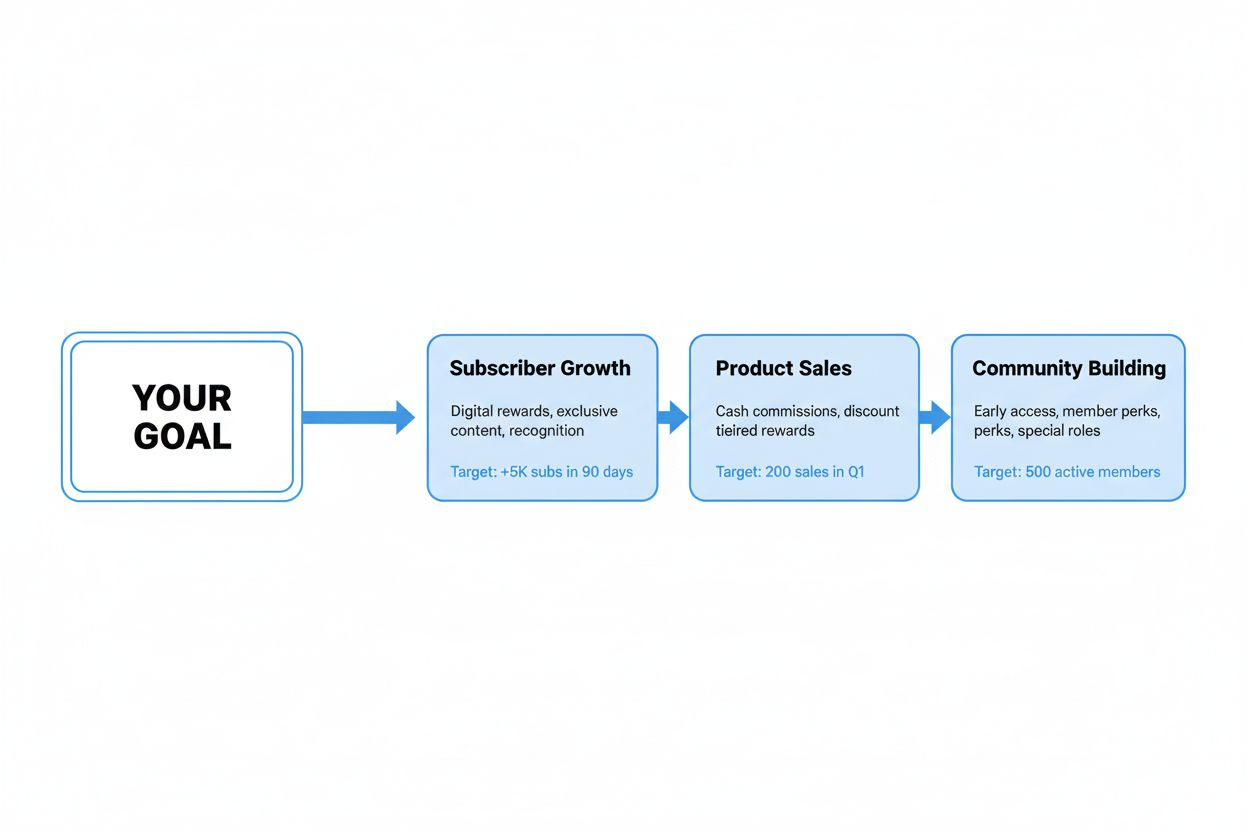
Write down a specific target. "Get more subscribers" is vague. "Add 5,000 new subscribers in 90 days through referrals" gives you something measurable. If you are promoting a product, your goal might be "Generate 200 sales through viewer referrals in the next quarter."
Your goal also shapes your budget. A program aimed at subscriber growth might offer digital rewards like exclusive content. A program focused on product sales can offer cash or percentage-based commissions because each referral has direct revenue attached.
Identify Your Target Audience Within Your Viewership
Not every viewer will participate in your referral program. You need to identify which segment of your audience is most likely to share your content or products with others.
Look at your YouTube Analytics. Who are your most engaged viewers? Check metrics like:
- Average view duration (people who watch most of your videos)
- Comment frequency (viewers who regularly engage)
- Repeat viewers (those who come back to your channel)
- Traffic sources (viewers who already share your content on social media)
These engaged viewers are your referral program candidates. They already like your content enough to watch regularly. They are more likely to recommend you to friends.
Consider creating viewer personas. For example, if you run a tech review channel, you might have:
- Tech enthusiasts who watch every review and comment frequently
- Casual viewers researching a specific purchase
- Industry professionals who use your videos for work
The tech enthusiasts are your referral targets. They have the motivation and audience reach to share your content effectively.
ReferralHero emphasizes identifying your target audience as a critical step. For YouTubers, this means understanding not just who watches, but who actively participates in your community.
Choose Incentives That Match Your Audience and Goals
Your incentive structure makes or breaks your referral program. According to ReferralHero, premium rewards ($50+ value) generate 3x more immediate participation than token rewards ($10).
For YouTubers, incentives fall into several categories:
Digital rewards work well for channels focused on content:
- Exclusive videos or extended cuts
- Behind-the-scenes content
- Early access to new videos
- Private Discord or community access
- One-on-one video calls or Q&A sessions
- Custom shoutouts in videos
Monetary rewards work for product-focused channels:
- Cash payments per successful referral
- Percentage commissions on sales
- Gift cards to relevant stores
- Free products or merchandise
Recognition rewards appeal to community-oriented viewers:
- Featured in a video
- Name in video credits
- Special badge or role in your community
- Leaderboard placement
Voucherify notes that double-sided incentives (rewarding both referrer and friend) convert better than one-way deals. For YouTubers, this might mean: "Refer a friend to my course. You get a $20 credit, they get 20% off their first purchase."
Match your incentive to your goal. If you want subscriber growth, offer content-based rewards. If you are driving product sales, offer cash or discounts. If you are building community, offer recognition and access.
Consider tiered rewards to encourage multiple referrals:
- 1 referral: Exclusive video
- 5 referrals: Private community access
- 10 referrals: One-on-one call
- 25 referrals: Featured in a video + $100 gift card
Set Clear Program Rules and Requirements
Ambiguous rules create confusion and disputes. Define exactly what counts as a successful referral and what participants need to do.
Specify these elements:
What qualifies as a referral?
- A new subscriber who came through a specific link
- A purchase made using a referral code
- A sign-up for your email list or course
- A certain number of video views from shared links
What actions must the referrer take?
- Share a unique link in their social media
- Use a specific referral code when promoting
- Have the referred person mention their name during sign-up
What actions must the referred person take?
- Subscribe and watch at least one full video
- Make a purchase within 30 days
- Remain subscribed for a minimum period
- Use the referral code at checkout
When do rewards get distributed?
- Immediately upon successful referral
- Monthly batches
- After a verification period
- When a threshold is reached (minimum 5 referrals)
Are there any restrictions?
- One reward per unique person referred
- Referrers cannot refer themselves with alternate accounts
- Referrals must be new to your channel or product
- Geographic limitations if applicable
Write these rules in plain language and make them easily accessible. Create a simple document or webpage that explains everything. Link to it in your video descriptions and pin it in your community tab.
Choose Your Tracking Method
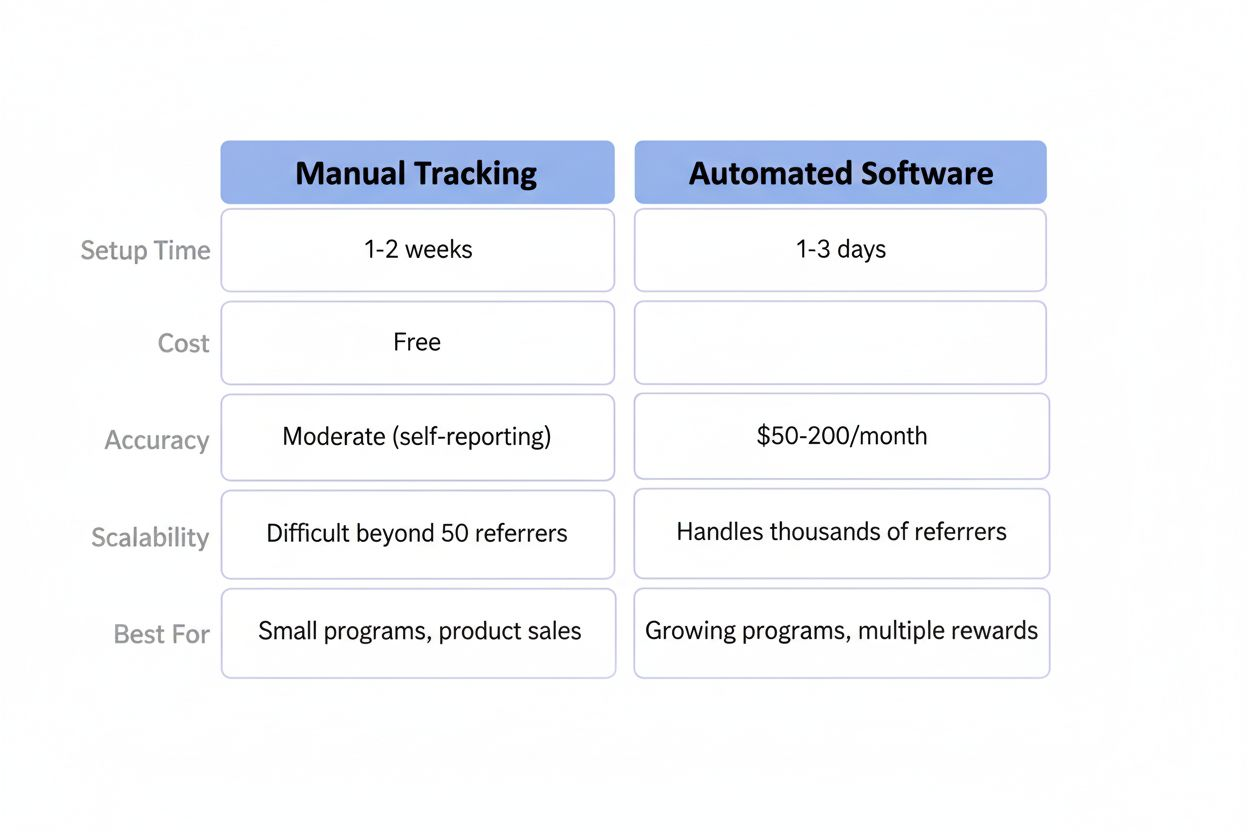
You need a way to track who referred whom. According to ReferralHero, manual tracking adds 1-2 weeks to setup and creates ongoing administrative burden, while software cuts setup time in half.
Manual tracking options:
Use unique discount codes. Assign each participant a custom code (like JOHN10 or SARAH15). When someone uses that code, you know who referred them. This works for product sales but not for subscriber growth.
Use custom URLs with UTM parameters. Create links like youtube.com/yourchannel?ref=john for each referrer. Check your analytics to see traffic from each link. This requires spreadsheet management and regular checking.
Ask new subscribers or customers how they found you. Include a field in your sign-up form or send a welcome email asking for the referrer's name. This relies on people remembering and reporting accurately.
Software tracking options:
Referral program platforms like ReferralHero, Viral Loops, or GrowSurf automate tracking. They generate unique links, track conversions, and manage reward distribution. Most charge monthly fees starting around $50-200 depending on features and volume.
Affiliate marketing platforms like Impact, ShareASale, or Refersion work well if you are promoting products. They handle link generation, sales tracking, and commission payments. These typically take a percentage of sales or charge monthly fees.
YouTube's built-in features provide basic tracking. According to Ambassador, YouTube is owned by Google, making it easier to rank videos on the first page compared to other video platforms. Use YouTube Analytics to track traffic sources and see which external links drive the most views or subscribers.
For most YouTubers starting out, a combination works best: use unique discount codes for product referrals and UTM-tagged links for content referrals. As your program grows, invest in dedicated software.
Create Your Referral Materials and Links
Once you have your tracking method, create the assets your referrers will use.
Generate unique referral links or codes. If using software, it will create these automatically. If doing it manually, create a spreadsheet with each participant's name and their assigned code or link.
Design graphics for social sharing. Create simple images or short video clips that referrers can post on Instagram, Twitter, or Facebook. Include your channel name, a brief description of what you offer, and space for them to add their referral link.
Write sample messages. Give your referrers templates they can customize. For example:
"I have been watching [Your Channel] for months and their videos on [topic] completely changed how I approach [subject]. If you are interested in [topic], check them out: [referral link]"
Make these templates sound natural, not like ads. According to Voucherify, a referral program only works if it's easy to join—think one-click invites, mobile-friendly flows, and instant rewards.
Create a landing page or video explaining the program. This is where you send potential referrers to learn about the program and sign up. Include:
- What the program offers (incentives)
- How it works (steps to participate)
- Program rules
- Sign-up form or link
- FAQ section
If you have a website, create a dedicated page. If not, use a Google Doc with view-only access, or create a simple page using free tools like Carrd or Linktree.
Prepare your reward delivery system. How will you actually give people their rewards? Set up:
- A private YouTube playlist for exclusive content
- A Patreon or Discord for community access
- A PayPal or Venmo account for cash rewards
- A spreadsheet to track who earned what and when it was delivered
Promote Your Referral Program Through Your Videos
You have built the program. Now you need to tell people about it. For YouTubers, your videos are your primary promotional channel.
Announce the program in a dedicated video. Create a video explaining what the program is, why you are launching it, and how viewers can participate. Walk through the sign-up process on screen. Show examples of the rewards. Make it clear and simple.
According to Authority Hacker, 52% of customers are more likely to purchase a product featured in a YouTube product review video. The same principle applies to referral programs: showing viewers exactly how it works increases participation.
Mention the program in your regular videos. Add a 15-30 second segment at the end of your videos reminding viewers about the referral program. Keep it brief and natural. For example:
"Before you go, quick reminder: if you know someone who would enjoy this content, I have a referral program where you can earn [reward] for sharing the channel. Link is in the description."
Use end screens strategically. According to Authority Hacker, YouTubers can add up to 5 end cards per video, providing multiple placement opportunities for referral or affiliate links. Use one end card to link to your referral program landing page or sign-up video.
Optimize your video descriptions. Ambassador notes that optimizing video titles and descriptions with targeted keywords helps reach audiences most likely to participate in a referral program.
Include a referral program section in every video description:
━━━━━━━━━━━━━━
JOIN MY REFERRAL PROGRAM
Share this channel and earn [reward]. Learn more: [link]
━━━━━━━━━━━━━━
Place this section high in the description, ideally in the first three lines that show before "Show more."
Pin a comment about the program. On videos that perform well or attract engaged viewers, pin a comment explaining the referral program and linking to sign-up information.
Create a community post. Use YouTube's Community tab to post about the program. Share success stories from early participants. Post leaderboards showing top referrers. Keep the program visible.

Promote Beyond YouTube
While YouTube is your main platform, promoting your referral program on other channels increases participation.
Email your list. If you have an email newsletter, announce the program there. Email subscribers are often your most engaged audience. Send a dedicated email explaining the program, then include a reminder in your regular newsletters.
Share on social media. Post about the program on Instagram, Twitter, Facebook, or TikTok. Create short-form video content explaining how it works. According to Authority Hacker, 36.9% of affiliate marketers use YouTube as a platform, but cross-promotion on other platforms amplifies reach.
Add it to your website or blog. If you have a website, create a prominent link to your referral program in your navigation menu or sidebar. Write a blog post explaining the program in detail.
Mention it in podcasts or collaborations. If you appear on other creators' channels or podcasts, mention that you have a referral program. This can attract their audience members who might want to participate.
Use your existing community spaces. If you have a Discord server, Patreon, or Facebook group, announce the program there. Your community members are already invested in your content and more likely to refer others.
Track Performance and Adjust
Once your program launches, monitor how it performs against your goals.
Check these metrics weekly:
- Number of people who signed up to be referrers
- Number of successful referrals generated
- Conversion rate (referrals divided by referrers)
- Cost per acquisition (total rewards paid divided by new subscribers or customers)
- Which referrers are most successful
- Which promotional channels drive the most sign-ups
If your goal was 5,000 new subscribers in 90 days and you are only at 500 after the first month, something needs to change.
Common problems and solutions:
Low sign-ups to become referrers: Your incentives might not be compelling enough, or the sign-up process is too complicated. Simplify the process or increase reward value.
Referrers sign up but do not share: They might not know how to promote effectively. Provide better templates, graphics, and examples. Create a tutorial video showing exactly how to share.
Referrals do not convert: The people being referred might not find your content relevant. This could mean your referrers are sharing with the wrong audience. Provide guidance on who makes a good referral.
High cost per acquisition: You are paying too much in rewards relative to the value of each new subscriber or customer. Adjust your reward structure or focus on higher-value conversions.
According to Voucherify, referral marketing generates 3 to 5 times higher conversion rates than any other marketing channel. If your program is not performing at that level, identify the bottleneck and fix it.
Test different approaches. Try A/B testing your incentives: offer one group exclusive content and another group cash rewards. See which converts better. Experiment with different call-to-action phrases in your videos. Change the placement of your referral program link in descriptions.
Scale What Works
Once you have a referral program that generates consistent results, look for ways to scale it.
Automate reward distribution. If you are manually sending rewards, this becomes unsustainable as your program grows. Invest in software that automatically delivers digital rewards or integrates with payment systems for cash rewards.
Create a tiered structure. Reward your top referrers with higher-value incentives. This motivates them to keep referring and creates a sense of achievement. For example:
- Bronze (1-4 referrals): Exclusive video
- Silver (5-9 referrals): Private community access
- Gold (10-24 referrals): Monthly group call
- Platinum (25+ referrals): One-on-one consultation + cash bonus
Recruit your top referrers as ambassadors. Identify your most successful referrers and offer them a more formal partnership. Give them higher commissions, exclusive perks, or co-creation opportunities. Feature them in your content.
Expand to affiliate partnerships. If your referral program focuses on product sales, consider joining formal affiliate networks. This gives you access to more promotional tools and potentially higher commissions.
Document and share success stories. Create videos featuring your top referrers. Interview them about why they promote your channel and what rewards they have earned. This social proof encourages others to participate.
Ambassador emphasizes that optimizing YouTube for a customer referral program gives a great ROI by promoting new brand ambassadors. Your most successful referrers become extensions of your marketing team.
Common Mistakes to Avoid
Making the program too complicated. If people need to read a 10-page document to understand how to participate, they will not participate. Keep rules simple and sign-up easy.
Offering rewards that do not match your audience. A gaming channel offering cooking equipment as a reward will not motivate referrals. Know what your audience values.
Forgetting to follow up with referrers. Send regular updates. Let people know how many referrals they have generated. Remind them about the program. Celebrate milestones.
Not delivering rewards promptly. If someone earns a reward and waits weeks to receive it, they will lose motivation to continue referring. Set up systems for quick reward delivery.
Ignoring fraud. Some people will try to game the system with fake accounts or self-referrals. Have detection methods in place and enforce your rules consistently.
Setting unrealistic expectations. Do not promise that everyone will earn hundreds of dollars or thousands of subscribers. Be honest about what typical participants can expect.
Failing to test before launching. Run your program with a small group of trusted community members first. Identify problems before opening it to everyone.
Building Long-Term Referral Relationships
A successful referral program is not a one-time campaign. It becomes part of how you grow your channel or business over time.
Keep your program fresh by:
- Rotating incentives seasonally
- Running limited-time bonus reward periods
- Highlighting different referrers each month
- Adding new reward tiers as your channel grows
- Soliciting feedback from participants and implementing improvements
Remember that your referrers are advocates for your brand. Treat them well. Recognize their contributions publicly. Give them insider access to your content plans or upcoming projects. Make them feel like valued partners, not just promotional tools.
The best referral programs create a cycle: great content attracts engaged viewers, engaged viewers become referrers, referrers bring in more engaged viewers who eventually become referrers themselves. Build that cycle, and your channel grows sustainably through the power of your community.