How Educational YouTubers Can Attract Sponsors
Why Educational Channels Are Actually in a Strong Position
Educational YouTube channels often underestimate their own appeal to sponsors. Creators in this space tend to compare themselves to entertainment channels with millions of subscribers and assume they cannot compete. That comparison misses the point entirely.
Sponsors do not just buy eyeballs. They buy attention from a specific type of person. An audience that chooses to spend 20 minutes learning about astrophysics, personal finance, or historical events is demonstrably different from one that passively watches reaction videos. That difference has real commercial value, and the right sponsors know it.
This article is for educational creators who want to build a sustainable sponsorship strategy, whether they are approaching their first deal or trying to move beyond random inbound offers to something more deliberate.
Understanding What Sponsors Are Actually Buying
Before pitching anyone, it helps to understand how sponsors think about YouTube placements.
A sponsor is not doing charity. They are making a calculated bet that your audience will take an action, usually buying a product, signing up for a service, or at minimum becoming aware of a brand. Every decision they make flows from that goal.
Audience Quality Over Audience Size
For educational channels, the most important thing to communicate to a potential sponsor is not your subscriber count. It is your audience's characteristics.
A channel teaching programming to working professionals has an audience with disposable income, technical literacy, and a demonstrated willingness to invest in their own skills. That profile is extremely attractive to sponsors selling developer tools, online courses, productivity software, or financial products. A channel with 50,000 subscribers in that niche can command better rates and more interest than a general entertainment channel with 500,000 subscribers.
The metrics that matter most to sponsors:
- Watch time and average view duration, which measure the total time users spend watching your video and show how engaged your audience is
- Audience demographics (age, location, income level if available)
- Click-through rates on previous sponsorships
- Comments and community engagement
If you have run sponsored segments before, track the performance data. Conversion rates and click data from past deals are among the most persuasive things you can show a new sponsor.
The Alignment Problem
Sponsors that perform well on educational channels share one characteristic: they make sense to the audience. A note-taking app on a study skills channel, a VPN on a cybersecurity channel, a language learning platform on a linguistics channel. The product fits the context, so the recommendation feels natural rather than jarring.
Misaligned sponsors create two problems. First, they convert poorly, which means the sponsor does not renew. Second, they erode audience trust, which damages your channel long-term. Turning down a poorly aligned sponsor is often the better business decision, even when the short-term money is tempting.
Building the Foundation Before You Pitch
Most creators approach sponsorships backwards. They reach out to companies before they have done the internal work that makes those conversations productive.
Know Your Numbers
Before contacting any sponsor, pull together a clear picture of your channel's performance. This does not require a formal media kit (though that helps), but you need to know:
- Average views per video over the last 90 days
- Average watch time percentage
- Subscriber count and growth rate
- Top audience demographics from YouTube Analytics
- Your niche and the type of content you produce
These numbers tell a sponsor whether you are a serious creator or someone fishing for free products.
Create a Media Kit
A media kit is a one or two-page document (or a clean PDF) that presents your channel professionally. Think of it as a resume for your channel. It should include your channel overview and niche, key performance metrics, audience demographics, examples of past sponsored content if you have any, your rates, and your contact information.
Keep it visual and specific. A sponsor reviewing dozens of pitches will spend about 30 seconds on yours before deciding whether to read further. Lead with the numbers that matter most for your niche.
Set Your Rates
Knowing what to charge is one of the most common pain points for new creators. Rates in the YouTube sponsorship market are typically discussed in terms of CPM (cost per thousand views), but educational channels often negotiate flat fees per video instead.
YouTube sponsorship CPMs frequently fall between $15 and $30, depending on niche, audience geography, and creator demand, though the overall range is wider and depends on the type of integration. A brief mention at the end of a video commands less than a mid-roll dedicated segment. A dedicated video built entirely around a product commands the most. Educational channels in high-value niches (finance, technology, professional development) tend to sit at the higher end of the market because their audiences have purchasing power.
Start by researching what creators of similar size in your niche charge. Creator communities on Reddit, Discord, and forums like Creator Wizard's newsletter share rate information openly. Do not guess blindly.
The Four Main Types of Sponsorships
Sponsorship structures vary more than most creators realize. Understanding the options lets you propose arrangements that fit both your content and the sponsor's goals.
Flat-fee deals are the most common. The sponsor pays a fixed amount for a specific integration in one or more videos. Simple, predictable, and easy to negotiate.
Performance-based deals tie your payment to results, usually tracked through a unique promo code or affiliate link. These work well when you are confident in your audience's conversion behavior, but they shift risk onto you. A flat fee is almost always preferable unless the performance bonuses are substantial.
Product gifting is technically a sponsorship but rarely worth treating as one. A company sends you a product in exchange for coverage, with no cash payment. This can make sense early on to build a portfolio of sponsored content, but it should not be a long-term strategy. Your time has value.
Long-term partnerships are the goal most creators should be working toward. A sponsor who commits to multiple videos over several months provides predictable income and usually pays better per video than one-off deals, because they are buying consistency and deeper audience familiarity with their brand.
Where to Find Sponsors
There are two ways sponsors arrive: they come to you, or you go to them. Both matter, and the mix shifts as your channel grows.
Inbound Sponsorships
Inbound interest usually starts once a channel reaches somewhere in the range of 10,000 to 50,000 subscribers, though niche matters enormously. A highly specialized channel in a valuable category might attract inbound interest much earlier.
To make inbound easier, add a business email address to your YouTube channel's About page. Many sponsorship inquiries go nowhere simply because the creator is not reachable. A dedicated email (not your personal one) signals professionalism and makes it easy for brands to contact you.
Outbound Pitching
Waiting for sponsors to find you is passive and slow. Outreach is faster and gives you control over which brands you work with.
The most effective approach is to identify companies that already advertise on YouTube, specifically on channels similar to yours. If a brand is sponsoring other educational creators in your space, they have already decided that YouTube is a good channel for them and that your type of audience is worth reaching. Your pitch is not asking them to take a leap of faith. You are asking them to add one more channel to something they are already doing.
To find these companies, watch videos from channels in your niche and note who sponsors them. Visit those companies' websites and look for a "partnerships," "marketing," or "advertising" contact. If none exists, a direct email to their marketing team works. LinkedIn is useful for finding the right person at smaller companies.
Sponsorship Marketplaces and Agencies
Several platforms exist specifically to connect creators with sponsors. Grapevine, Sponsorkit, Creator.co, and similar marketplaces let brands browse creators by niche and size. These are worth joining, particularly for creators who are still building their outreach confidence, though the rates on marketplace deals tend to be lower than what you can negotiate directly.
Creator agencies and management companies handle sponsorship negotiations on behalf of creators, typically taking a percentage of each deal. This can be worth it once your channel generates enough sponsorship revenue that the time savings justify the cut.
Writing a Pitch That Gets Responses
Most cold pitches fail because they are generic. A brand manager receiving 50 pitches a week can spot a copy-paste template immediately.
A good pitch is short, specific, and makes the value obvious without overselling. Here is the structure that works:
Start with a single sentence about who you are and what your channel does. Then explain why your audience is a good fit for their product specifically. Reference something real about their product or their existing marketing to show you have done basic research. State what you are proposing (one video, a three-month partnership, etc.) and your rate. Close with an invitation to discuss further.
The whole thing should fit in four or five short paragraphs. Sponsors are busy. A pitch that respects their time signals that you understand how business relationships work.
One thing to avoid: do not open with your subscriber count as if it is the most important fact about you. Lead with your audience and the fit. The numbers belong in your media kit, which you attach or link separately.
Negotiating and Protecting Yourself
Once a sponsor expresses interest, the conversation moves to terms. A few things to know before you get there.
Always Use a Contract
Every sponsorship deal, regardless of size, should be documented in writing. A contract does not need to be complex, but it should specify the deliverable (what you will produce and when), the payment amount and timeline, revision and approval processes, exclusivity terms if any, and what happens if either party fails to deliver.
Sponsors who resist any written agreement are a red flag. Legitimate brands expect contracts.
Exclusivity Clauses
Some sponsors will ask for exclusivity, meaning you agree not to work with their direct competitors for a period of time. This is reasonable, but it has a cost. If a sponsor wants exclusivity, they should pay a premium for it. A blanket exclusivity clause that covers a broad category (say, "all software products") for six months could prevent you from taking other deals. Read these carefully and push back on terms that are too broad.
Payment Terms
Net-30 payment terms are the default used by most businesses, meaning payment within 30 days of the video going live. Some larger companies operate on Net-60 or even Net-90, which means you might wait three months to get paid for work you have already done. Know this going in and factor it into your cash flow planning. Asking for a deposit (typically 50% upfront) is common and acceptable, especially for new sponsor relationships.
Categories of Companies That Work Well for Educational Channels
Rather than listing specific companies, it is more useful to think in categories, because the right fit depends entirely on your niche.
Software and productivity tools are among the most active sponsors on educational YouTube. Note-taking apps, project management tools, coding platforms, and writing software all target audiences that overlap heavily with educational content viewers.
Online learning platforms are an obvious fit. Platforms that sell courses or skill-building subscriptions actively seek educational creators because the audience alignment is direct.
Financial products (budgeting apps, investment platforms, credit cards) work well on channels covering personal finance, economics, or business topics. These deals often pay well because the financial services industry has high customer lifetime value.
VPNs and cybersecurity tools have become ubiquitous across YouTube broadly, but they perform particularly well on tech and privacy-focused educational channels where the audience genuinely understands the product.
Books and publishing is underused. Publishers regularly sponsor creators to promote new releases, particularly in non-fiction categories. If your channel covers history, science, psychology, or business, reaching out to publishers directly can open deals that feel completely natural to your audience.
Hardware and equipment sponsors (microphones, cameras, ergonomic gear, lab equipment) make sense for channels where the creator's setup is visible and relevant.
Building Long-Term Sponsor Relationships
The most valuable sponsorships are not one-off deals. They are ongoing relationships where a brand becomes a regular part of your channel.
Long-term partners benefit from repeated exposure to your audience. Nielsen found that awareness and consideration each rising by one point drives a 1% increase in future sales, which is why sponsors who appear consistently outperform those who show up once. A sponsor who appears in ten of your videos over six months will almost always see better results than one who appears once.
To turn a one-off deal into a long-term relationship, deliver excellent work the first time. Hit your deadlines, produce a segment that genuinely represents the product well, and share performance data after the video goes live. If you have a promo code, report how many times it was used. Sponsors who see that you take the relationship seriously and that your audience actually responds will come back.
After a successful campaign, reach out proactively to propose a renewal before they move on to the next creator. Do not wait for them to come to you.
What to Do When You Are Just Starting Out
If your channel is small (under 10,000 subscribers) and you have no sponsorship history, the path is still open, just narrower.
Focus on smaller companies and startups that have smaller marketing budgets and are more willing to take a chance on emerging creators. Local businesses, indie software developers, and small e-commerce brands are all possibilities. The deals will be smaller, but they give you the experience and the portfolio entries you need.
Affiliate programs are another entry point. Many companies (Amazon, software platforms, course marketplaces) have affiliate programs that pay a commission on sales you drive. This is not a sponsorship in the traditional sense, but it generates revenue and gives you data on how your audience responds to recommendations, which is useful when pitching direct deals later.
Be honest about where you are. A pitch that says "I have 8,000 subscribers in a focused niche and I am looking for my first formal partnership" is more credible than one that oversells a small channel as if it were something bigger. Brands that work with emerging creators know what they are getting. Transparency builds trust from the start.
Turning Sponsorships Into a Real Revenue Stream
Sponsorships work best as part of a broader revenue strategy rather than the only one. Channels that depend entirely on sponsorships are vulnerable to market shifts, brand budget cuts, and the unpredictability of inbound interest.
The creators who build durable businesses around educational content typically combine sponsorships with other income streams: channel memberships, merchandise, their own courses or digital products, Patreon or similar platforms, or consulting work that flows from their channel's reputation.
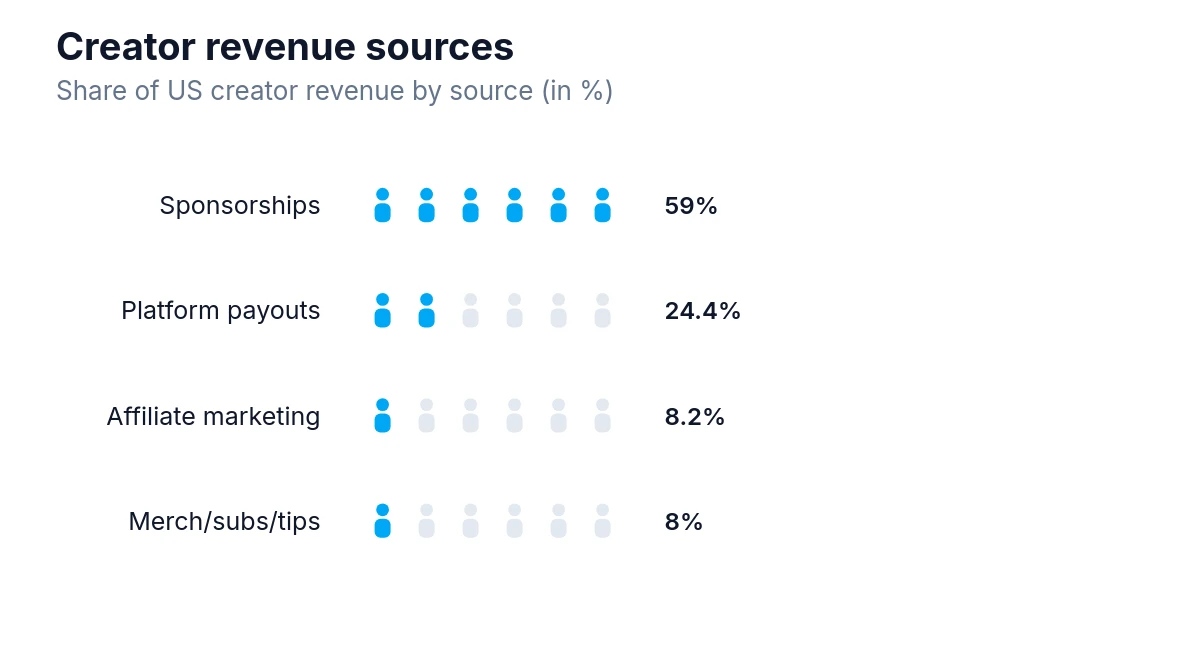
Sponsorships account for 59% of US creator revenue, substantially more than any other source.
Sponsorships accelerate that process by providing consistent cash flow that funds better production, more content, and faster growth. The goal is not just to land sponsors. It is to build a channel valuable enough that the right sponsors want to be part of it for the long term.
That starts with knowing your audience, presenting yourself professionally, and being selective enough about partnerships that your recommendations still mean something when you make them.