The Role of Influencer Marketing in Beauty Sponsorships

How a Selfie Became a Sales Strategy
A makeup artist films herself doing a full-face tutorial in her bathroom. She mentions the foundation she is using, drops a discount code, and posts it before breakfast. By the time she checks her phone at lunch, the product has sold out in three shades. No TV commercial, no magazine spread, no celebrity endorsement with a seven-figure price tag. Just a person, a ring light, and an audience that trusts her.
This is the engine driving beauty sponsorships today. The relationship between cosmetics brands and social media creators has reshaped how beauty products are discovered, evaluated, and purchased. Understanding how this relationship works, why it is so effective in the beauty category specifically, and where it is heading requires looking at the mechanics beneath the surface.
Why Beauty and Influencer Marketing Are a Natural Fit
Not every product category translates well to influencer marketing. Selling industrial software through a YouTube creator is a stretch. Selling mascara is not.
Beauty is a category built on demonstration. Consumers want to see a product in action before they buy it. They want to know how a foundation looks on real skin, how long an eyeshadow lasts through a workday, whether a lip gloss is sticky or comfortable. Traditional advertising could show a model wearing the product, but it could not answer those questions honestly. Influencer content can, or at least creates a strong impression that it does.
There is also the trust factor. Beauty consumers have historically relied on word of mouth. A friend recommending a moisturizer carries more weight than a billboard. Influencers occupy a strange middle ground between friend and celebrity. Their audiences follow them closely, know their preferences, and feel a sense of familiarity that brands cannot manufacture through conventional advertising.
The result is a category where influencer marketing does not just supplement traditional advertising. In many cases, it has replaced it entirely.
The Different Tiers of Beauty Influencers
Not all beauty sponsorships look the same, because not all influencers serve the same purpose. Brands have learned to think in tiers, each with distinct advantages and trade-offs.
Mega-Influencers and Celebrities
These are creators with millions of followers. Partnering with them delivers reach at scale. A single post from a creator with ten million followers can expose a product to an audience that rivals a national television campaign. The cost reflects this. Sponsorship fees at this level can run into six figures for a single piece of content.
The downside is engagement. Massive audiences tend to be passive. Followers at this scale are often there for entertainment rather than purchasing advice. Conversion rates, meaning the percentage of viewers who actually buy the product, are typically lower than with smaller creators.
Luxury and prestige beauty brands tend to favor this tier. For them, reach and association matter as much as direct sales. Being seen in the right hands carries brand equity.
Mid-Tier Influencers
Creators with audiences in the hundreds of thousands occupy a productive middle ground. They have enough reach to move product meaningfully, but their audiences are engaged enough to act on recommendations. Many mid-tier beauty influencers have built reputations around specific niches: drugstore dupes, skincare for mature skin, makeup for darker complexions. That specificity makes their endorsements more credible within their communities.
Brands often build ongoing ambassador relationships at this tier rather than one-off posts. A creator who mentions the same brand across six months of content is more persuasive than one who posts a single sponsored video and never mentions the product again.
Micro and Nano Influencers
The smallest tier, creators with audiences ranging from a few thousand to around 100,000, has become one of the most interesting areas in beauty sponsorships. Micro-influencer engagement rates average 21.42% compared with 2.15% for macro-influencers, a gap large enough to explain why brands are rethinking where they put their money. Followers feel like they personally know the creator. Recommendations land more like advice from a friend than an advertisement.
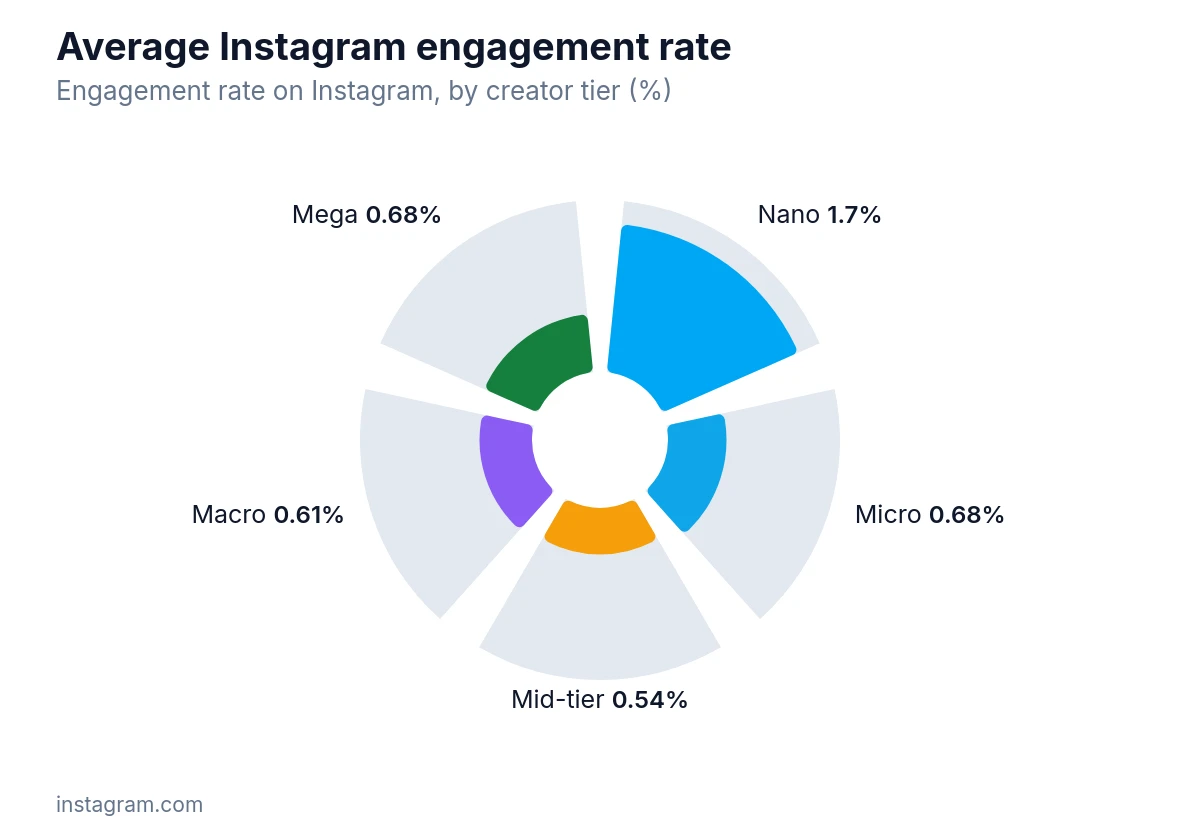
Nano creators have the highest average Instagram engagement at 1.73%, while micro creators (0.68%) match mega creators (0.68%) and both outpace mid‑tier (0.54%) and macro (0.61%) creators.
Brands working with micro-influencers typically run campaigns involving dozens or even hundreds of creators simultaneously. The logistics are more complex, but the cumulative effect can outperform a single mega-influencer deal at a fraction of the cost.
What a Beauty Sponsorship Actually Looks Like
The mechanics of a beauty sponsorship vary considerably depending on the brand, the creator, and the platform. But most deals share a common structure.
A brand approaches a creator (or their management) with a brief. The brief outlines the product, key messages the brand wants communicated, any claims that must or must not be made, and deliverables: how many posts, on which platforms, within what timeframe. The creator produces content, sometimes with approval required before posting, sometimes with full creative freedom. The brand pays a fee, provides free product, or both.
Disclosure requirements exist in most markets. In the United States, the FTC's guidance on influencer disclosures is clear: creators must make their relationship to a brand obvious to an average viewer. Similar rules apply in the UK, Australia, and across the European Union. In practice, compliance is uneven. Some creators use prominent "#ad" labels. Others bury disclosures in fine print or use vague language like "#collab" that many viewers do not recognize as indicating a paid relationship.
Affiliate programs add another layer. Many beauty brands give influencers unique discount codes or trackable links. When a follower uses the code, the creator earns a commission on the sale. This aligns incentives: creators are motivated to actually drive purchases, not just post and move on. It also gives brands cleaner data on which creators are actually converting their audiences.
The Platforms Shaping Beauty Sponsorships
Platform choice shapes everything about how beauty sponsorships function.
YouTube
Long-form video remains the gold standard for detailed beauty content. A ten-minute skincare routine or a full makeup tutorial gives a creator time to demonstrate a product thoroughly, address common concerns, and build a genuine case for why something works. YouTube content also has a long shelf life. A well-ranked tutorial can drive traffic and sales for years after it was posted: content marketers have found that long-tail traffic from evergreen articles accounts for 40-60 percent of monthly pageviews, a dynamic that applies equally to durable video content.
Instagram built the visual language of beauty influencing. Grid posts established aesthetic credibility. Stories created a space for more casual, off-the-cuff product mentions. Reels brought short-form video into the platform and shifted the content style toward faster, more entertaining formats. Instagram remains important for brand image and product launches, though its role has evolved as other platforms have grown.
TikTok
TikTok has arguably done more to change beauty sponsorships in the past few years than any other single development. The platform's algorithm surfaces content based on engagement rather than follower count, which means a creator with 5,000 followers can reach millions if their video connects. This has democratized beauty influence and created a constant stream of viral product moments.
The "TikTok made me buy it" phenomenon is real and well-documented in retail. Products that go viral on the platform sell out within hours. Caudalie's Glow Edit skincare kit, for instance, demonstrated what is possible: Shoppable LIVE sales performance drove a 170% sales uplift over five weeks, with the kit selling out in just one hour. Brands have learned to seed products with TikTok creators specifically to chase this effect, though genuine virality cannot be reliably manufactured.
Emerging Platforms
Pinterest drives significant beauty discovery, particularly for tutorials and product research, even if it lacks the creator economy infrastructure of the major platforms. Podcasts have become an underused channel for beauty brands targeting older demographics who consume audio content during commutes or workouts.
Authenticity, Trust, and the Problem of Oversaturation
The effectiveness of influencer marketing in beauty depends almost entirely on perceived authenticity. When followers believe a creator genuinely uses and loves a product, they are receptive to the recommendation. When they sense a creator is promoting anything that pays, they tune out.
This creates a real tension. As influencer marketing has grown, audiences have become more skeptical. Heavy sponsorship loads, where a creator posts paid content multiple times per week across competing brands, erode credibility. Followers notice when a creator who spent months raving about one foundation suddenly switches to a competitor's product the moment a new deal is signed.
The most commercially durable beauty influencers have learned to manage this carefully. They limit the number of sponsorships they take. They turn down deals for products they would not actually use. They maintain a visible ratio of organic content to sponsored content so their recommendations still carry weight. This is not just ethics. It is business sense. A creator who burns through audience trust has nothing left to sell.
Brands have also learned to be more selective. Early influencer marketing was often a numbers game: reach as many creators as possible and see what sticks. More sophisticated brands now invest in fewer, deeper relationships with creators whose audiences genuinely align with the product and whose content style fits the brand's identity.
Measuring Whether It Actually Works
Measuring the return on influencer marketing has always been difficult, and beauty sponsorships are no exception.
Vanity metrics, views, likes, shares, are easy to track but often misleading. A video can rack up millions of views without selling a single unit. Brands have shifted toward harder metrics: affiliate link clicks, discount code redemptions, direct traffic to product pages during and after a campaign, and sales lift in the period following a sponsorship.
Brand awareness is harder to quantify but still valuable. A new beauty brand that secures coverage from several respected creators gains credibility that would take years to build through conventional advertising. That credibility has real commercial value even if it does not show up immediately in sales data.
Some brands run controlled tests, seeding product with influencers in some markets but not others, then comparing sales performance. This approach is more rigorous but requires scale and patience that not every brand can manage.
The honest answer is that measurement remains imperfect. Brands continue to invest heavily in influencer marketing because the qualitative evidence is strong even when the quantitative evidence is incomplete. Brand investment in creator partnerships jumped 171% year-over-year globally, according to CreatorIQ's 2025 State of Creator Marketing Report, which called it the fastest growth in the category's history.
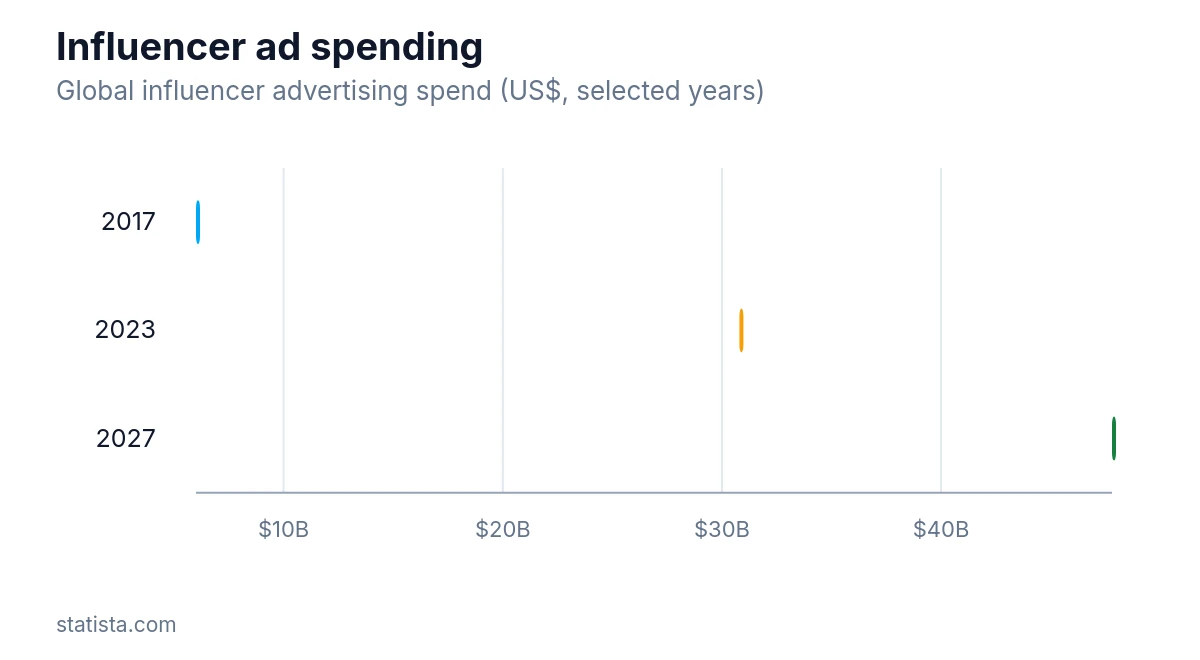
Global influencer ad spending has climbed steadily and is projected to reach $47.8 billion by 2027.
Brand Collaborations and Co-Created Products
The most advanced form of beauty sponsorship goes beyond a creator promoting an existing product. Brands increasingly partner with influencers to create products together.
These collaborations take different forms. Some are limited-edition collections where a creator selects shades, names products, and promotes the launch. Others are deeper partnerships where the creator is involved in formulation and product development. A few have evolved into full equity arrangements where the creator becomes a co-owner of the brand.
The appeal for brands is obvious. A creator who helped build a product has a genuine stake in its success. Their promotion is more credible because it is more authentic. Their audience is primed to buy because they have been part of the development journey through behind-the-scenes content.
The appeal for creators is equally clear. Product collaborations generate revenue beyond a flat sponsorship fee. A successful launch can earn a creator more in a week than a year of standard sponsorship deals. It also elevates their professional profile from promoter to entrepreneur.
Some of the most successful beauty brands in recent years have been built almost entirely on this model, with creators as the face, voice, and sometimes the creative director of the product line.
The Ethics and Ongoing Debates
Beauty influencer marketing operates in a space with genuine ethical complexity.
Skin-altering filters have been a persistent issue. When a creator demonstrates a foundation using a filter that smooths skin texture, the product's actual performance is impossible to evaluate. Several countries have moved toward requiring disclosure when filters are used in beauty advertising, though enforcement is inconsistent.
Diversity and representation have improved but remain uneven. For years, beauty influencer campaigns skewed heavily toward a narrow range of skin tones and types. Brands and creators have faced public pressure to broaden representation, and many have responded. The progress is real, though the industry still has significant gaps.
The relationship between editorial integrity and commercial interest is a permanent tension. Beauty journalists and critics have long navigated this. Influencers face the same challenge with less institutional support and, often, less experience managing the pressure that comes from brands who expect positive coverage in exchange for sponsorship fees.
Where Beauty Sponsorships Are Heading
A few directions are clear.
Artificial intelligence is beginning to affect creator selection. Brands can now analyze audience demographics, engagement patterns, and content sentiment at a scale that was previously impossible. This makes it easier to identify creators whose audiences genuinely match a product's target customer, rather than relying on follower counts and gut instinct.
Short-form video will continue to dominate discovery, but long-form content will remain important for conversion. Consumers who see a product on TikTok often seek out longer reviews before purchasing. Brands that support creators across both formats will capture more of the purchase journey.
Live shopping, already enormous in Asian markets, is growing in Western markets. Beauty is a natural fit for live commerce. China's live-streaming e-commerce market has seen unprecedented growth and now represents a fundamental shift in how retail operates there, giving Western beauty brands a clear template to follow. A creator demonstrating a product in real time, answering questions, and offering a limited-time discount creates urgency that static content cannot match.
The creator-as-entrepreneur model will expand. More influencers will move from promoting brands to building them. This will push established brands to offer more compelling partnership structures to retain creator attention, whether through equity arrangements, deeper creative involvement, or more generous revenue sharing.
The Relationship That Reshaped an Industry
Beauty brands spent decades building awareness through magazines, television, and department store counters. Those channels still exist, but they no longer drive the conversation. The conversation happens in comment sections, in DMs, in the replies to a creator's honest review of a product that did not work as advertised.
Influencer marketing succeeded in beauty because it gave consumers something traditional advertising never could: a credible, human perspective on whether a product is actually worth buying. The brands that understand this, and build genuine relationships with creators who share their values and speak to their customers, will continue to have an advantage. The ones chasing reach numbers and viral moments without that foundation will keep finding that the results are harder to sustain than they look.