How Influencer Marketing Agencies Enhance Sponsorships
The Gap Between Brands and Creators
A brand with a product worth promoting and a creator with an audience worth reaching should be a natural match. In practice, the connection rarely happens cleanly on its own. Brands struggle to identify which creators actually move product versus which ones just accumulate followers. Creators struggle to price their work, draft contracts, and manage the back-and-forth with marketing teams who have never run an influencer campaign before.
Influencer marketing agencies exist in that gap. Their job is not simply to make introductions. They shape the entire structure of a sponsorship, from the initial match through the final performance report, in ways that change what the deal looks like and what it delivers.
What an Influencer Marketing Agency Actually Does
The title "influencer marketing agency" covers a wide range of operations, but the core function is consistent: these firms manage the relationship between brands and creators so that sponsorships produce results rather than just impressions.
Finding the Right Creators
The most visible part of the job is creator selection, and it is harder than it looks. Follower count is almost meaningless as a standalone metric. An account with 800,000 followers in a broad lifestyle category may generate far less purchase intent than a creator with 60,000 followers who speaks specifically to, say, home brewers or competitive cyclists. Research on micro-influencer trust and engagement confirms that followers of smaller, more focused creators show higher engagement levels than followers of higher-tier influencers, and are more likely to act on purchase recommendations.
Agencies build or license databases that go beyond surface metrics. Good influencer evaluation metrics include engagement rates, comments and audience interactions, and past results for other brands, rather than relying on follower counts alone. When a brand needs to reach a specific kind of buyer, a good agency can identify five creators who actually reach that buyer, rather than fifty who claim to.
They also screen for brand safety. A creator's recent content, comment sections, and public history all get reviewed before a deal is proposed. Brands that skip this step sometimes find out too late that their product is now associated with a creator whose values conflict with their own.
Structuring the Deal
Sponsorship deals have more moving parts than most brands expect. Payment terms, exclusivity clauses, content approval rights, usage rights, posting schedules, FTC disclosure requirements, performance guarantees, and kill clauses all need to be addressed before any content goes live.
Agencies bring templates and precedent to these negotiations. They know what a fair rate looks like for a YouTube integration versus a dedicated video, for a single Instagram story versus a month-long campaign. They know which exclusivity terms are reasonable and which are overreaches that will push good creators away. Agencies with influencer agency legal support can write contracts, negotiate rates, meet compliance requirements, and handle other legal aspects that brands managing campaigns in-house often lack the expertise to address.
For creators, having an agency in the room changes the negotiation entirely. Creators who represent themselves often underprice their work, accept unfavorable usage rights without realizing it, or agree to revision cycles that consume far more time than the fee justifies. An agency acts as a buffer and an advocate, which tends to produce deals that both sides actually honor.
Managing the Creative Process
Once a deal is signed, the campaign still has to be executed. This is where many direct brand-to-creator relationships fall apart. Brands send briefs that are either too vague to be useful or so prescriptive that the resulting content sounds nothing like the creator's normal voice. Audiences notice immediately.
Agencies help brands write briefs that communicate the essential message and requirements without scripting every word. They manage revision rounds so that feedback is consolidated and clear rather than arriving in fragments from five different stakeholders. They track deadlines and posting schedules across multiple creators simultaneously, which is genuinely difficult to do without systems built for it.
The goal is content that feels native to the creator's channel. Sponsored content that sounds like an ad gets skipped. Sponsored content that sounds like a natural recommendation from someone the audience already trusts gets watched, shared, and acted on.
Measuring What Happened
After posting, the work continues. Agencies pull performance data, analyze it, and translate it into something a brand's marketing team can actually use. This means going beyond views and likes to look at click-through rates, conversion tracking where it exists, coupon code redemptions, affiliate link performance, and audience sentiment in the comments.
Good agencies also compare performance across creators within the same campaign. If one creator drove ten times the conversions of another with a similar audience size, that is information worth having before the next campaign is planned. Over time, this data builds into a picture of what works for a specific brand, which creators to invest in more heavily, and which content formats produce the best return.
Why Sponsorships Fail Without This Infrastructure
Direct brand-to-creator deals happen all the time, and some of them work well. But the failure modes are predictable.
Brands often pick creators based on name recognition or follower count rather than audience fit. The content goes live, the numbers look fine on the surface, and nothing moves. The brand concludes that influencer marketing does not work for them, when the real problem was the match.
Contracts drafted without experience tend to leave out the clauses that matter most. A creator who posts a week late, or posts content the brand finds objectionable, or uses the brand's footage in their own promotional materials without permission, can create real problems. Without the right contract language, the brand has limited recourse.
Creative friction is common. Brands want control; creators need creative freedom to maintain audience trust. Without someone experienced at managing that tension, the relationship deteriorates. The creator posts something that satisfies the brief technically but performs poorly because it does not fit their channel. Nobody is happy.
And without proper measurement, there is no learning. Each campaign starts from scratch. The same mistakes get repeated.
The Specific Value Agencies Add to Larger Sponsorships
For smaller campaigns, the agency overhead may not be justified. A brand paying a single micro-influencer a few hundred dollars to post about a product probably does not need a full agency structure around that transaction.
The calculus changes significantly for larger sponsorships. When a brand is committing serious budget to a campaign involving multiple creators across different platforms over several months, the agency's role becomes central to whether the investment pays off.
Scale Without Chaos
Running a campaign with fifteen creators simultaneously means fifteen contracts, fifteen briefs, fifteen sets of revisions, fifteen posting schedules, and fifteen performance reports. Agencies have project management systems, dedicated account managers, and workflows built for exactly this. Brands that try to manage this in-house with a marketing coordinator who has other responsibilities usually end up with missed deadlines, inconsistent messaging, and incomplete data.
Platform Expertise
Each platform has its own norms, its own algorithm quirks, and its own creator culture. What works on YouTube does not translate directly to TikTok. What performs on Instagram Reels may not land on a podcast. Agencies that specialize in specific platforms bring knowledge that takes years to develop. They know which content formats are currently getting pushed by the algorithm, which posting times matter, and which types of calls to action actually convert on each platform.
Relationship Capital
Agencies that have worked with a creator before know how they operate. They know if the creator delivers early or late, how they respond to feedback, what their audience responds to, and whether they are reliable partners. This relationship history is genuinely valuable. It reduces the risk of a campaign going sideways because of a creator who seemed great on paper but was difficult to work with in practice.
For creators, the agency relationship matters too. Creators who have an ongoing relationship with an agency get access to opportunities they would not find on their own. Brands approach agencies with briefs before they ever approach individual creators. Being in an agency's network means being considered for campaigns that would otherwise be invisible. That access matters more than most creators realize: creator income distribution is heavily skewed, with only about 4% of creators earning $100,000 or more per year, which means the difference between being in an agency's network and working independently can be significant.
How Agencies Affect the Sponsorship Itself
An agency's involvement does not just change how a campaign is managed. It changes what the sponsorship looks like structurally.
Agencies push brands toward longer-term creator relationships rather than one-off posts. The data consistently shows that audiences respond better to creators who mention a brand multiple times over weeks or months than to a single sponsored post. A creator who uses a product in several videos, references it naturally, and builds it into their content over time generates more trust than one who posts a single obvious ad. Agencies understand this and structure deals accordingly.
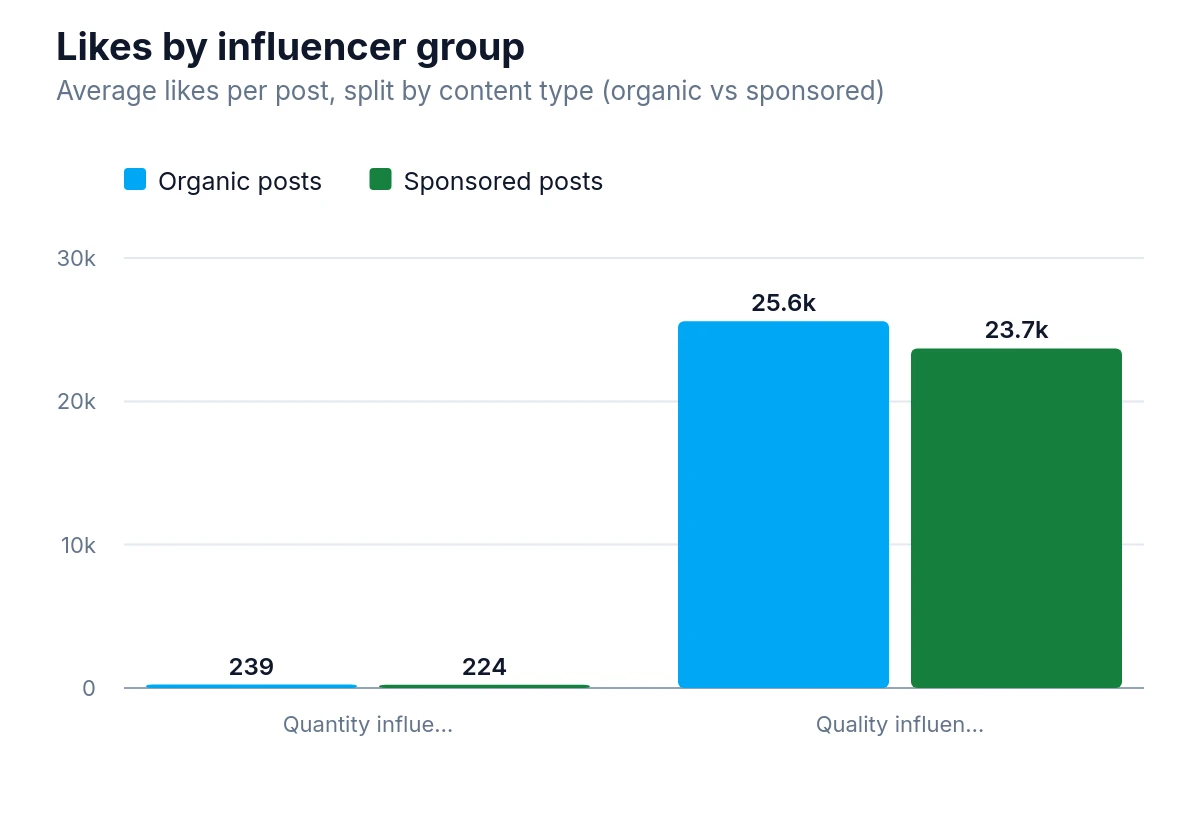
Quality influencers’ organic posts average 25,589 likes, far more than their sponsored posts and much higher than posts by quantity influencers.
They also push for creative integration over interruption. A mid-roll ad read that connects to the creator's actual content performs better than one that is clearly dropped in from a script the brand wrote. Agencies negotiate the space for creators to adapt brand messaging to their own voice, which requires trust from the brand and experience from the agency to manage well.
Exclusivity terms get more careful attention too. A brand that locks a creator into a broad exclusivity clause may prevent that creator from working with adjacent brands, which can damage the creator's income and their relationship with the agency. Agencies negotiate exclusivity that protects the brand's interests without being punitive, which keeps creators willing to work with that brand again.
What Brands Should Look for in an Agency
Not all agencies are equal, and the differences matter.
Some agencies are primarily talent management firms that have added a brand services division. Their loyalty is to the creators, which is not necessarily bad, but it is worth understanding. Others are primarily media buying agencies that have added influencer marketing to their service menu. They may be strong on measurement and weak on creative.
The strongest influencer marketing agencies have deep expertise in specific verticals or platforms, genuine relationships with creators rather than just access to databases, transparent reporting that shows actual performance rather than vanity metrics, and a track record of repeat business from both brands and creators.
Repeat business is the clearest signal. Brands that run one campaign with an agency and never return are telling you something. Brands that have used the same agency for three years are telling you something else.
The Return on Agency Investment
Agencies charge for their services, either as a percentage of the campaign budget, a flat management fee, or some combination. Brands sometimes resist this cost, particularly when they believe they could manage creator relationships directly.
The honest answer is that some brands can. Companies with dedicated influencer marketing staff, existing creator relationships, and internal measurement tools may not need an agency for every campaign. But for brands without that infrastructure, the agency fee is not overhead. It is the cost of not making expensive mistakes.
A poorly matched creator, a contract dispute, a content approval process that drags on until the campaign window closes, or a campaign with no measurement framework are all more expensive than an agency fee. The agency's value is partly in what they do and partly in what they prevent.
For creators, the math is similar. An agency that negotiates better rates, secures longer-term deals, and handles the administrative burden of sponsorship management pays for itself in time saved and revenue gained.
Building Sponsorships That Actually Work
The best sponsorships feel effortless to the audience. The creator seems genuinely enthusiastic. The product fits naturally into the content. The message lands without feeling like an interruption. That appearance of effortlessness is the product of a lot of careful work upstream: the right match, the right contract, the right brief, the right creative guidance.
Influencer marketing agencies do not guarantee that outcome, but they dramatically improve the odds of reaching it. They bring structure to a process that, without structure, tends to produce expensive disappointment on both sides. For brands serious about sponsorship as a channel, and for creators serious about building sustainable income from brand partnerships, the agency relationship is less a luxury than a practical necessity.