Using Instagram to Drive YouTube Growth and Monetization
Why Most Creators Treat These Platforms as Separate Mistakes
Most YouTube creators think about Instagram as a side project. They post occasionally, maybe share a thumbnail or a behind-the-scenes photo, and call it cross-promotion. Then they wonder why their subscriber count barely moves.
The creators who actually grow their YouTube channels through Instagram are doing something fundamentally different. They treat Instagram as a traffic system, not a content dump. They understand how each platform's algorithm rewards different behaviors, and they build a bridge between the two that moves real viewers, not just impressions.
This article breaks down how that bridge works, what content strategies actually convert Instagram followers into YouTube subscribers, and how growing your YouTube audience through Instagram directly affects your monetization potential.
Understanding What Each Platform Actually Does for You
Before building any strategy, you need to be clear about what Instagram can and cannot do for your YouTube channel.
Instagram is a discovery engine. Its Reels algorithm, in particular, pushes content to users who do not follow you yet. That reach is genuinely valuable. In a Creatopy study, reach on Instagram Reels hit 389,298, nearly double TikTok's 199,477. YouTube's algorithm, by contrast, is slower to surface new creators to cold audiences. It rewards watch time and session duration, which means it favors creators who already have an audience.
This creates a natural pairing. Instagram gives you reach. YouTube gives you depth. Instagram can introduce someone to your content in 30 seconds. YouTube is where they spend 20 minutes and decide they want more.
The mistake most creators make is trying to use Instagram to do YouTube's job, or vice versa. Long-form explanations belong on YouTube. Short, punchy hooks that make someone curious enough to click belong on Instagram.
The Attention Economy Difference
Instagram users scroll fast. The average Reel gets a fraction of a second to earn a viewer's attention before they move on. YouTube viewers, by comparison, have already decided to sit down and watch something. They are in a different mental state entirely.
This means your Instagram content needs to do one thing well: create curiosity or desire that only your YouTube channel can satisfy. It is not about summarizing your video. It is about leaving a gap that the viewer wants to close.
Building an Instagram Presence That Points Toward YouTube
Your Instagram profile is the first thing someone sees after your content catches their eye. If it does not clearly communicate what your YouTube channel is about and why they should go there, you lose the conversion.
Profile Optimization
Your bio should do three things: tell people who you are, tell them what they get from your YouTube channel, and give them a reason to click the link. Generic bios like "Content creator | YouTube" do almost nothing. Something like "Weekly deep dives on personal finance for people in their 30s - new video every Thursday, link below" is specific enough to filter in the right audience.
The link in your bio matters more than most creators realize. Use it to point directly to your YouTube channel or, better yet, a specific video that serves as a strong introduction to your content. Some creators rotate this link to match their latest upload, which gives returning Instagram followers a reason to click regularly.
Content Types That Actually Drive YouTube Traffic
Not all Instagram content converts equally. Here is how each format performs as a YouTube traffic driver:
Reels are your highest-reach format and your best tool for cold audience discovery. A Reel that performs well can reach people who have never encountered your brand. The goal is to create a clip that feels complete enough to be satisfying on its own, but leaves the viewer wanting the full version. Show the first 20 seconds of a compelling story, then cut. Show the result of a process without showing the process. Ask a question your YouTube video answers.
Stories work differently. They reach your existing followers, not new ones. Use Stories to remind your current audience when a new video drops, share the thinking behind a video, or run polls that connect to your YouTube content. Stories are relationship maintenance, not discovery.
Carousels tend to get strong engagement and saves. A carousel that breaks down a concept your YouTube video covers in depth can drive clicks from people who want to go further. The last slide of every carousel should have a clear prompt to watch the full video.
Static posts have the lowest reach of any format right now, but they still have a place. They build your profile's visual identity and give new visitors a sense of what your channel is about when they land on your page.
The Content Repurposing Framework That Actually Works
Repurposing does not mean taking your YouTube video and posting it on Instagram. It means extracting the parts of your YouTube content that work in short form and rebuilding them for Instagram's format.
Identify the Hook Moments
Every good YouTube video has several moments that could stand alone as compelling short content. These are usually:
- A surprising fact or counterintuitive claim made in the first two minutes
- A before-and-after reveal
- A moment of genuine emotion or reaction
- A specific tip or technique that produces a clear result
- A question that challenges a common assumption
When you finish editing a YouTube video, watch it back specifically looking for these moments. Clip them, reframe them for a vertical format, and add a text overlay that makes the clip understandable without audio (since many Instagram users watch on mute).
The Teaser vs. the Standalone Clip
There are two schools of thought on how to use clips from YouTube videos on Instagram.
The first approach is the teaser: a clip that clearly references a longer video and ends with a call to action. "Watch the full breakdown on YouTube" or "Link in bio for the complete guide." This works well when the clip creates strong curiosity but is genuinely incomplete without the full video.
The second approach is the standalone: a clip that delivers real value on its own but naturally makes the viewer want more of your content. This builds trust and authority faster. Someone who gets genuine value from your Instagram content is much more likely to seek out your YouTube channel than someone who feels like they were shown a preview and cut off.
The best strategy combines both. Use teasers for your most compelling YouTube moments. Use standalones to build credibility and attract new followers who will eventually convert.
Timing Your Posts Around YouTube Uploads
One of the most overlooked tactics is coordinating your Instagram posting schedule with your YouTube upload schedule. Post a Reel or Story the day before a new YouTube video goes live. This primes your audience. They see something interesting on Instagram, and then the next day they get a notification that the full video is up.
This sequence turns passive Instagram followers into active YouTube viewers. It also increases your YouTube video's performance in the first 24 hours, which matters enormously for how the YouTube algorithm treats the video going forward.
Converting Instagram Followers into YouTube Subscribers
Getting someone to watch one YouTube video from Instagram is a start. Getting them to subscribe is the goal. These are different outcomes that require different thinking.
The First Video Problem
When someone clicks your bio link and lands on your YouTube channel, they need to immediately understand what your channel is about and what they should watch first. A channel page with 80 videos and no clear organization is overwhelming. Most visitors leave without subscribing.
Pin a channel trailer or a "start here" video that speaks directly to someone who just discovered you. Keep it short, under three minutes, and make it clear what kind of content you make, how often you post, and why they should stick around.
Calls to Action That Do Not Feel Desperate
Asking people to subscribe is fine. Asking them every 30 seconds, or using guilt-based language like "it only takes a second and it means so much to me," tends to have the opposite effect. Viewers can tell the difference between a creator who is building something and a creator who is chasing metrics.
The most effective calls to action are specific and tied to a benefit. "Subscribe if you want to see the follow-up video where I test this for 30 days" works better than "Subscribe for more content." The first gives the viewer a reason. The second gives them nothing.
How This Growth Strategy Affects Monetization
Growing your YouTube channel through Instagram does not just increase your subscriber count. It affects your monetization in several specific ways.
YouTube Partner Program Thresholds
YouTube Partner Program eligibility requires 1,000 subscribers and either 4,000 public watch hours in the past 12 months or 10 million valid Shorts views in 90 days. Instagram-driven traffic can accelerate how quickly you hit these thresholds, particularly the watch time requirement.
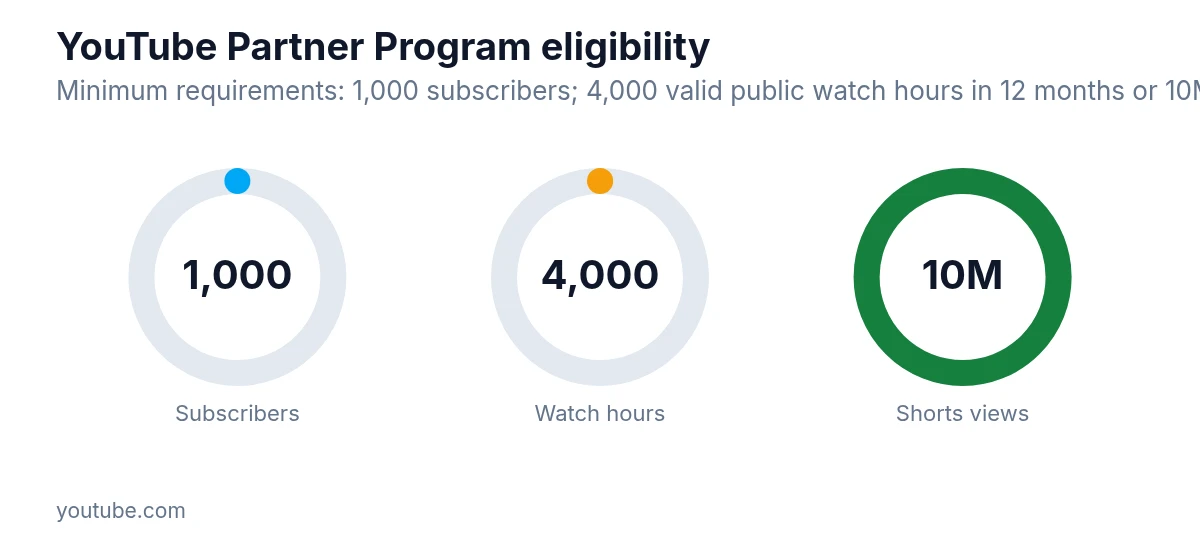
YouTube’s Partner Program requires 1,000 subscribers and either 4,000 public watch hours in 12 months or, for Shorts, a much larger threshold of 10 million views.
When someone comes to your YouTube channel from Instagram already curious about your content, they tend to watch longer and click through to more videos. This is different from someone who finds your video through a YouTube search and has no prior relationship with you. Warm traffic from Instagram converts into watch time more efficiently than cold traffic from search.
Sponsorship and Brand Deal Leverage
Brands that approach YouTube creators often look at their total social presence, not just their YouTube numbers. A YouTube channel with 20,000 subscribers and an Instagram account with 15,000 engaged followers is a more attractive sponsorship partner than a channel with 20,000 subscribers and no social presence.
More importantly, having Instagram gives you another placement to offer sponsors. A YouTube integration plus an Instagram Story mention is a more valuable package than a YouTube integration alone. Brands and creators are increasingly recognizing this efficiency, with discounts for multi-content packages typically running 20-40% below one-off rates, which means bundling placements across both platforms can raise your effective rate per deal.
Merchandise and Direct Sales
Instagram is a strong driver of merchandise sales and direct product purchases. If you sell anything, whether it is physical products, digital downloads, courses, or coaching, Instagram social commerce sales totaled $42.8 billion in 2025, which shows how effectively the platform moves buyers. The two platforms working together produce better commercial results than either one alone.
A creator who builds an audience on both platforms can use YouTube to build trust and authority, then use Instagram to drive purchases. The two platforms working together produce better commercial results than either one alone.
Channel Memberships and Patreon
Creators who run channel memberships or Patreon campaigns benefit from Instagram's ability to show the human side of their work. Behind-the-scenes content, personal updates, and community-building posts on Instagram make followers feel connected to the creator as a person, not just a content source. That personal connection is what drives people to pay for membership access.
Use Instagram Stories specifically for this. Show your process, your workspace, your failures, and your wins. People who feel like they know you are far more likely to become paying supporters.
Common Mistakes That Kill the Cross-Platform Strategy
Understanding what works is only half the picture. Several common mistakes actively undermine the Instagram-to-YouTube pipeline.
Posting the same content identically on both platforms is one of the biggest. Instagram and YouTube audiences have different expectations. A 15-minute YouTube video posted as a 15-minute IGTV upload will perform poorly on Instagram and may actually hurt your Instagram account's reach. Adapt the content, do not just copy it.
Neglecting Instagram engagement is another. If you post on Instagram and never respond to comments or DMs, your reach shrinks because the algorithm deprioritizes low-engagement accounts. Spend 15 minutes after each post responding to comments. It compounds over time.
Forgetting to mention YouTube in your Instagram content is surprisingly common. Some creators build a strong Instagram presence and never explicitly connect it to their YouTube channel. Your Instagram audience should know, regularly and clearly, that you have a YouTube channel and what they will find there.
Finally, inconsistency kills momentum. Posting on Instagram every day for two weeks and then going silent for a month resets your algorithmic reach. A consistent posting schedule, even if it is just three times a week, outperforms sporadic bursts of activity.
Building the System Over Time
The Instagram-to-YouTube strategy is not a quick fix. The first month of consistent cross-posting rarely produces dramatic results. What it produces is a foundation.
By month three, your Instagram account starts to understand your audience and surfaces your content to more of the right people. Your YouTube channel starts to see a steady trickle of warm traffic from Instagram. Your watch time grows because that traffic converts well.
By month six, the compounding effect becomes visible. Your YouTube videos perform better in the first 24 hours because your Instagram audience is primed and ready. Your sponsorship inquiries reference your combined social presence. Your channel membership or Patreon has members who found you on Instagram and deepened their relationship with you on YouTube.
The creators who build durable YouTube businesses are almost always building on multiple platforms simultaneously. Instagram is the most natural complement to YouTube because the content styles are different enough to avoid cannibalization but similar enough to share an audience.
Start with one consistent Reel per week that connects directly to your YouTube content. Build from there. The system rewards patience and consistency more than any single viral moment.
What to Focus on First
If you are starting from scratch or trying to restart a dormant Instagram account, prioritize in this order:
- Optimize your profile so it clearly communicates your YouTube channel's value
- Post one Reel per week that either teases or complements your latest YouTube video
- Use Stories to notify your existing followers when new YouTube videos go live
- Respond to every comment on your first 20 posts to build early engagement signals
- Rotate your bio link to your most recent YouTube video each week
These five steps alone, done consistently, will produce measurable results within 60 to 90 days. Add complexity only after the basics are working. The goal is a system that runs alongside your YouTube production process without consuming so much time that it hurts the quality of your main content.
Your YouTube channel grows when people watch your videos. Instagram's job is to get the right people to start watching.