Strategies for Leveraging Micro-Influencers Effectively
Why Smaller Followings Often Deliver Bigger Results
A creator with 800,000 followers posts your product. Thousands of people see it, a handful click through, and most forget it by the next scroll. Meanwhile, a creator with 12,000 followers posts the same product to an audience that actually trusts them, asks questions in the comments, and buys.
This is the core argument for micro-influencers, and it holds up in practice. Smaller audiences tend to be more focused, more engaged, and more responsive to recommendations. The creator feels like a real person rather than a media channel, and that authenticity changes how their audience receives a sponsored post.
But "use micro-influencers" is not a strategy. It is a category. The brands that get real returns from this approach do so because they are specific about who they work with, how they structure the relationship, and what they actually ask creators to do.
Defining the Micro-Influencer Tier Correctly
The term gets used loosely. Research on micro-influencer follower range typically places the category at 1,000 to 100,000 followers, distinguishing them from mega-influencers who exceed one million. The exact numbers matter less than the underlying characteristics you are looking for.
A genuine micro-influencer has:
- An audience built around a specific topic or community, not general lifestyle content
- Engagement that reflects real conversation, not just passive likes
- A posting history that shows consistent focus rather than scattered content
- Comments that read like responses from people who actually know the creator
Follower count is a proxy for these qualities, not a guarantee of them. A creator with 30,000 followers in the home renovation space who regularly answers questions and shares project updates is a very different proposition from a creator with the same count who posts aspirational photos with minimal interaction.
When you are evaluating potential partners, look at the comment section before you look at any other metric. Comments reveal whether the audience is real, whether they trust the creator, and whether they are the kind of people who act on recommendations.
Compensation: What the Market Actually Looks Like
Micro-influencer compensation varies widely based on platform, niche, audience quality, and what you are asking them to do.
For a single Instagram post from a creator with 10,000 to 50,000 followers, pay rates for micro-influencers typically fell between $200 and $1,000 per post according to a Shopify guide on Instagram influencer marketing. TikTok rates for similar follower counts can be lower because the platform's algorithm gives organic reach to smaller creators, making the content feel less like a paid placement. YouTube integrations tend to cost more because the content takes longer to produce and has a longer shelf life.
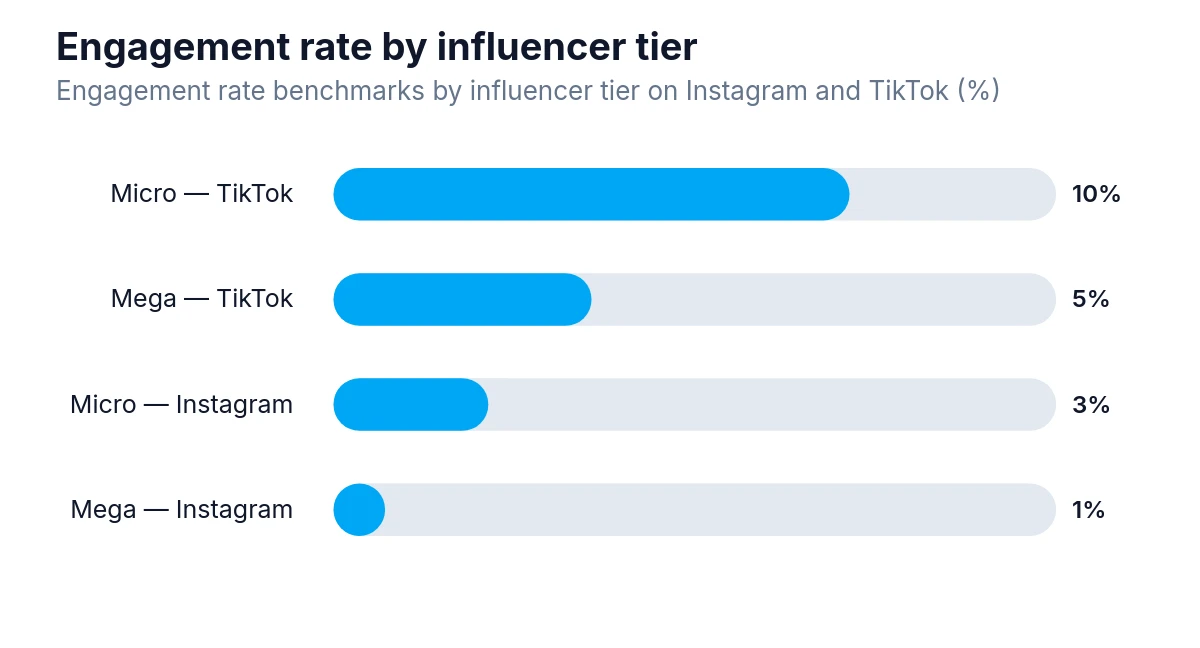
Micro-influencers have much higher engagement than mega-influencers on both platforms, peaking at 10% on TikTok versus 5% for mega TikTok, and 3% on Instagram versus 1% for mega Instagram.
Product gifting without cash payment works in some niches, particularly food, beauty, and consumer goods, where the product itself has enough value to justify the creator's time. It works less well in niches where creators have professional audiences and treat their channels as a business. Offering a $40 skincare product in exchange for a dedicated post to a creator who charges $300 is a quick way to damage a relationship before it starts.
Many brands structure compensation as a combination of product plus a flat fee, which acknowledges both the creator's time and the value of the exposure. Performance-based bonuses tied to affiliate codes or tracked links can work on top of a base fee, but they should not replace it. Asking creators to work entirely on commission shifts the financial risk onto them and tends to attract creators who will say anything to drive a sale.
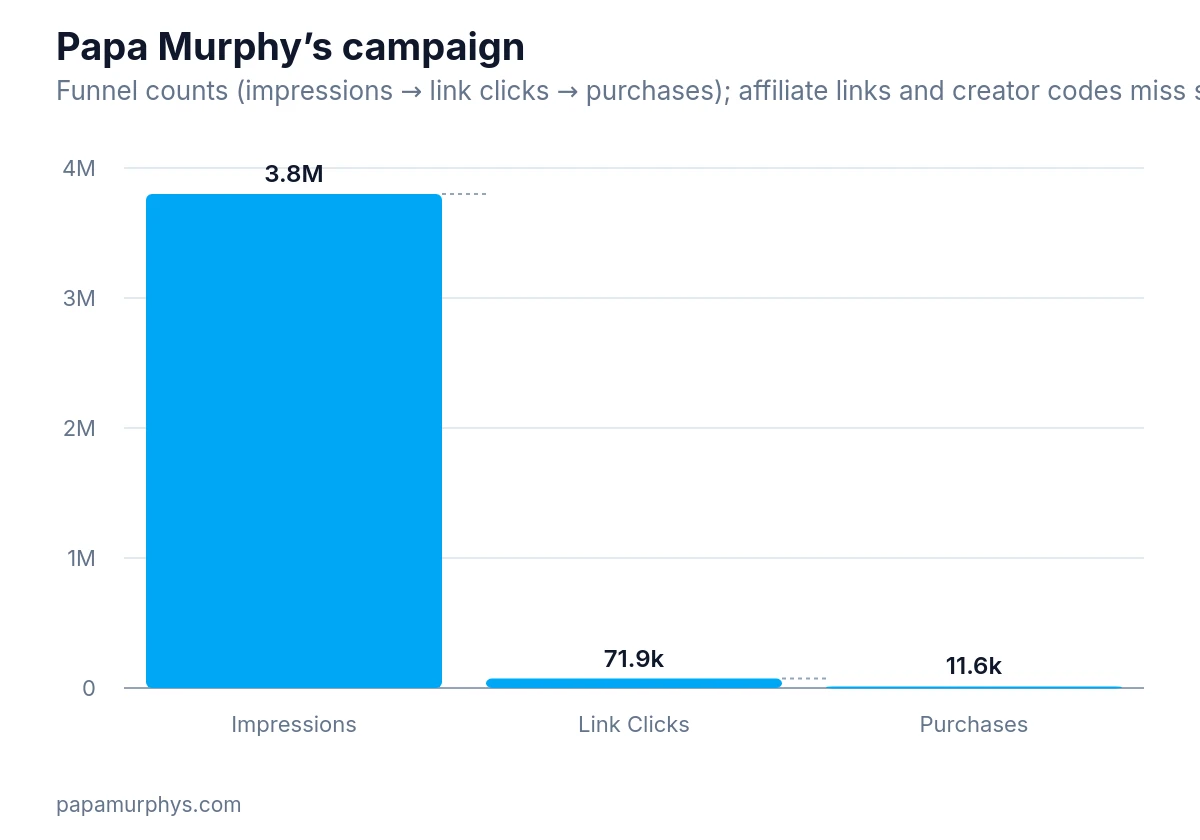
The Papa Murphy’s campaign reached 3.8 million impressions and narrowed to 11,600 tracked purchases, showing a steep drop from exposure to attributable sales. Affiliate links and creator codes illustrate the funnel but don’t capture every eventual purchase.
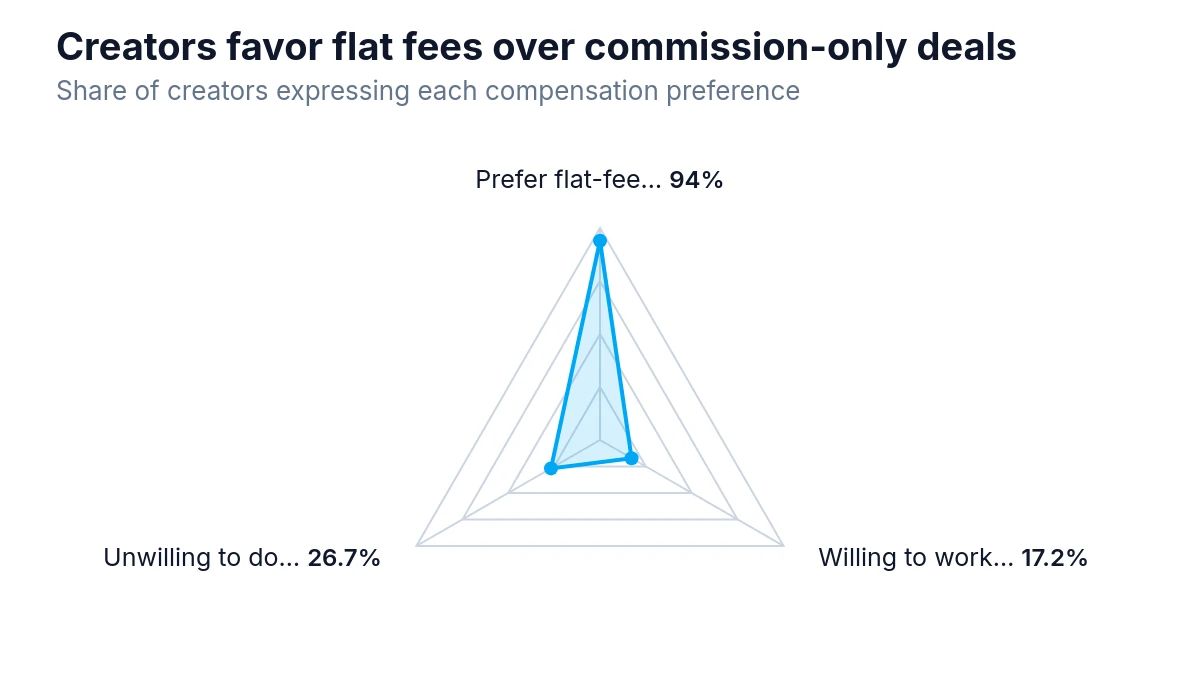
Ninety-four percent of creators prefer flat-fee stipends, while just 17.2 percent are willing to work commission-only and 26.7 percent say they are unwilling to do commission-only.
What Brands Are Actually Paying For
The fee covers more than a post. It covers the creator's credibility with their audience, the time they spend creating content, and the implicit endorsement they are giving your brand. Treating micro-influencer compensation as a media buy misses this. The relationship element is part of what you are paying for.
Finding the Right Creators for Your Brand
The most common mistake brands make is searching by hashtag or follower count and then reaching out to anyone who seems vaguely relevant. This produces a lot of wasted outreach and mediocre results.
A better approach starts with your existing customers. If you have any kind of engaged customer base, some of them are already creating content. They post about your product because they like it, not because you paid them. These people are your best starting point because the authenticity is already there.
Search for your brand name and product category on Instagram, TikTok, and YouTube. Look for people who have mentioned you without being asked. Reach out to them first. The conversation is easier, the relationship starts from a genuine place, and the content they produce will reflect that.
For creators you have not yet encountered, look at who your competitors are working with, who appears in the comment sections of larger accounts in your niche, and who is consistently producing content in your category without necessarily having a huge following. A creator who has been posting about sustainable kitchen products for two years and has 8,000 engaged followers is more valuable to a sustainable cookware brand than a lifestyle creator with 60,000 followers who occasionally posts about food.
Building Campaigns That Actually Work
Give Creators Real Direction Without Scripting Them
Micro-influencers are effective because their audience trusts their voice. The moment a post sounds like it was written by a marketing department, that trust erodes. Your job is to give creators enough context to represent your brand accurately, then get out of the way.
A good brief covers:
- What the product does and what makes it different
- Who it is for (so the creator can frame it for their specific audience)
- Any claims you need them to avoid for legal or accuracy reasons
- The key message you want their audience to take away
- Disclosure requirements (which are not optional)
It does not include a script, a list of approved adjectives, or a requirement that they use specific phrases. If you find yourself writing a brief that reads like ad copy, you are working against the format.
Think in Campaigns, Not One-Off Posts
A single post from a single creator is hard to evaluate and easy to dismiss. An audience needs to see something more than once before it registers, and a creator's audience needs to see them use a product across time before they believe it is genuinely part of that person's life.
Long-term influencer partnerships are replacing one-off collaborations precisely because continuity builds the trust between creators and audiences that makes recommendations land. It also makes the relationship more valuable to the creator, which tends to produce better content.
If budget allows, structure campaigns around a sequence: an initial introduction post, a follow-up that shows the product in use over time, and a third touchpoint that might be a review, a tutorial, or a response to audience questions. This mirrors how real word-of-mouth works.
Use Affiliate Links and Codes Strategically
Trackable links and discount codes serve two purposes: they give you data on what is actually driving purchases, and they give the creator something concrete to offer their audience.
A unique discount code creates a small incentive for the audience to act and makes the creator feel like they are giving their followers something, rather than just selling to them. It also lets you measure which creators are genuinely driving conversions versus which ones are generating impressions without action.
Do not rely on these metrics alone. Someone might see a creator's post, not use the code, and buy directly later. Attribution in influencer marketing is imperfect. Track codes and links as one signal among several, not as the definitive measure of a campaign's value.
Niches Where Micro-Influencers Perform Best
The strategy works across categories, but it works especially well in niches where trust and expertise matter more than aspiration.
Health and wellness is one example. People making decisions about supplements, fitness routines, or mental health tools want to hear from someone who seems knowledgeable and relatable, not from a celebrity who may or may not actually use the product.
Home improvement and DIY is another. A creator who documents their renovation projects has an audience that is actively looking for product recommendations. When they say a particular tool or material worked well, their viewers believe it because they have watched the creator use it.
Parenting, personal finance, cooking, and specialty hobbies (cycling, hiking, gaming, craft brewing) all follow the same pattern: audiences are engaged because they care about the topic, and they trust creators who demonstrate real knowledge over time.
Luxury and fashion can work, but the dynamics are different. In those categories, aspiration plays a bigger role, and a creator's aesthetic and perceived status matter more than their engagement rate.
Measuring What Matters
Reach and impressions tell you how many people potentially saw something. They do not tell you whether anyone cared or acted.
For micro-influencer campaigns, the metrics worth tracking are:
- Engagement rate (comments and shares carry more weight than likes)
- Click-through rate on tracked links
- Conversion rate from affiliate codes
- Qualitative feedback in the comments (are people asking where to buy, or are they ignoring the product entirely?)
- Brand search volume during and after a campaign (harder to measure but worth watching)
Engagement by audience size follows a consistent pattern: as an audience expands, a smaller percentage of followers responds to every post, which is why nano-influencers consistently outperform celebrity accounts on engagement rate. Set expectations accordingly. A creator with 15,000 followers is not going to produce the same raw numbers as a creator with 150,000. The comparison that matters is cost per meaningful action, not total impressions.
Legal and Disclosure Requirements
This is not optional, and it is not complicated. In most markets, creators are required to clearly disclose when content is paid or when they received a product for free. The FTC is specific about disclosure placement: disclosures are likely to be missed if they appear only on an About Me or profile page, at the end of posts or videos, or anywhere that requires a person to click "more."
As the brand, you share responsibility for ensuring creators disclose properly. Include disclosure requirements in your brief, and check that posts are compliant before you promote them or pay for them.
Non-disclosure is not just a legal risk. It is a trust risk. Audiences have become good at spotting undisclosed sponsorships, and when they find one, they tend to lose trust in both the creator and the brand.
Scaling Without Losing What Makes It Work
Once a micro-influencer strategy is producing results, the temptation is to scale it by adding more creators, increasing posting frequency, and systematizing everything. This can work, but it carries a real risk.
The reason micro-influencer content works is that it feels personal and specific. When a brand is working with hundreds of creators simultaneously, all using similar briefs and similar messaging, the content starts to feel coordinated rather than genuine. Audiences notice.
Scale by deepening relationships with your best-performing creators before you broaden to new ones. Give top performers early access to new products, involve them in feedback sessions, or offer them longer-term partnership agreements. This keeps the relationship feeling real and gives them more to talk about over time.
When you do add new creators, maintain the same vetting standards you used at the start. A larger program built on the same principles as a smaller one will hold its quality. A larger program built on volume and convenience will not.
Making the Most of This Approach
Micro-influencer marketing works when brands treat it as relationship-building rather than media buying. The creators who produce the best results are the ones who genuinely like the product, have an audience that trusts them, and have enough creative freedom to represent the brand in their own voice.
The practical steps are straightforward: find creators who already care about your category, compensate them fairly, give them a clear brief without over-directing them, and measure results against realistic benchmarks. Run campaigns over time rather than as one-off activations, and invest more in the relationships that are working.
The brands that do this well are not necessarily the ones with the biggest budgets. They are the ones that take the time to find the right people and treat them as partners rather than placements.