Finding Your Niche: Content Ideas That Attract Sponsors
Why Most Creators Never Land a Sponsor
Thousands of creators publish content every week without ever receiving a sponsorship inquiry. It is not always about audience size. Plenty of channels with modest followings land consistent brand deals, while others with ten times the subscribers sit ignored by advertisers.
The difference usually comes down to niche clarity. Brands do not sponsor audiences in the abstract. They sponsor access to a specific type of person who is likely to buy a specific type of product. When your content is too broad, too scattered, or too undefined, you become invisible to the people writing sponsorship checks, regardless of how good your videos or posts actually are.
This article is about building content with sponsorship in mind from the start, not as an afterthought once you have already published hundreds of posts in the wrong direction.
What a Niche Actually Is (and What It Is Not)
A niche is not a topic. It is a topic plus an audience plus an angle.
"Fitness" is a topic. "Strength training for women in their 50s who want to avoid injury" is a niche. The second version tells a brand exactly who is watching, what they care about, and what they might spend money on. Supplements for joint health, resistance bands, online coaching programs, ergonomic equipment - the sponsorship categories write themselves.
This distinction matters because brands are not looking for content that covers a subject. They are looking for content that reaches their customer. When you define your niche precisely, you are essentially building a pre-qualified audience for a category of advertisers.
The Three Layers of a Sponsorable Niche
Think of your niche as having three layers:
- The subject matter (what you cover)
- The audience identity (who watches and why they relate to you specifically)
- The angle or perspective (how you approach the subject differently from others)
A personal finance creator who covers "money for recent college graduates navigating student debt" has all three layers working. The subject is personal finance. The audience is young adults in a specific financial situation. The angle is the debt-first perspective, which shapes every piece of content and makes the audience feel seen.
Financial brands, student loan services, budgeting apps, and entry-level investment platforms all have a clear reason to reach that audience. The creator does not need to pitch hard. The niche does the work.
How to Find a Niche That Actually Fits You
The worst niche advice is to simply "follow your passion." Passion without an audience is a hobby. Passion without monetization potential is a dead end for anyone trying to build a business.
A better framework asks three questions at the same time:
- What do you know well enough to teach or discuss with authority?
- What are people actively spending money on in this space?
- Where is there a gap in existing content, or an underserved audience?
The overlap of those three is where a sustainable, sponsorable niche lives.
Starting with What You Know
Your professional background, personal experience, or obsessive hobbies are all legitimate starting points. A nurse who creates content about managing chronic illness from a patient-advocate perspective has built-in credibility. A former chef who covers kitchen equipment for home cooks who take cooking seriously brings expertise that a general food blogger cannot replicate.
Credibility matters to sponsors. Research on influencer expertise effect on purchase intentions finds that expertise outweighs physical attractiveness as a driver of consumer buying decisions. Creators who clearly know their subject attract brands that want to be associated with expertise, not just reach.
Checking the Money
Before committing to a niche, look at what brands are already advertising in that space. If you search YouTube or Instagram for content similar to what you want to make, what sponsors show up in those videos? If the answer is "none," that is a warning sign. It does not mean the niche is impossible to monetize, but it does mean you will have to work harder to convince brands that the audience is worth reaching.
Niches with strong sponsorship histories include personal finance, technology and software, health and wellness, outdoor and adventure, home improvement, parenting, and gaming. That does not mean you should pick one of these if they do not fit you. But it does mean that if your niche sits adjacent to one of these, you can position your content to attract those advertising budgets.
Finding the Gap
The most competitive niches are crowded at the generic level and wide open at the specific level. General productivity content is everywhere. Productivity content specifically for ADHD adults who work remotely is far less saturated, and it reaches an audience that is actively looking for solutions, which makes them valuable to brands selling focus tools, apps, planners, and coaching services.
Look at the comments sections of popular creators in your area of interest. What questions are going unanswered? What frustrations keep coming up? What type of person feels like the existing content was not made for them? That gap is your opening.
Content Ideas That Signal Sponsorship Value
Once you have your niche, the specific content ideas you choose send signals to potential sponsors about the quality and intent of your audience. Some content formats attract brand attention more reliably than others.
Product-Adjacent Content
Content that naturally lives next to purchasing decisions is the most sponsor-friendly. This includes reviews, comparisons, tutorials that require specific tools or products, and "best of" roundups. A creator who regularly publishes "best budget microphones for podcasters" content is already doing the work that a microphone brand would pay to be part of.
This does not mean every video needs to be a review. But having a consistent thread of product-adjacent content in your library tells brands that your audience is in a buying mindset.
Problem-Solution Content
Audiences that come to you with a specific problem are highly valuable. They are motivated, they are looking for answers, and they are often willing to spend money on solutions. A creator who covers "how to fix X" or "why Y keeps happening and what to do about it" is building an audience of people who are actively seeking help.
Brands love this. A tutorial on fixing a common issue with home plumbing is a natural fit for a plumbing supply brand or a home warranty service. A video about managing anxiety before job interviews is a natural fit for therapy apps, career coaching services, or even sleep and wellness brands.
Aspiration and Transformation Content
Content that shows people what is possible - before-and-after stories, progress documentation, case studies - attracts audiences who want to change something about their lives. These audiences are often willing to invest in products and services that help them get there faster. Fitness transformation content, financial independence journeys, and language learning progress videos all fall into this category.
Educational Deep Dives
Long-form educational content builds authority and attracts an audience that takes the subject seriously. Serious audiences tend to be higher-value buyers. A creator who publishes thorough, well-researched content about investing strategies attracts viewers who actually have money to invest, which makes them extremely attractive to financial brands.
How Sponsors Actually Find (and Choose) Creators
Most creators imagine that landing a sponsor means cold-emailing brands and hoping for a response. That does happen, and outreach is a legitimate strategy. But the more sustainable path is building content that makes brands come to you.
Brands and their agencies search for creators in a few consistent ways. They look at platforms like YouTube and Instagram for creators covering relevant topics. They use influencer marketing platforms that index creator profiles. They track who is already organically mentioning their products. And they pay attention to which creators their competitors are working with.
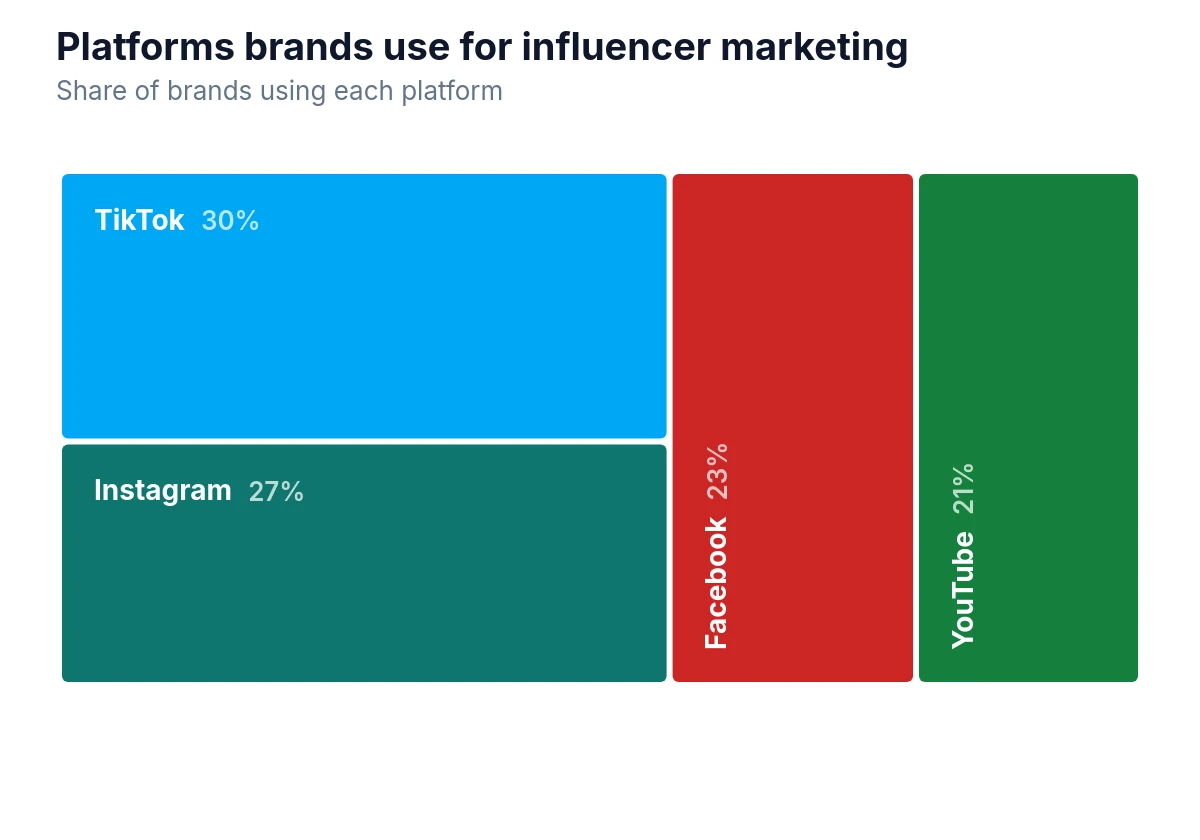
TikTok is the most-used platform for influencer marketing at 30%, with Instagram close behind at 27%.
What Brands Look at Before Saying Yes
Audience size is one factor, but it is rarely the deciding one for smaller brands and niche products. What brands actually evaluate:
- Audience demographics (age, location, income level if detectable)
- Engagement rate relative to follower count
- Niche alignment with the product category
- Content quality and production consistency
- Whether the creator's existing content feels authentic or purely promotional
A creator with a highly engaged audience of 8,000 followers who are all serious home bakers is worth more to a specialty baking equipment brand than a general lifestyle creator with 80,000 followers who are interested in everything and nothing in particular. This holds up in research too: the effect of follower count on adoption intentions is indirect, mediated by perceived popularity and opinion leadership rather than raw numbers alone.
Building a Media Kit That Works
A media kit is a document (usually a PDF or a clean website page) that tells brands what they need to know to make a decision. It should include your niche description, audience demographics, key metrics, content examples, and your rates or partnership options.
The niche description is the most important part. It should answer the question: "Who is your audience and why would they buy from a brand in your category?" If you cannot answer that clearly, neither can a brand.
Keep it short. Brands receive a lot of pitches. A media kit that communicates everything essential in two pages is better than one that runs to ten.
Outreach That Gets Responses
When you reach out to brands directly, specificity matters more than polish. A pitch that says "I create content about sustainable fashion for millennial women who are transitioning away from fast fashion, and I think your line of recycled-material basics would resonate strongly with my audience" will outperform a generic pitch that could have been sent to anyone.
Research the brand before you write. Mention a specific product, a recent campaign, or a value they have publicly stated. Show that you chose them deliberately, not just because they sell something adjacent to your topic.
Niches That Are Particularly Strong for Sponsorships Right Now
Some content areas have structural advantages for attracting sponsors, either because the audience spends heavily, because there are many competing brands fighting for attention, or because the content naturally integrates products without feeling forced.
Personal finance and investing remains one of the highest-paying sponsorship categories. Financial products carry large margins, and brands in this space pay well for access to audiences who are actively managing money.
Health, fitness, and nutrition has a dense ecosystem of supplement brands, equipment companies, app developers, and coaching services all competing for creator partnerships. The challenge is standing out in a crowded field, which makes specificity even more important.
Software and technology is strong for creators who can demonstrate products in action. SaaS companies in particular have embraced creator sponsorships because tutorials and reviews drive trial sign-ups more effectively than traditional advertising.
Outdoor and adventure attracts gear brands with loyal followings and high average order values. Audiences in this space tend to be passionate buyers who trust creator recommendations.
Parenting and family is underrated. Parents are high-frequency buyers across many categories, and the niche has strong sub-segments (new parents, homeschooling families, parents of kids with specific needs) that allow for precise targeting. According to influencer content categories tracked in Influencer Marketing Hub's 2023 benchmark report, Gaming accounts for 12.9% of creators surveyed, Family/Parent & Home 10.7%, and Health & Fitness 6.8%, suggesting parenting holds its own against categories that tend to get more attention.
Common Mistakes That Kill Sponsorship Potential
Being Too Broad
The instinct to appeal to everyone is understandable but counterproductive. A creator who covers "health and wellness" in a general sense competes with thousands of others and gives brands no specific reason to choose them. Narrowing down feels risky, but it is what creates value.
Inconsistency
Brands want to know what they are buying into. If your content shifts topics, tone, or format unpredictably, a brand cannot confidently predict what their sponsorship will look like or who will see it. Consistency does not mean being boring. It means being reliably yourself within a defined space.
Ignoring Audience Data
Many creators do not look at their own analytics carefully enough to know who their audience actually is. Before you approach a brand, know your audience's age breakdown, top geographic locations, and which content performs best. This information is what turns a pitch from a guess into a proposal.
Treating Sponsorships as Separate from Content
The creators who build the most durable sponsor relationships are the ones who integrate brand partnerships naturally into content their audience already wants. When a sponsorship feels like an interruption, audiences tune out and brands notice the poor performance. When it feels like a natural recommendation from someone they trust, it works for everyone.
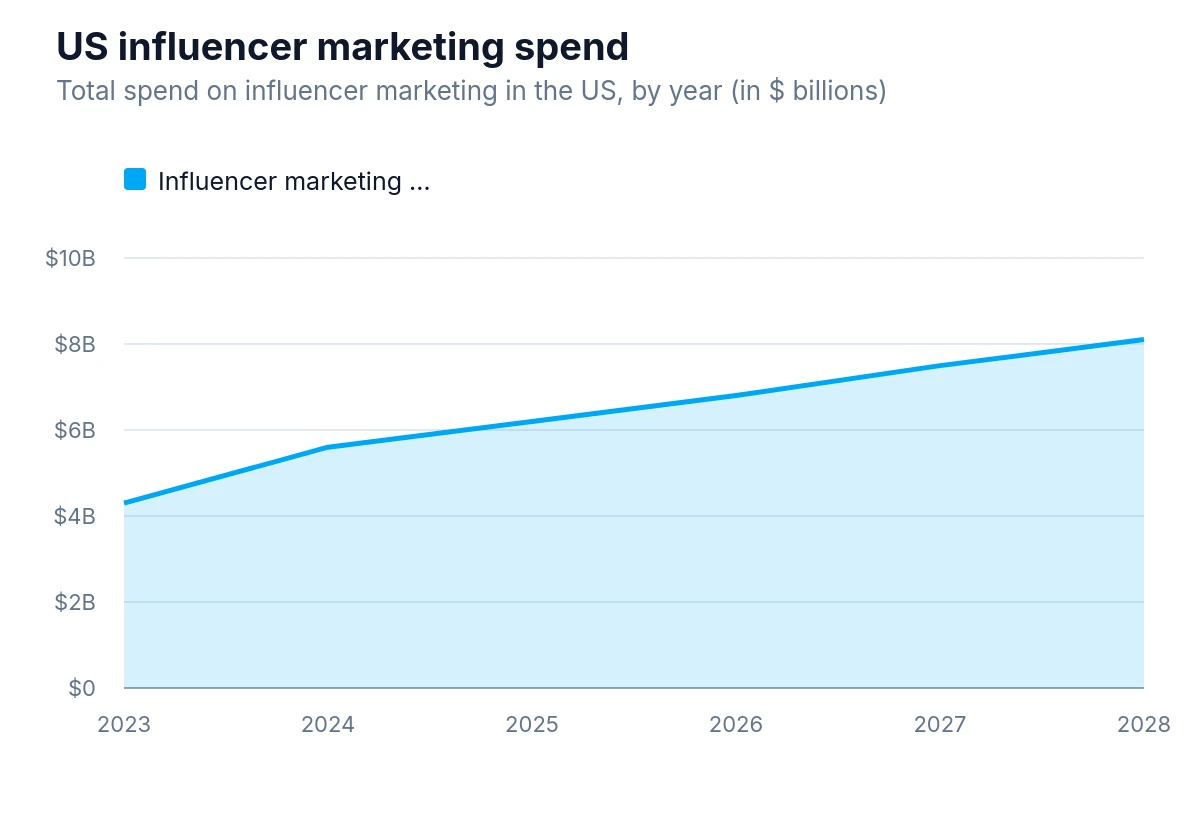
US influencer marketing spend climbs from $4.3 billion in 2023 to $8.1 billion in 2028, nearly doubling and showing steady year-to-year growth.
Building Toward Your First Sponsorship
If you are starting from scratch, the realistic path to your first sponsorship involves three phases.
First, define and commit to your niche. Publish consistently within it for long enough to build a body of work that clearly demonstrates who you are and who you serve. There is no fixed timeline, but having at least 20 to 30 pieces of content in a clear niche gives brands something to evaluate.
Second, start building relationships before you need them. Follow brands you would genuinely want to work with. Mention products you actually use. Engage with brand accounts authentically. Some creators land their first deal simply because a brand noticed they had been organically recommending their product.
Third, make it easy to say yes. Have a media kit ready. Know your rates. Have a clear sense of what partnership formats you offer (dedicated videos, integrated mentions, social posts, newsletter features). Brands move faster when the logistics are already figured out. That urgency is only growing: planned influencer marketing budget increases are expected from 87.49% of brands in 2026, meaning more money will be chasing the creators who have made themselves easy to find and work with.
The creators who attract sponsors consistently are not necessarily the most talented or the most popular. They are the ones who have built something specific enough that the right brands can see exactly why their audience matters.