Strategies for Pitching Travel Vlogs to Sponsors
Why Most Travel Vlog Pitches Get Ignored
Sponsors receive hundreds of pitch emails every week. Most of those emails get deleted within seconds, not because the creator lacks talent, but because the pitch fails to answer the one question every brand manager is actually asking: "What do I get out of this?"
Travel vloggers often make the mistake of leading with their passion. They write about how much they love exploring new places, how authentic their content feels, and how engaged their audience is. These things may all be true, but they are not what closes a deal. Brands are not buying your enthusiasm. They are buying access to an audience, and they want proof that the audience is worth buying.
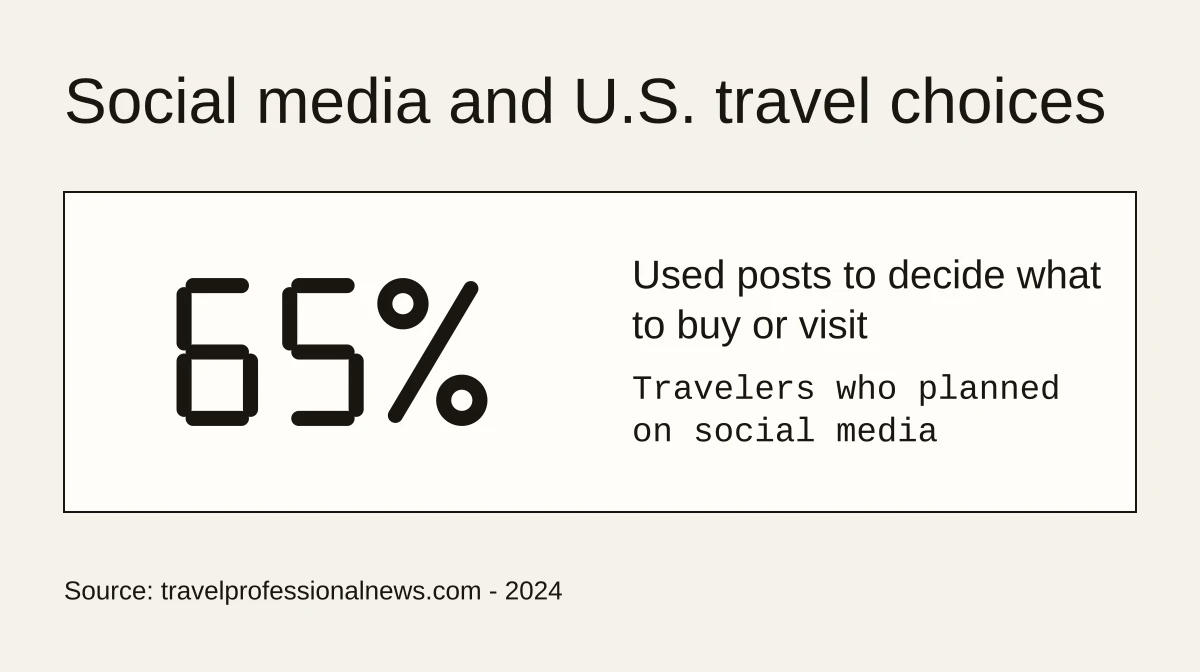
Source: travelprofessionalnews.com
This guide covers how to build a pitch that speaks the language sponsors actually care about, how to find the right brands to approach, and how to structure deals that work for both sides.
Know Your Numbers Before You Send Anything
The fastest way to lose credibility with a potential sponsor is to be vague about your metrics. Before you pitch anyone, you need to know your numbers cold.
The Metrics That Actually Matter
Views per video matter, but average views matter more than total views. A channel with 50,000 subscribers that averages 40,000 views per video is far more attractive than one with 200,000 subscribers averaging 8,000 views. Brands have learned to look past subscriber counts.
The metrics worth pulling together before any pitch:
- Average views per video (last 90 days)
- Average watch time and retention rate
- Click-through rate on cards and end screens
- Audience demographics (age range, top countries, gender split)
- Engagement rate (comments and likes relative to views)
- Email list size if you have one
- Website traffic if your vlog has a companion site
Watch time and audience retention are especially useful for travel content because a higher rate signals to YouTube that your content is engaging and attracts sponsors. Someone who watches 80% of a 12-minute video about hiking in Patagonia is a warm lead for an outdoor gear brand. That is the kind of argument you want to make.
Understanding Your Audience Demographics
Sponsors do not just buy reach. They buy reach to specific people. A travel vlog that skews toward 35-to-55-year-old viewers with disposable income is extremely valuable to luggage brands, travel insurance companies, and premium hotel chains. A vlog with a younger audience might be a better fit for budget travel apps, hostels, or adventure gear.
Pull your demographic data from YouTube Studio or whatever platform you use, and know it well enough to speak to it confidently. If your top viewership countries align with a brand's target markets, say so explicitly in your pitch.
Building a Media Kit That Does the Work for You
A media kit is a one-to-three page document (or PDF) that gives a sponsor everything they need to evaluate you quickly. Think of it as your business card, resume, and sales deck combined.
What to Include
Your media kit should open with a short description of your channel: what kind of travel you cover, who your audience is, and what makes your content different from the other 10,000 travel channels on YouTube. Keep this to two or three sentences. Specificity helps. "Budget adventure travel for solo travelers in Southeast Asia and South America" is more useful than "travel content for people who love to explore."
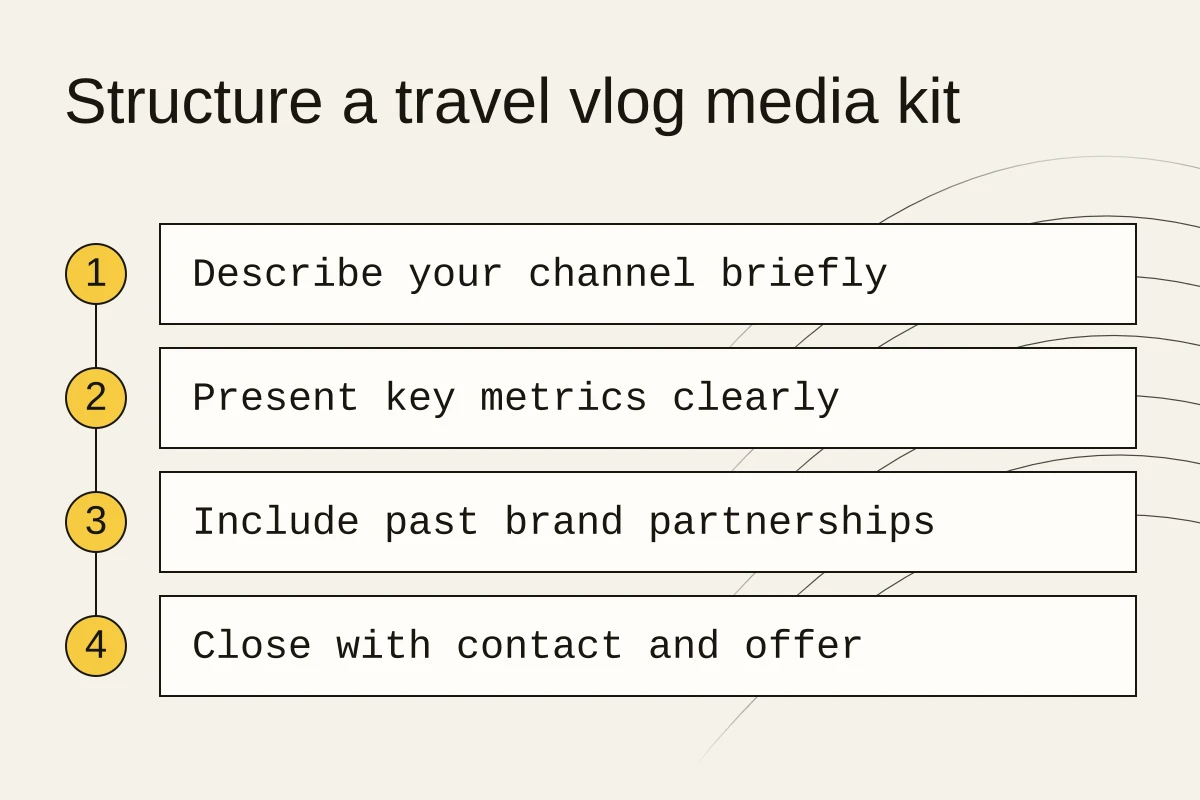
After the intro, present your key metrics clearly. Do not bury them in paragraphs. Use a clean layout with numbers that stand out. Include a few screenshots of your analytics if they support your case.
Then include past brand partnerships if you have them, with brief notes on what you delivered. If you are pitching your first sponsor, skip this section rather than padding it with irrelevant collaborations.
Close with your contact information and a clear note about what you are offering. Some creators include rate cards; others prefer to discuss rates after initial contact. Either approach works, but if you include rates, make sure they are defensible based on your metrics.
Design and Presentation
Your media kit should look like you take your work seriously. It does not need to be elaborate, but it should be clean and consistent with your channel's visual identity. Use your channel's color scheme, include a few high-quality stills from your videos, and make sure the PDF is easy to read on both a desktop and a phone.
A poorly designed media kit tells a brand manager that you might produce poorly designed sponsored content. First impressions carry weight.
Finding the Right Sponsors to Approach
Pitching the wrong brands wastes everyone's time. The goal is to find companies whose products or services genuinely fit your content and your audience.
Start with What You Already Use
The easiest pitch to make is for a product you actually use on camera. If your audience has already seen you pull out a specific brand of travel backpack in five videos, a pitch to that company comes with built-in proof of fit. You can point to specific timestamps where the product appeared organically.
Make a list of every brand that appears in your existing content: the gear you carry, the apps you use to book accommodation, the travel insurance you buy, the camera equipment you film with. These are your warmest leads.
Research Brand Sponsorship Patterns
Look at travel creators in your niche who are a step or two ahead of you in terms of audience size. Watch their recent videos and note which brands they are working with. This tells you which companies are actively spending money on travel content sponsorships. Those same companies are likely open to hearing from other creators in the space.
You can also search for brands that run affiliate programs in the travel category. A company with an active affiliate program is already comfortable paying creators for conversions, which makes them easier to convert into direct sponsors.
Think Beyond the Obvious
Most travel vloggers pitch airlines, hotels, and luggage brands. Those categories are competitive. Consider adjacent categories that have strong reasons to reach travelers:
- Language learning apps
- Travel credit cards and financial products
- Health and travel insurance providers
- Noise-canceling headphones and tech accessories
- VPN services (popular with long-term travelers)
- Photography and video equipment brands
- Portable power banks and solar chargers
- Subscription services that travelers use (streaming, cloud storage)
A brand in one of these categories may receive far fewer pitches from travel creators, which means your email has a better chance of getting a real response.
Writing a Pitch Email That Gets Read
The pitch email is where most creators lose the deal before it starts. Here is how to write one that works.
Keep It Short
Brand managers and marketing directors are busy. A pitch email should be readable in under two minutes. If yours requires scrolling three times to reach the bottom, it is too long.
Aim for four short paragraphs:
- Who you are and what your channel covers (two to three sentences)
- Why you are reaching out to this specific brand (one or two sentences showing you have done your research)
- Your key metrics and why your audience is a good fit for them
- A clear ask: what you are proposing and what the next step is
That is it. Attach your media kit. Sign off.
Personalize Every Email
Generic pitches get generic results, which usually means no response. Before you send anything, spend five minutes researching the brand. Look at their recent marketing campaigns, their social media presence, and any press coverage from the past year. Find one specific thing you can reference in your email that shows you actually know who they are.
"I noticed you recently launched a waterproof version of your day pack, and I have an upcoming series on coastal hiking in Portugal where it would be a natural fit" is far more compelling than "I think your products would resonate with my audience."
Find the Right Contact
Do not send your pitch to a generic info@ address. Find the name of the person who handles influencer partnerships or content marketing. LinkedIn is useful for this. So is the brand's website, which sometimes lists a PR or partnerships contact. Addressing your email to a real person with the correct title increases your chances of getting a response significantly.
Structuring the Deal
Once a brand responds with interest, you need to be ready to discuss what you are actually offering and what you expect in return.
Types of Sponsorship Arrangements
Travel vlog sponsorships generally fall into a few categories:
- Dedicated video: The entire video is built around the sponsor's product or destination
- Integrated mention: A 60-to-90-second segment within a regular video
- Series sponsorship: A brand sponsors multiple episodes in a series, often with logo placement and mentions
- Affiliate-only deal: No upfront fee, but you earn a commission on sales driven through your link
- Gifted product only: The brand sends product in exchange for coverage, with no cash payment
For most creators with a growing but not massive audience, integrated mentions and series sponsorships offer the best balance of creative flexibility and revenue. Dedicated videos work well when the brand's product genuinely fits a full episode (a tourism board sponsoring a destination video, for example), and dedicated YouTube video pricing runs at a 2-3x premium over standard mid-roll integrations.
Affiliate-only deals can be worth accepting early on if the product is something you would genuinely recommend and the commission structure is reasonable. They also give you a track record of driving conversions, which is useful data for future pitches.
Setting Your Rates
Rate-setting is one of the most stressful parts of sponsorship negotiation for new creators. There is no universal formula, but a few principles help.
Your rate should reflect the value you deliver, not just your follower count. A creator with 20,000 highly engaged subscribers in a specific niche can often charge more than a creator with 100,000 passive followers. When you set your rate, be prepared to explain the logic behind it using your metrics.
Research what creators at your level charge by joining creator communities, forums, or Discord groups where people share rate information. This gives you a realistic baseline.
Do not undercut yourself dramatically just to close a deal. Brands that pay very low rates often have high demands and low respect for the creative process. A slightly higher rate that filters out difficult clients is worth it.
Deliverables and Timelines
Before any deal is finalized, get clear agreement in writing on:
- Exactly what content you will produce (video length, mention duration, number of posts)
- The timeline for delivery and any review process
- How many rounds of revisions the brand can request
- Usage rights (can the brand use your footage in their own marketing?)
- Exclusivity terms (are you agreeing not to work with competitors for a set period?)
- Payment terms (upfront, on delivery, or split)
A simple contract or deal memo protects both parties. Many creators use template contracts available through creator economy resources or legal template services. If a brand asks you to sign their contract instead, read it carefully before agreeing, paying particular attention to exclusivity clauses and usage rights.
Following Up and Building Long-Term Relationships
A single sponsored video is a transaction. A long-term brand partnership is a business relationship, and those are worth far more.
After the Campaign
Once your sponsored content goes live, send the brand a performance report. Include the view count at the 7-day and 30-day marks, engagement data, click-throughs on their link, and any notable comments from your audience. This is information they need for their own reporting, and providing it without being asked signals professionalism.
If the campaign performed well, say so and propose a follow-up. If it underperformed, be honest about why and what you would do differently. Brands respect transparency more than spin.
Staying on Their Radar
Even when you are not actively working with a brand, stay connected. Engage with their content on social media. Send a brief email when you have a new series launching that might be relevant to them. Share relevant audience growth milestones. These small touchpoints keep you in mind when they are planning their next campaign.
Building a Reputation in the Space
The travel creator world is smaller than it looks. Brand managers talk to each other, and so do creators. Delivering what you promise, meeting deadlines, and producing content that actually serves the brand's goals builds a reputation that generates inbound interest over time.
The goal is to reach a point where sponsors come to you because they have heard your name from another brand or another creator. That does not happen overnight, but it is the result of treating every partnership, even small ones, with the same level of care.
Turning Pitching into a Repeatable System
The creators who build sustainable sponsorship income do not treat pitching as a one-off activity. They build a system.
Set aside time each week to research new brands, update your media kit with fresh metrics, and send a set number of outreach emails. Track every pitch in a simple spreadsheet: who you contacted, when, what you proposed, and what happened. Follow up on unanswered emails after 10 to 14 days with a brief, polite note.
Over time, your pitch emails will get sharper, your media kit will get stronger, and your conversion rate will improve. The first few pitches are almost always awkward. That is normal. The skill develops with practice, just like filming and editing did.
Sponsors are not looking for the biggest channel. They are looking for the right channel. If you know your audience, understand what brands need, and communicate both clearly, you give yourself a real shot at building the kind of sponsorship relationships that fund the travel you want to make.