Referral Marketing Definition: What Video Creators Need to Know

You drop a product link in your video description. A viewer clicks it, buys something, and you earn a commission. That's referral marketing in action, and it's probably already part of your revenue strategy whether you call it that or not.
But here's the thing: most creators treat referral marketing like a side hustle when it could be their main income stream. According to Referral Factory, referral marketing is growing fast, yet most marketers still don't fully understand what it is or how to use it effectively.
This guide breaks down the definition, explains how it works for video creators, and shows you why it matters for your channel's bottom line.
What Referral Marketing Actually Means
Tremendous defines referral marketing as a customer acquisition strategy that encourages existing customers to recommend a brand to others. For creators, flip that definition: it's when you recommend products or services to your audience and earn something in return.
The core mechanic is simple. Someone trusts your opinion. You point them toward a product. They buy it. You get paid.
According to SendPulse, 92% of people rely on advice from people they know when making purchase decisions. Your viewers watch your content regularly. They know your voice, your style, your preferences. That puts you in the "people they know" category, even if you've never met face-to-face.
Referral Factory notes that referral marketing is sometimes called word-of-mouth marketing. The term covers more than just customers promoting products. It includes affiliates, employees, partners, and influencers. As a creator, you fall into that influencer category.

How Referral Marketing Works for Video Creators
The process has four basic steps.
First, you find a product or service you actually use or would recommend. This could be camera gear, editing software, online courses, or subscription services. Authenticity matters here. Your audience can tell when you're faking enthusiasm.
Second, you join the company's referral or affiliate program. Most programs are free to join. You fill out an application, get approved, and receive a unique tracking link.
Third, you mention the product in your content and include your link. This might be a dedicated review video, a casual mention during a vlog, or a link in your description with a brief callout.
Fourth, viewers click your link and make purchases. The company tracks these sales through your unique URL and pays you a commission. Some programs pay per sale, others pay per signup, and some pay recurring commissions for subscription services.
Tremendous points out that referral marketing differs from passive word-of-mouth because it's active, structured, and provides clear metrics. You can see exactly how many clicks your link gets, how many convert to sales, and how much you earn. That data helps you figure out what products resonate with your audience.
Why This Matters More Than Ad Revenue
Ad revenue fluctuates. YouTube's CPM rates change based on advertiser demand, viewer location, and content category. One month you might earn $5 per thousand views, the next month $2.
Referral marketing income is more predictable once you establish which products your audience buys. If you know that 2% of viewers who click your link for a $200 product convert, and you earn a 10% commission, you can calculate expected earnings based on your view count.
According to SendPulse, 78% of B2B marketers say referral programs help grow high-quality leads. For creators, this translates to building relationships with brands that value your promotional power. Companies track which affiliates drive the most sales. Top performers get better commission rates, early access to products, and sometimes exclusive deals to share with their audience.
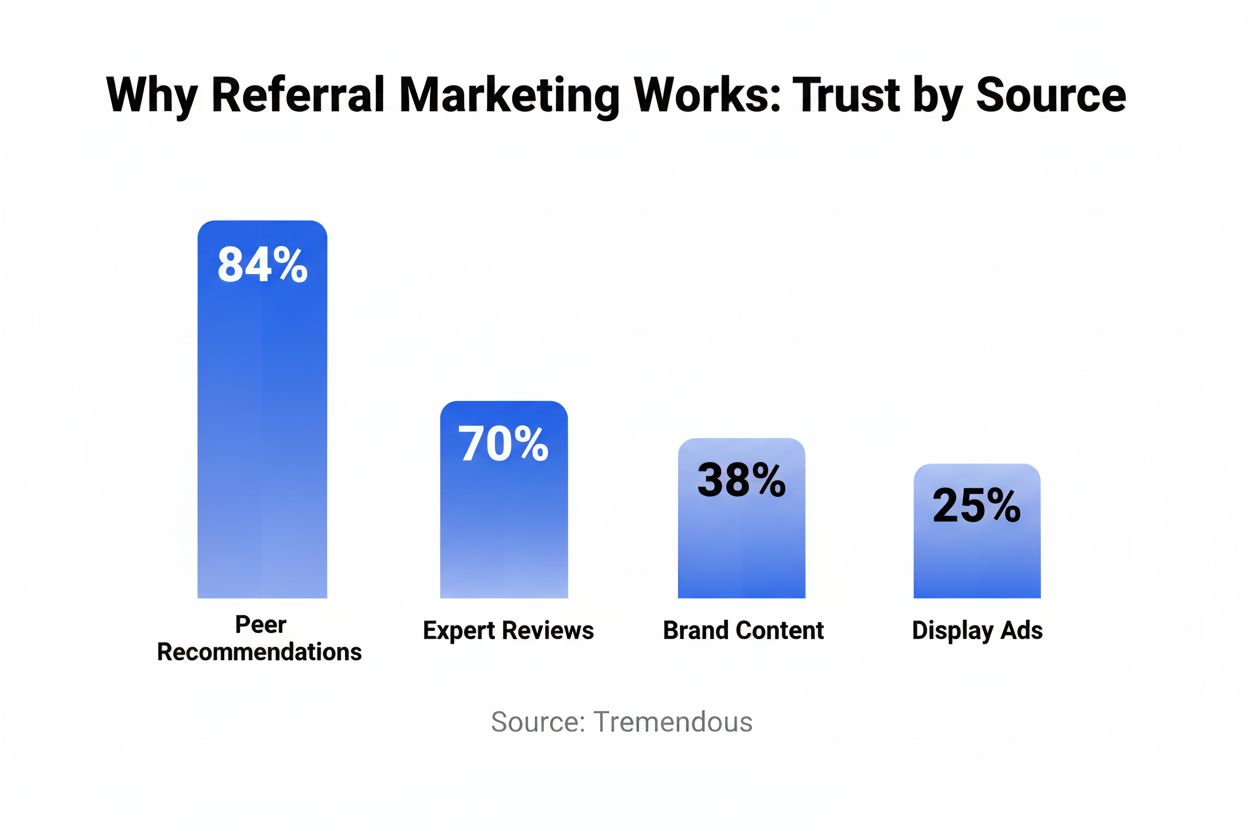
Tremendous reports that 84% of people trust recommendations over other kinds of marketing. Your video review carries more weight than a banner ad or sponsored post from a brand account. That trust is your competitive advantage.
The Difference Between Referral and Affiliate Marketing
You'll hear both terms used interchangeably, but there's a subtle distinction worth understanding.
Referral marketing traditionally means existing customers recommending a product to friends. The customer gets a reward, the friend gets a discount or bonus, and the company gets a new customer. Think of Dropbox giving you extra storage when someone signs up using your link.
Affiliate marketing typically means you promote a product to your audience without necessarily being a customer first. You join an affiliate network, pick products to promote, and earn commissions on sales. Amazon Associates is the classic example.
For video creators, the line blurs. You might genuinely use a product (making you a customer who refers) while also being part of an affiliate program (making you an affiliate marketer). The mechanics are nearly identical: unique link, tracked sales, commission payment.
Referral Factory uses referral marketing as an umbrella term that includes affiliates, employees, partners, and influencers. Under that definition, your affiliate links count as referral marketing.
What matters more than terminology is the approach. Successful creator referrals come from genuine recommendations, not carpet-bombing your audience with every available affiliate link.
What Makes a Good Referral Product for Your Channel
Not every product fits every channel. Your audience subscribed for specific content, and your referrals should align with that content.
Tech reviewers can promote cameras, microphones, and editing software naturally. Gaming channels fit with peripherals, chairs, and energy drinks. Cooking channels match with kitchen tools, ingredients, and meal kits.
The best referral products share three characteristics.
First, you actually use them. Your hands-on experience gives you credibility. You can speak to specific features, compare alternatives, and answer viewer questions in comments.
Second, they solve a problem your audience has. If you teach video editing, your viewers need editing software. If you review budget travel, your audience wants affordable luggage and booking tools.
Third, they offer decent commission rates relative to price. A 5% commission on a $20 item nets you $1 per sale. A 30% commission on a $200 software subscription nets you $60 per sale. Both can work, but you need far more volume with low-ticket items.
SendPulse notes that referral marketing helps brands grow quality leads quickly, and those referred customers stay loyal and purchase often. The same applies to your referrals. When you send qualified, interested viewers to a product, companies notice. That can lead to direct sponsorship deals beyond standard affiliate programs.

How to Present Referrals Without Annoying Your Audience
The fastest way to kill trust is to sound like a walking advertisement. Your viewers came for content, not a sales pitch.
Integrate referrals naturally. If you're filming with a new camera, mention it and drop a link. If you're using editing software, show it in action and explain why you chose it. The product becomes part of the story, not an interruption.
Be honest about affiliate relationships. YouTube requires disclosure, but beyond legal compliance, transparency builds trust. A simple "This video contains affiliate links, which means I may earn a commission if you make a purchase" covers you. Most viewers understand and appreciate the honesty.
Don't promote garbage. One bad recommendation damages your credibility more than ten good ones build it. If a product disappoints you, say so. Your audience will respect the honesty, and you'll maintain the trust that makes future referrals effective.
Limit the number of referral products per video. Mentioning five different affiliate links in a ten-minute video feels desperate. Focus on one or two products that genuinely relate to the content.
According to Tremendous, referral marketing provides clear metrics for success. Pay attention to those numbers. If a product gets lots of clicks but few conversions, your audience might not be the right fit. If another product converts well, consider creating more content around similar items.
Common Referral Program Types for Creators
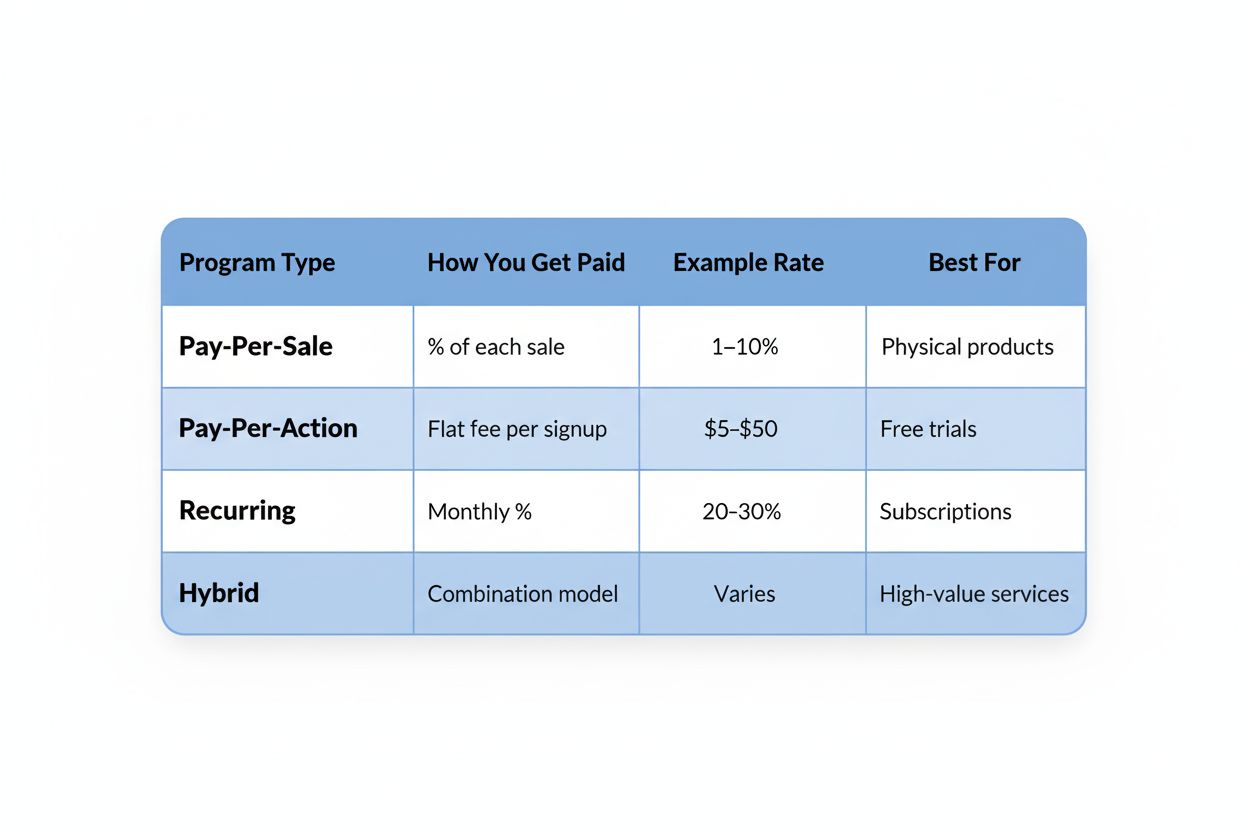
Different programs structure payments differently. Understanding the models helps you choose which programs to join.
Pay-per-sale programs give you a commission when someone buys. Amazon Associates works this way. You earn a percentage of the sale price, typically 1-10% depending on product category.
Pay-per-action programs pay when someone completes a specific action, like signing up for a free trial or submitting their email. Software companies often use this model. You might earn $5-$50 per qualified signup.
Recurring commission programs pay you monthly as long as the customer stays subscribed. Web hosting, software-as-a-service, and membership sites often offer this. If you refer someone to a $30/month service with 20% recurring commission, you earn $6 every month they remain a customer.
Hybrid programs combine multiple payment types. You might get a one-time bonus for the initial sale plus recurring commissions on subscription renewals.
SendPulse emphasizes that referred customers stay loyal and purchase often. For creators, this means recurring commission programs can build passive income. One video promoting a subscription service can generate income for months or years.
Building a Referral Strategy That Scales
Random affiliate links in descriptions generate pocket change. A deliberate strategy builds real income.
Start by auditing the products you already use and recommend. Make a list of everything you mention in videos: gear, software, services, books, courses. Check if each company has an affiliate program. Most do.
Join relevant affiliate networks. Amazon Associates covers millions of products. ShareASale, CJ Affiliate, and Impact connect you with thousands of brands. Creator-focused platforms like Gumroad and Teachable have built-in affiliate options for digital products.
Create dedicated review and tutorial content. A video titled "Best Budget Microphones for YouTube" naturally includes multiple affiliate links. A tutorial on "How I Edit Videos in DaVinci Resolve" positions the software link as helpful rather than promotional.
Track what works. Most affiliate programs provide dashboards showing clicks, conversions, and earnings per link. If your camera gear links convert well but your book recommendations don't, adjust your strategy.
Build an email list. YouTube owns your subscriber relationship. An email list is yours. When you launch a new video with referral links, email your list. According to Tremendous, referral marketing is active and structured, providing clear metrics. Email gives you another channel to activate those referrals.
Test different presentation styles. Some creators mention products casually. Others create detailed reviews. Some put links in descriptions with minimal callout. Others dedicate video segments to explaining why they recommend something. Your audience will respond differently than someone else's.
What Not to Do
Certain approaches backfire, damaging your channel and income potential.
Don't join every program available. Promoting 50 different products dilutes your message and confuses your audience. Focus on products you genuinely use and believe in.
Don't hide your affiliate relationships. Disclosure isn't optional. The FTC requires it, YouTube requires it, and your audience deserves it. A simple statement in your video and description covers you legally and ethically.
Don't let referrals dictate your content. If you start creating videos just to promote products, your channel becomes an infomercial. Your audience will leave. Create content that serves your viewers first. Referrals should enhance that content, not replace it.
Don't promote competing products simultaneously. If you tell viewers to buy Camera A in one video and Camera B in the next video, you look indecisive or mercenary. Pick the product you actually prefer and stick with it.
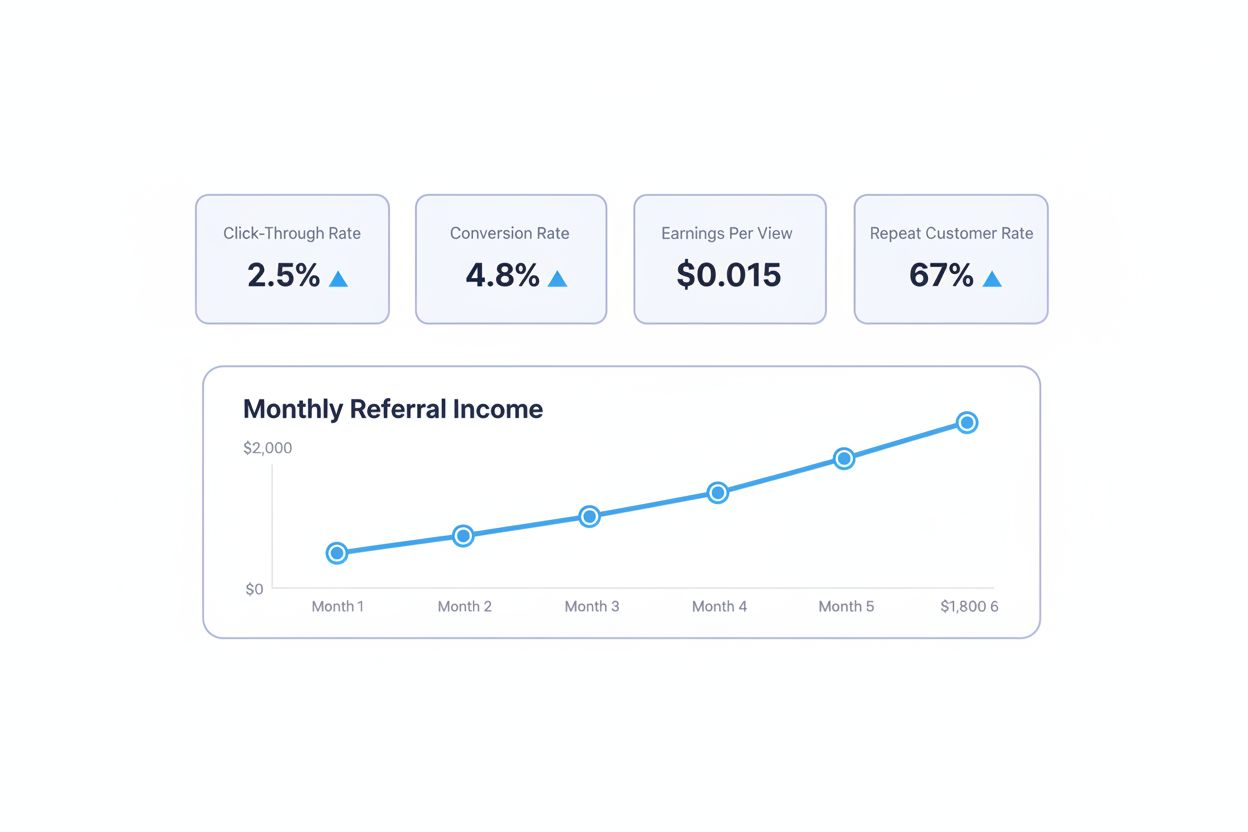
Don't expect instant results. Referral Factory notes that referral marketing is growing fast, but building a profitable referral strategy takes time. Your first month might generate $50. Six months in, you might hit $500. A year later, $2,000. Consistency compounds.
How to Measure Success
Revenue matters, but other metrics tell you if your strategy works.
Click-through rate shows what percentage of viewers click your links. If 10,000 people watch your video and 200 click your affiliate link, that's a 2% CTR. Higher is better, but rates vary by niche and product.
Conversion rate shows what percentage of clicks become sales. If 200 people click and 10 buy, that's a 5% conversion rate. This number depends partly on the product and partly on how well you've matched the product to your audience.
Earnings per view divides total referral income by video views. If a video gets 50,000 views and generates $500 in referral commissions, that's $0.01 per view. Compare this to your ad revenue per view to see which income stream performs better.
Repeat customer rate matters for recurring commission programs. If someone you refer stays subscribed for 12 months, that's far more valuable than someone who cancels after one month.
Tremendous emphasizes that referral marketing provides clear metrics for success. Use those metrics to refine your approach. Double down on what works. Cut what doesn't.
The Long Game
Referral marketing isn't a get-rich-quick scheme. It's a legitimate business model that rewards creators who build trust with their audience and recommend products thoughtfully.
According to SendPulse, 92% of people rely on advice from close people when making purchase decisions. Your viewers watch your content regularly. They hear your voice, see your face, and follow your recommendations. That relationship has value.
The creators earning serious money from referrals didn't get there by spamming links. They built audiences around specific topics, became known for expertise in those areas, and recommended products that genuinely helped their viewers.
Your referral income grows as your channel grows. A video with 5,000 views might generate $50 in referrals. The same video with 50,000 views might generate $500. As your back catalog expands, older videos continue generating referral income months or years after publication.
Start small. Pick three products you actually use. Join their affiliate programs. Mention them naturally in relevant videos. Track the results. Adjust based on what you learn.
Referral Factory points out that referral marketing is growing fast. More companies are launching programs. More creators are participating. The opportunity exists, but so does the competition.
What sets successful creator referrals apart is authenticity. Your viewers can tell when you believe in a product versus when you're chasing a commission. Build your referral strategy on genuine recommendations, and the income will follow.