Referral Marketing Benefits: Why YouTubers Are Leaving Money on the Table

You spend hours filming, editing, and optimizing your YouTube videos. Your subscriber count grows steadily. Your views climb. But when you check your AdSense dashboard, the numbers feel disappointing. A video with 50,000 views might earn you $100 to $300, depending on your niche and CPM rates.
Meanwhile, creators with similar audience sizes are generating thousands of dollars per month through a revenue stream you might be overlooking: referral marketing.
According to Novice Income, even relatively small creators can sign up with referral programs and start turning their viewership into income without needing direct sponsorships or their own products. Yet many YouTubers still rely almost entirely on ad revenue, missing out on a monetization method that delivers significantly better returns.
This guide breaks down the concrete financial benefits of referral marketing for YouTubers and shows you why it should be a core part of your revenue strategy, not an afterthought.
The Financial Reality: Referral Programs Pay More Than Ads
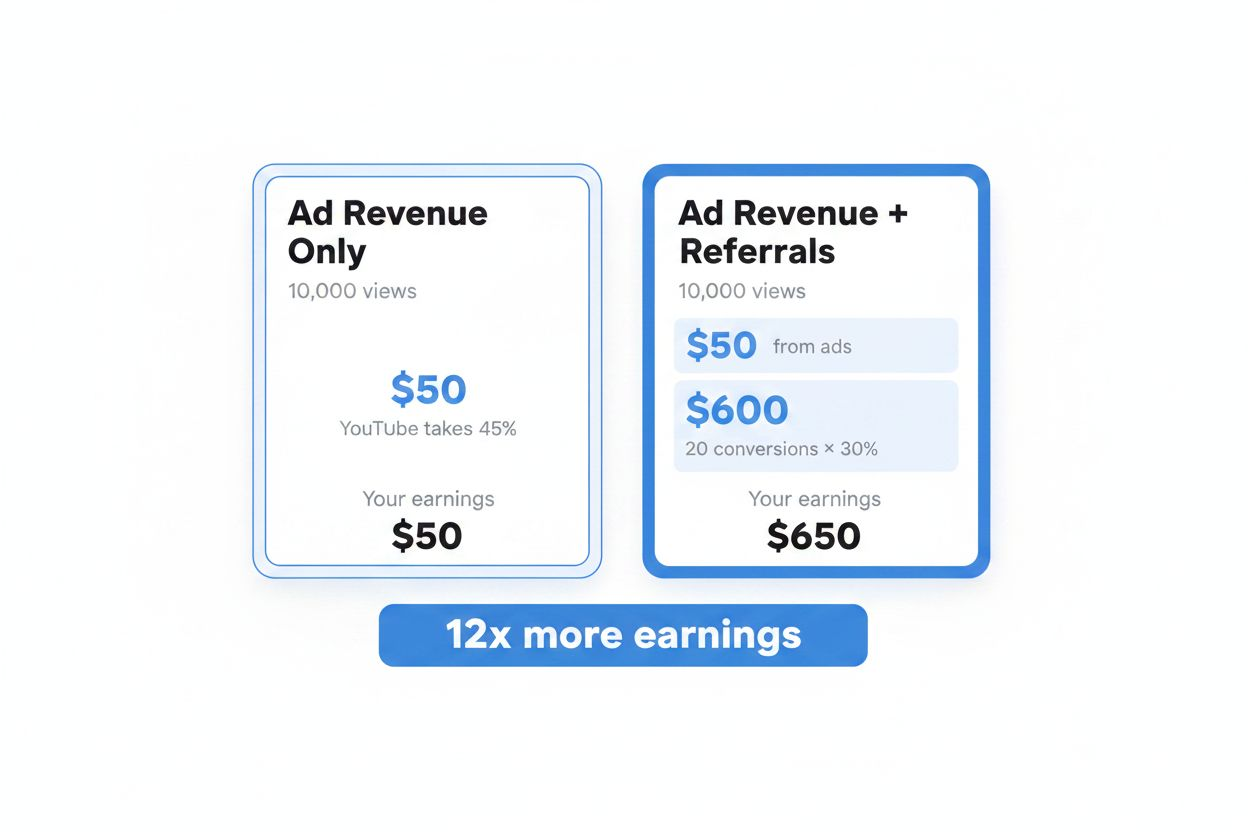
YouTube's ad revenue model takes a substantial cut before money reaches your pocket. YouTube keeps 45% of ad revenue, leaving creators with 55%. For a video that generates $200 in ad revenue, you receive $110.
Referral programs work differently. According to MilX, affiliate programs pay creators directly, bypassing YouTube's ad revenue cut entirely. You keep 100% of what the program pays you.
The commission structures often exceed what you would earn from ads on the same viewers. Consider these examples:
- Sellfy offers 25% recurring revenue for as long as a referred user stays subscribed. If you refer someone to a $29/month plan, you earn $7.25 every single month they remain a customer.
- Amazon Associates commissions range from 1-10% by category. While rates vary, the global reach compensates for lower percentages in some categories.
- Software and digital product referral programs often pay 20-50% commissions on sales, with some offering $50-$200 per conversion.
Let's compare the math. You create a video reviewing productivity software. The video gets 10,000 views and earns $50 from ads. If just 20 viewers (0.2% conversion) click your referral link and purchase a $100 software subscription at 30% commission, you earn $600 from referrals versus $50 from ads.
Lower Acquisition Costs Mean Better Business Fundamentals
If you plan to build a sustainable creator business, understanding customer acquisition costs matters. According to Deloitte research cited by Entrepreneurs HQ, referral programs lower customer acquisition costs by 24%.
For YouTubers, this translates to practical advantages. When you recommend a product through a referral link, you are not spending money on ads to drive traffic. Your video content serves as the marketing vehicle. The company whose product you are promoting benefits from lower acquisition costs, which is why they are willing to pay you generous commissions.
This creates a win-win dynamic. The company gets customers at a lower cost than they would pay for traditional advertising. You get paid for recommendations you might make anyway. Your audience gets introduced to products that solve real problems.
The efficiency of this model explains why referral marketing delivers such strong returns. Harvard Business Review research from 2024 found that referral programs deliver 4x higher ROI than digital advertising. That four-fold advantage comes from the trust factor built into creator recommendations.
The Trust Advantage: Your Audience Actually Listens to You
Viewers skip ads. They install ad blockers. They tune out during sponsored segments that feel forced. But when you genuinely recommend a tool you use in your workflow, they pay attention.
This trust translates directly into conversion rates. According to First Page Sage data from 2025, the average B2B conversion rate for referrals is 11% compared to just 1.2% for affiliate marketing. That's a nearly 10x difference in how many people take action.
The distinction matters for YouTubers. When you integrate a referral naturally into your content, it performs more like a referral than a cold affiliate link. You are not a faceless website promoting random products. You are a creator your audience has chosen to follow, often for months or years.
This relationship creates permission to recommend products. Your viewers want to know what tools you use, what gear you bought, what software runs your workflow. Referral marketing lets you answer those questions while generating revenue.
The lifetime value of referred customers reinforces this advantage. Harvard Business Review found that referred customers have a 25% higher lifetime value. For recurring commission programs, this means your initial referral continues paying you month after month as long as the customer stays subscribed.

You Do Not Need Sponsorships or Your Own Products
One of the biggest misconceptions about YouTube monetization is that you need either a massive audience for sponsorships or your own products to sell. Referral marketing removes both barriers.
Novice Income points out that referral and affiliate programs do not require a direct sponsorship or your own product to generate steady YouTube profit. You can start with 1,000 subscribers or 100,000 subscribers. The programs are open to creators at any level.
This accessibility changes the monetization timeline for new creators. Instead of waiting until you hit 10,000 subscribers to attract sponsor interest, you can start earning referral commissions immediately. Every video becomes an opportunity to recommend relevant products and services.
The process is straightforward. According to Novice Income, creators mention or promote referral offers in videos or video descriptions, earning commissions when viewers take action. You do not need to negotiate contracts, meet minimum follower requirements, or create your own products.
You simply:
- Join referral programs relevant to your niche
- Use the products or services yourself
- Mention them naturally in your content
- Include referral links in your description
- Earn commissions when viewers convert
This model works across every YouTube niche. Tech reviewers can promote software and gadgets. Fitness creators can recommend workout equipment and supplements. Personal finance channels can share investment platforms and budgeting tools. Gaming channels can promote gaming peripherals and platforms.
Strategic Placement Maximizes Conversion Rates
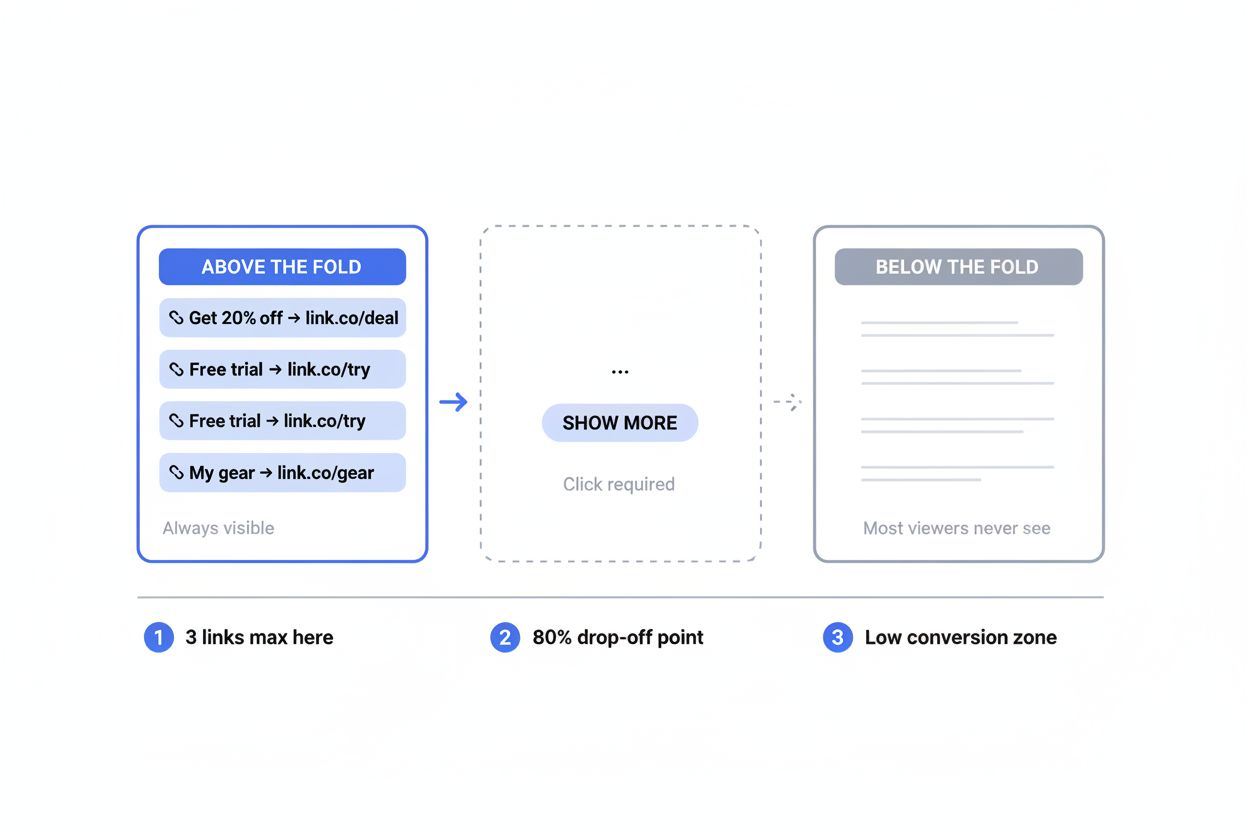
Where and how you present referral links significantly impacts your earnings. MilX research found that creators should place affiliate links in the top 3 lines of video descriptions and use clear CTAs for best results.
The top three lines matter because YouTube truncates descriptions after the first few lines. Viewers must click "Show more" to see the rest. If your referral links are buried at the bottom, most viewers will never see them.
Effective placement looks like this:
Top of description: Get 20% off the project management tool I use: [link] Try the video editing software from this tutorial: [link] Download the free productivity template: [link]
Below the fold: Timestamps, social media links, additional resources
The call-to-action in your video matters just as much. Vague mentions do not convert well. Specific, actionable CTAs do.
Weak CTA: "Check out the links in the description."
Strong CTA: "I have put the exact camera I am using to film this video in the description. If you click that link and make a purchase, I earn a small commission at no extra cost to you, and it helps me keep making these videos."
The second version tells viewers exactly what to do, what they will find, and how it benefits you. Transparency builds trust, which increases conversion rates.
Diversification Protects Your Income
Relying solely on YouTube ad revenue creates vulnerability. Algorithm changes can tank your views overnight. Advertiser boycotts can drop CPM rates by 50% or more. Demonetization can eliminate ad revenue entirely from certain videos.
Referral marketing provides income diversification. When ad rates drop, your referral commissions remain stable. When a video gets demonetized for controversial content, your referral links still work. When the algorithm changes and your views decrease, your existing referral relationships continue generating recurring commissions.
This stability matters for professional creators. If YouTube is your full-time income, you cannot afford to depend on a single revenue stream controlled entirely by one platform. Referral marketing puts some of your income under your control.
The best creators build multiple referral relationships across different programs. You might earn from:
- Software subscriptions (recurring monthly commissions)
- Physical products (one-time commissions on each sale)
- Digital courses (high-value commissions per conversion)
- Service platforms (commissions when users sign up)
Each program operates independently. If one company changes their commission structure or shuts down their program, your other referral income continues unaffected.
Referral Marketing Scales With Your Audience
Ad revenue scales linearly with views. Double your views, roughly double your ad revenue. Referral marketing can scale exponentially because older videos continue generating commissions long after publication.
A tutorial video you published two years ago still ranks in search results. New viewers discover it monthly. Each new viewer who clicks your referral link generates fresh commission, even though you created the video years ago. You do not need to create new content to earn from that video.
This creates compounding returns. As your video library grows, you accumulate more evergreen content with referral links. Each video becomes a passive income asset that works for you indefinitely.
The effect multiplies when you focus on evergreen content. Product reviews, tutorials, how-to guides, and educational content continue attracting viewers for years. Time-sensitive content about news or trends stops generating views quickly. Choose your referral content strategically to maximize long-term earnings.
Recurring commission programs amplify this scaling effect. A single video that refers 100 customers to a subscription service at $5/month recurring commission generates $500 monthly passive income. That income continues as long as those customers remain subscribed, requiring zero additional work from you.

Choosing the Right Referral Programs for Your Niche
Not all referral programs deliver equal value. The best programs for YouTubers share several characteristics:
High commission rates: Look for programs offering 20% or higher commissions. Lower rates can still work for high-ticket items, but percentage matters for smaller purchases.
Recurring commissions: Programs that pay monthly recurring commissions create passive income streams. A single referral can generate income for months or years.
Long cookie windows: Cookie windows determine how long after someone clicks your link you still get credit for their purchase. 30-day cookies are standard. 60-90 day cookies are better.
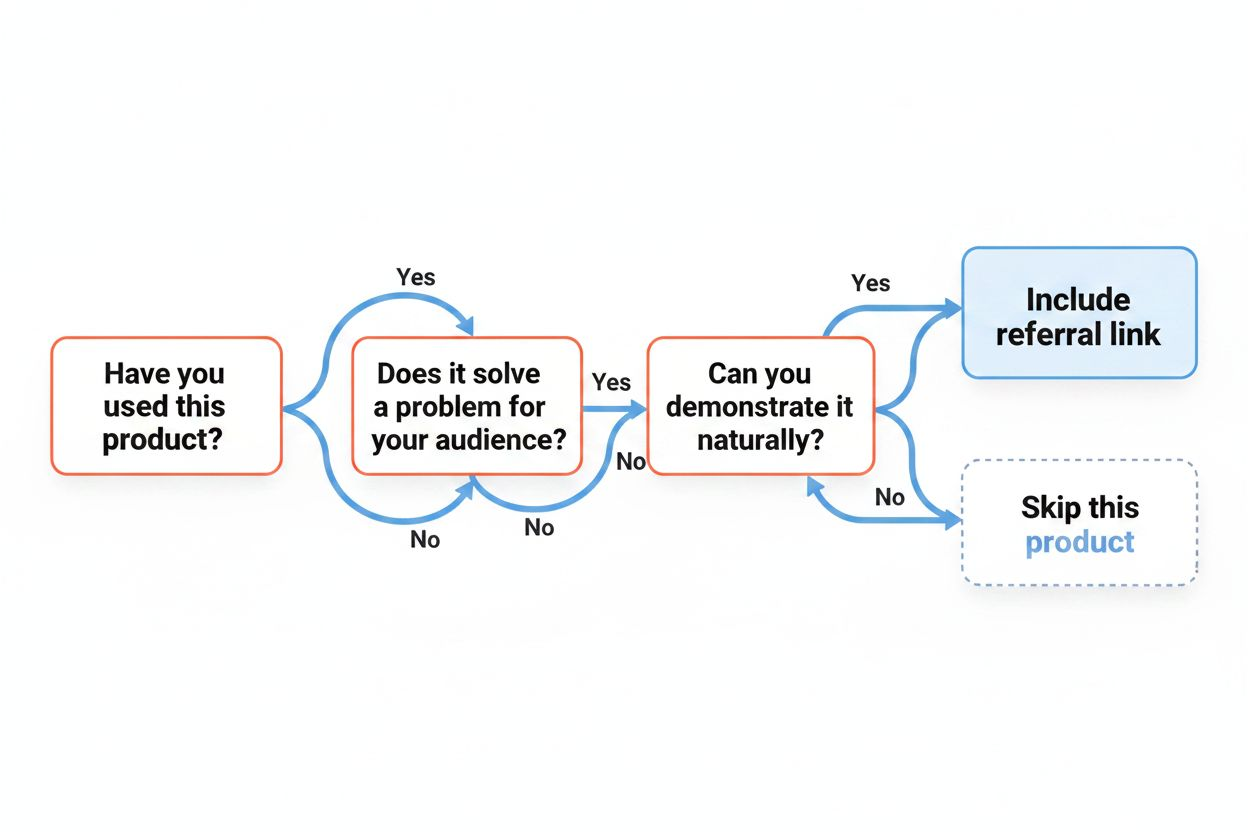
Products you actually use: Authenticity drives conversions. Only promote products you have personal experience with and genuinely recommend.
Reliable tracking and payments: Research program reputation before joining. Late payments or attribution problems waste your time and cost you money.
Relevant to your audience: The product should solve a problem your specific audience faces. Tech channels should not promote cooking gadgets just because commissions are high.
Popular referral programs for YouTubers include:
- Amazon Associates (broad product range, lower commissions, global reach)
- Software companies (Sellfy, Adobe, Canva, productivity tools)
- Web hosting and website builders (Bluehost, Wix, Squarespace)
- Online course platforms (Skillshare, Udemy, Teachable)
- Financial services (investment apps, banking, credit cards)
- Physical products relevant to your niche (camera gear, fitness equipment, art supplies)
Start with 3-5 programs closely aligned with your content. Test different products and track which ones your audience responds to. Double down on what works.
Integration Strategies That Feel Natural
The difference between effective referral marketing and annoying promotion comes down to integration. Forced product mentions feel like ads. Natural integration feels like helpful recommendations.
Effective integration techniques:
Show the product in use: Do not just mention a tool. Use it on camera. Walk through your actual workflow. Let viewers see the product solving a real problem in real time.
Create dedicated review or tutorial content: In-depth product reviews and tutorials provide value while naturally incorporating referral links. Viewers searching for information about specific products have high purchase intent.
Mention products as part of your process: When explaining how you achieved a result, mention the tools you used. "I edited this video in Premiere Pro" becomes natural when you are discussing your editing workflow.
Include products in setup tours or gear videos: Studio tours, desk setups, and "what's in my bag" videos create perfect opportunities to showcase products you use daily.
Answer audience questions: When viewers ask what camera you use or what software you recommend, create content answering those questions. Your referral links provide the specific answer they requested.
Build comparison content: "X vs. Y" comparison videos attract viewers actively deciding between products. These viewers have high conversion potential because they are already in buying mode.
Avoid these integration mistakes:
- Promoting products you have never used
- Interrupting content flow with forced product mentions
- Recommending products that do not fit your niche
- Failing to disclose referral relationships
- Overselling or making exaggerated claims
- Promoting too many different products in one video
The Federal Trade Commission requires clear disclosure of referral relationships. A simple statement like "This video contains affiliate links, which means I may earn a commission if you make a purchase through these links at no additional cost to you" satisfies legal requirements and maintains audience trust.
Tracking Performance and Optimizing Results
Successful referral marketing requires tracking what works. Most referral programs provide analytics dashboards showing clicks, conversions, and earnings per link.
Key metrics to monitor:
Click-through rate: What percentage of viewers click your referral links? Low CTR suggests poor placement, weak CTAs, or misaligned product recommendations.
Conversion rate: What percentage of clicks result in purchases? Low conversion rates might indicate the product does not match audience needs or your recommendation was not compelling enough.
Earnings per video: Which videos generate the most referral income? Analyze what makes these videos effective and replicate those elements.
Earnings per click: This metric reveals which products your audience actually buys. High EPC means strong product-audience fit.
Use this data to refine your approach. If tech product reviews convert well but lifestyle content does not, create more tech reviews. If one referral program consistently outperforms others, prioritize that program.
Test different variables:
- Link placement (top of description vs. pinned comment vs. end screen)
- CTA phrasing (direct vs. soft sell)
- Product types (software vs. physical products)
- Content formats (reviews vs. tutorials vs. comparisons)
- Disclosure language (brief vs. detailed)
Track changes and measure impact. Small optimizations compound over time into significantly higher earnings.
Building Long-Term Referral Relationships
The most successful YouTubers treat referral marketing as relationship-building, not transactional promotion. When you consistently deliver value to both your audience and the companies you promote, opportunities expand.
Strong performance with a referral program can lead to:
- Higher commission rates negotiated directly with the company
- Exclusive discount codes for your audience
- Early access to new products for review
- Invitations to formal sponsorship deals
- Partnership opportunities beyond standard referral terms
Companies notice creators who drive significant conversions. If you refer 500 customers to a software company, you have demonstrated real value. That leverage opens doors to better terms and deeper partnerships.
Building these relationships requires:
Consistent promotion: Do not mention a product once and forget it. Reference tools you use regularly across multiple videos when relevant.
Quality over quantity: Better to promote five products effectively than 50 products poorly. Deep integration with fewer programs outperforms shallow mentions of many programs.
Audience feedback: Pay attention to how your audience responds. If they love a product you recommended, tell the company. Positive feedback strengthens your relationship.
Professional communication: When reaching out to companies about referral programs, be professional. Show them your channel metrics, explain your audience, and demonstrate how you would promote their product.
Transparency: If a product stops meeting your standards or you find a better alternative, be honest with your audience. Long-term trust matters more than short-term commissions.
The Compound Effect of Referral Marketing
The true power of referral marketing for YouTubers emerges over time. Each video with referral links becomes an asset. Each satisfied customer who continues a subscription generates recurring income. Each successful product recommendation builds audience trust that makes future recommendations more effective.
This compounds in ways ad revenue cannot match. A video from 2020 might still generate $50-$100 monthly from referral commissions in 2025, long after its ad revenue has declined to near zero. Multiply that across dozens or hundreds of videos, and you create substantial passive income.
The math becomes compelling quickly. If you publish two videos per week with relevant referral links, you add 100+ referral-generating videos to your library each year. Even if each video only generates $20-$30 monthly in referral income, that's $2,000-$3,000 in passive monthly income after one year, growing to $4,000-$6,000 after two years.
These numbers assume modest performance. Creators who optimize their referral strategy, choose high-value programs, and create content specifically designed to drive conversions often see significantly higher returns.
Why Most YouTubers Still Miss This Opportunity
Despite the clear financial advantages, many YouTubers either ignore referral marketing entirely or implement it poorly. Common reasons include:
Misconceptions about audience size: Creators assume they need huge audiences before referral marketing works. In reality, even small, engaged audiences convert well when recommendations are genuine and relevant.
Fear of seeming salesy: Creators worry that promoting products will alienate their audience. When done authentically, the opposite is true. Audiences appreciate helpful recommendations.
Lack of strategy: Throwing random affiliate links in descriptions without integration or optimization produces poor results. This leads creators to conclude referral marketing does not work, when the real issue is poor execution.
Overreliance on ad revenue: Creators who start earning decent ad revenue often become complacent. They do not explore additional revenue streams until ad revenue drops or they hit a ceiling.
Not understanding the numbers: Many creators do not calculate the potential earnings from referral marketing compared to ads. When you run the numbers, the advantage becomes obvious.
The creators who overcome these barriers and implement strategic referral marketing consistently report that it becomes their highest-earning revenue stream, often exceeding ad revenue, memberships, and merchandise combined.

Taking Action: Your First Steps
If you have been leaving referral marketing money on the table, here is how to start:
This week:
- Identify 3-5 products or services you genuinely use and recommend
- Research referral programs for those products
- Sign up for programs with the best terms
- Add referral links to your existing video descriptions, prioritizing your most-viewed evergreen content
This month:
- Create one piece of content specifically featuring a product you can refer
- Test different link placements and CTAs
- Track your first conversions and earnings
- Analyze what worked and what did not
This quarter:
- Expand to 5-10 referral programs aligned with your niche
- Create a content calendar including regular referral-friendly content
- Optimize based on performance data
- Reach out to top-performing programs about better terms
The key is starting. Every video you publish without referral links is a missed opportunity. Every viewer who asks what gear you use and does not get a helpful link is potential income left unclaimed.
Referral marketing will not replace ad revenue overnight. But implemented consistently over months and years, it builds into a revenue stream that can match or exceed your ad earnings while providing better stability, higher margins, and compounding passive income.
The top YouTubers already know this. That is why they have diversified income streams where referral marketing plays a central role. The question is not whether referral marketing works for YouTubers. The question is whether you will implement it before your competitors do.