YouTube Media by the Numbers: What Every Creator Must Know in 2025

You upload your video, hit publish, and watch it disappear into an ocean of content. Every minute, 500 hours of new video flood the platform. That's 720,000 hours of fresh content every single day competing for the same eyeballs you're chasing. Understanding the scale and mechanics of YouTube media isn't optional anymore. It's the difference between building an audience and shouting into the void.
This guide breaks down the platform statistics that matter: how big YouTube really is, who's watching, what they're consuming, and where the money flows. Whether you're launching your first channel or trying to crack the algorithm with your hundredth video, these numbers will shape your strategy.
The Platform's Staggering Scale in 2025
YouTube isn't just big. It's a digital nation larger than most countries.
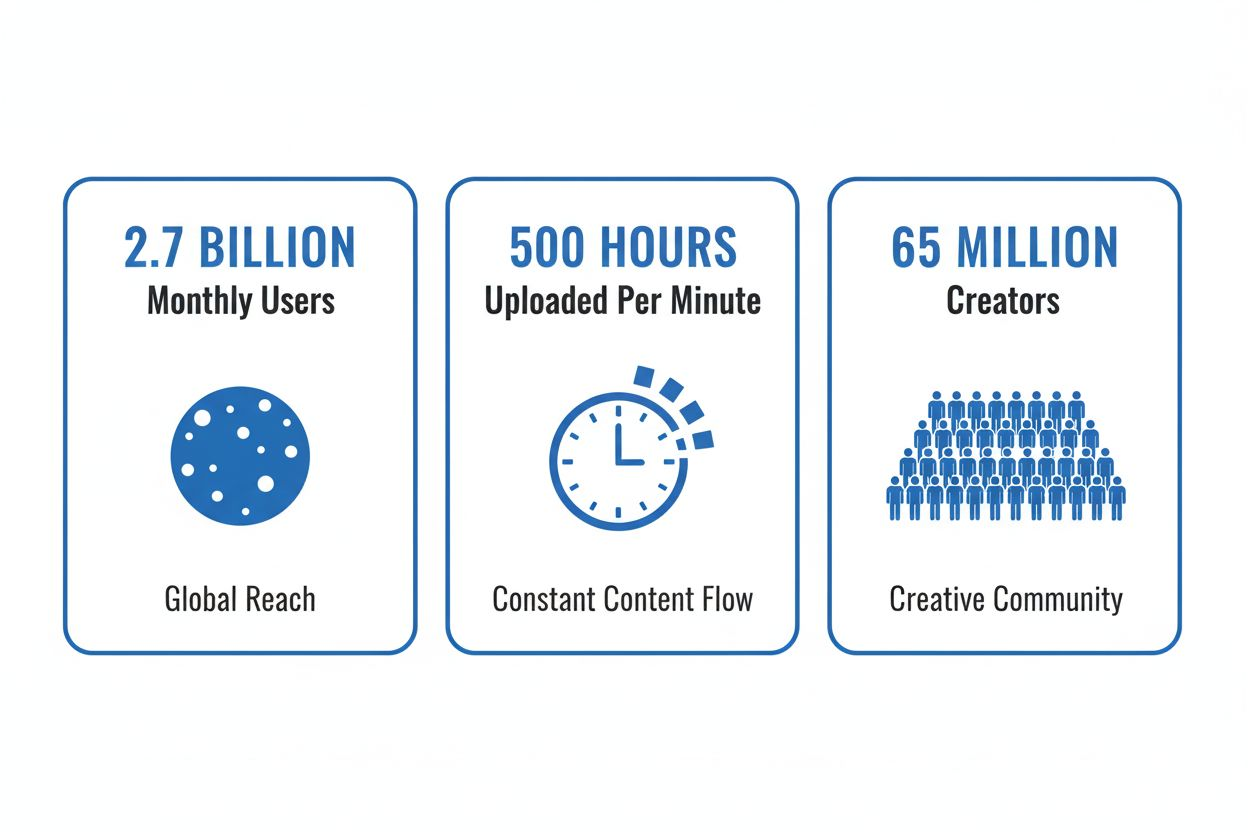
According to Teleprompter.com, YouTube has over 2.7 billion monthly active users as of 2025. That's more than one-third of the world's population. To put it in perspective, only China and India have larger populations than YouTube's user base. The platform has established a presence across 100 countries and 80 languages, making it truly global infrastructure for video content.
The platform hosts approximately 800 million videos across 113 million channels. But here's the critical detail: only about 65 million of those channels are actively creating content. The rest are dormant, abandoned, or occasional uploaders. That means if you're consistently publishing, you're already in a smaller, more serious group.
User growth hasn't plateaued. Lenos projects YouTube's user base will hit 2.85 billion by the end of 2025. That's 150 million new potential viewers in a single year.
The Upload Arms Race
Every minute you spend reading this sentence, another 500 hours of video went live on YouTube.
That 500 hours per minute figure translates to 30,000 hours per hour, or 720,000 hours of new content daily. In a single week, creators upload more video than all major U.S. television networks produced in the past 50 years combined.
This volume creates two realities. First, there's always room for new voices because the audience keeps growing. Second, standing out requires either exceptional quality, a specific niche, or both. The days of generic gaming commentary or unedited vlogs gaining traction are over unless you bring something distinct.
The 65 million active creators aren't evenly distributed. A small percentage drive the majority of views, while most channels struggle to break four-figure subscriber counts. The platform's recommendation algorithm determines who gets surfaced, and it prioritizes watch time, click-through rate, and viewer satisfaction over upload frequency alone.
Where YouTube Sits in the Media Landscape
YouTube isn't competing with other social platforms anymore. It's competing with television, streaming services, and the entire entertainment industry.
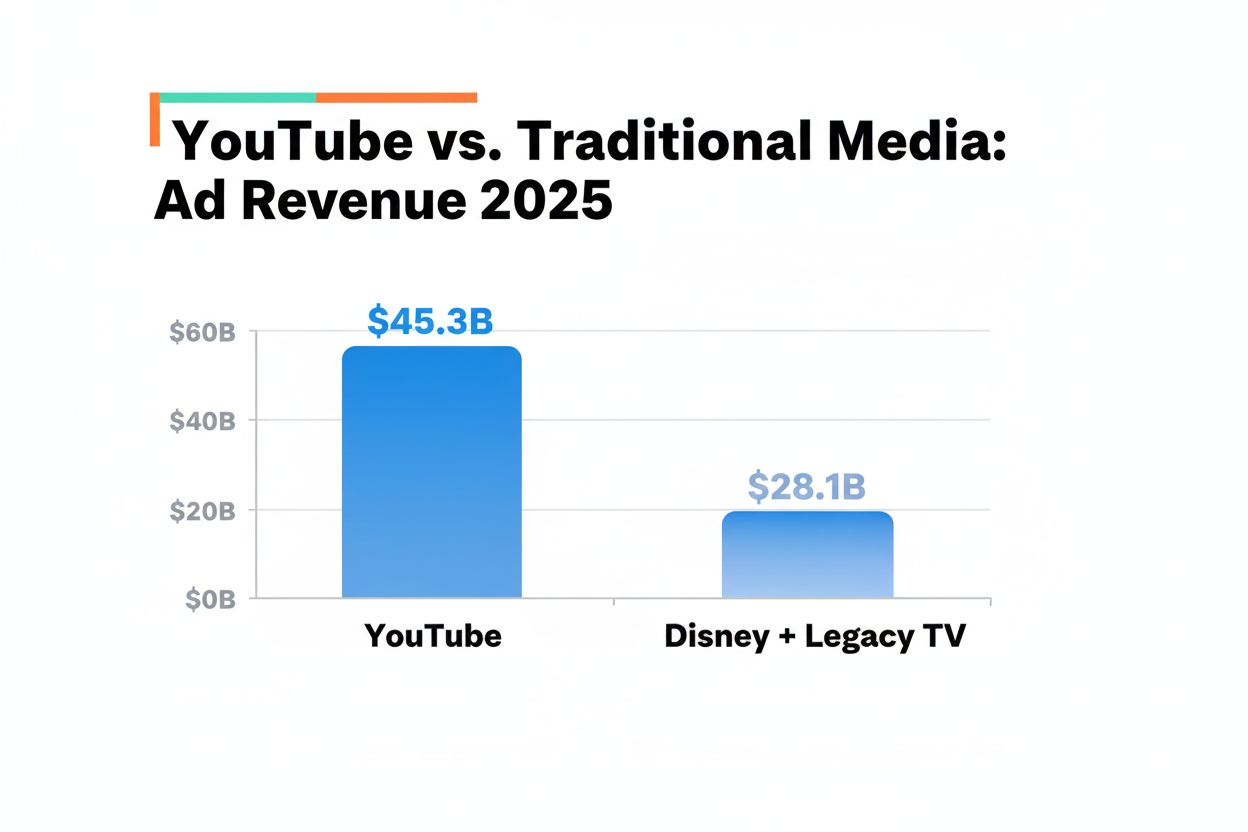
EMARKETER reports that YouTube generated $62 billion in total revenues, with over $40 billion coming from advertising alone. To contextualize that: YouTube's ad revenue exceeds the combined ad revenue of Disney and legacy television networks. The platform has become the dominant force in digital advertising, pulling budgets away from traditional media at an accelerating rate.
According to Teleprompter.com, YouTube commands a larger share of global social media time than TikTok and Instagram combined. Users aren't just scrolling through Shorts. They're watching 20-minute tutorials, hour-long podcasts, and multi-part series. The platform supports both snackable content and deep engagement, which no other social network can claim at this scale.
Content Formats That Work Now
The rise of YouTube Shorts changed the game, but it didn't replace long-form content.
EMARKETER notes that social teams are rethinking their YouTube strategy as Shorts surge while long-form and episodic content simultaneously gain traction. This dual-track success means creators need to think in terms of content ecosystems, not single video types.
Shorts work for discovery. They pull in new viewers who might never have found your channel through search or recommendations. But Shorts alone don't build loyal audiences or generate significant revenue. Long-form content drives watch time, which drives ad revenue and algorithmic favor.
Episodic content is seeing renewed interest. Series with consistent upload schedules, recurring formats, and narrative continuity perform well because they create habit-based viewing. If your audience knows a new episode drops every Tuesday, they return. The algorithm notices that pattern and rewards it.
Live streaming has exploded. Lenos found that 60% of the top 100 YouTube live streams by viewership were posted in the past two years. Live content creates urgency, real-time interaction, and longer watch sessions. It also generates clips and highlights that extend the content's lifespan.
The AI Content Question
Artificial intelligence is no longer a future concern. It's here, and viewers have opinions.
According to Lenos, 60% of users welcome AI-generated content on the platform. That's a surprisingly high acceptance rate, but it comes with caveats. Viewers accept AI as a tool, not a replacement for human creativity. AI-generated voiceovers, scripts, thumbnails, and editing assistance are fine. Fully automated channels with no human input face skepticism.
The same research shows that 52% of users have encountered virtual YouTubers. VTubers use animated avatars instead of showing their faces, often powered by motion capture and voice modulation. This format has grown from a niche in Japanese gaming culture to a mainstream content category with multi-million subscriber channels.
For creators, AI tools offer efficiency gains. You can generate video ideas, write scripts, optimize thumbnails, and analyze performance data faster than ever. But the human element—your perspective, personality, and unique take—remains the differentiator. Channels that use AI to enhance their voice succeed. Channels that let AI replace their voice blend into the noise.
Revenue Reality for Creators
YouTube's $40 billion in ad revenue sounds impressive until you realize how it's distributed.
The platform operates on a revenue-sharing model through the YouTube Partner Program. Creators receive 55% of ad revenue generated by their videos, while YouTube keeps 45%. To qualify, you need 1,000 subscribers and either 4,000 watch hours in the past 12 months (for long-form content) or 10 million Shorts views in the past 90 days.
Most creators earn between $3 and $5 per 1,000 views (CPM) after YouTube's cut, though this varies wildly by niche. Finance, technology, and business content commands higher rates because advertisers pay more to reach those audiences. Gaming, entertainment, and lifestyle content typically earn less per view but can generate higher total view counts.
The math is brutal for small channels. A video with 10,000 views might generate $30 to $50 in ad revenue. To make minimum wage from YouTube ads alone, you'd need millions of views per month. That's why successful creators diversify: sponsorships, merchandise, memberships, affiliate links, and digital products often generate more income than ads.
Shorts monetization launched in 2023, but the payout structure differs from long-form content. Shorts ad revenue is pooled and distributed based on your share of total Shorts views, and the rates are significantly lower per view. A Short with 1 million views might earn $100 to $300, while a long-form video with the same view count could earn $3,000 to $5,000.
Audience Behavior Patterns
Understanding who watches and how they watch shapes what you should create.
YouTube's audience skews younger but isn't exclusively young. The platform has strong penetration across age groups because it serves different needs: tutorials for homeowners, gaming streams for teenagers, news analysis for professionals, and cooking shows for everyone. Unlike TikTok, which is dominated by Gen Z, YouTube has multi-generational appeal.
Mobile viewing dominates. The majority of YouTube watch time happens on phones, which means your content needs to work on small screens. Text should be large and readable. Visual information should be clear without requiring a desktop monitor. Audio quality matters more than ever because many viewers use earbuds.
Session length varies by content type. Shorts sessions are brief, often just a few minutes of rapid scrolling. Long-form sessions can last hours, with viewers queuing up multiple videos or letting autoplay take over. The algorithm optimizes for session time, not just individual video performance, so keeping viewers on the platform matters.
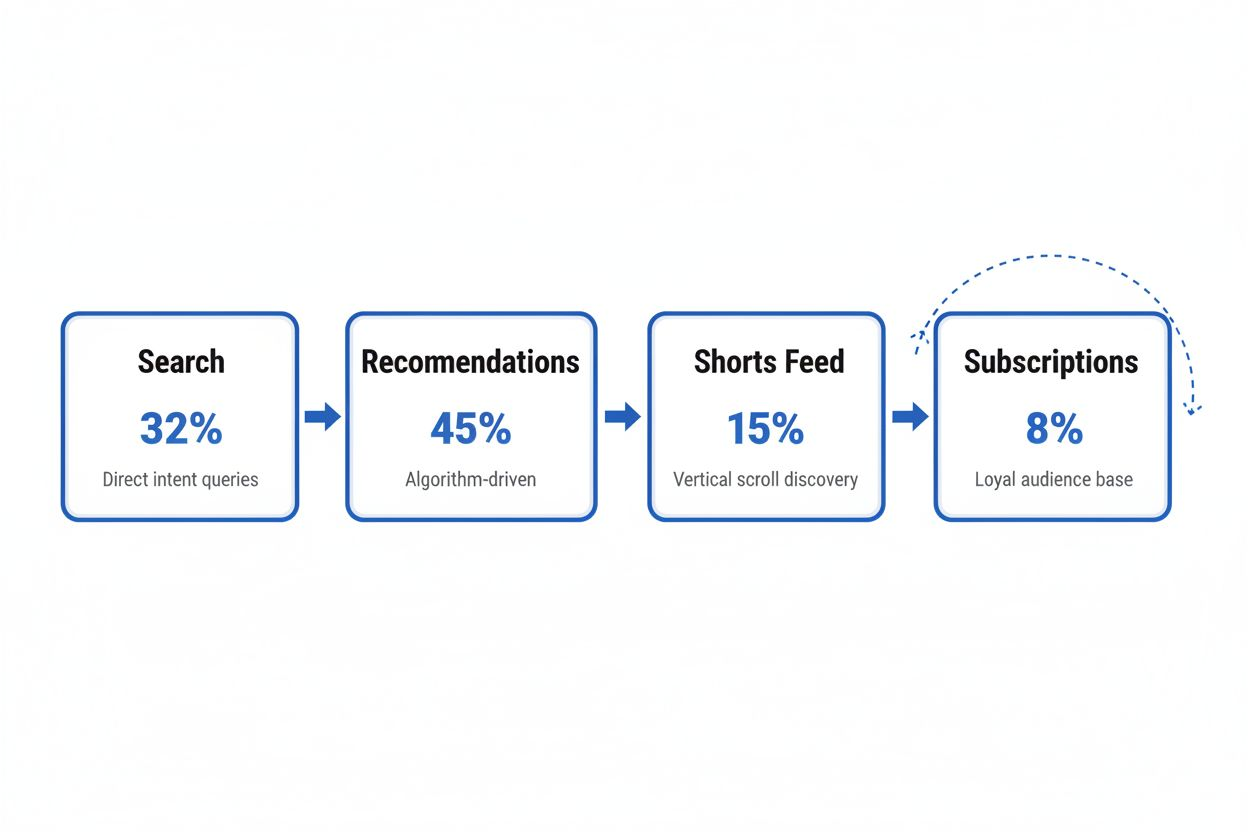
Search remains a primary discovery method. YouTube is the second-largest search engine after Google, and many users come to the platform with specific intent: how to fix something, learn something, or find entertainment around a topic. Optimizing titles, descriptions, and tags for search isn't outdated SEO advice. It's fundamental strategy.
The Recommendation Algorithm's Priorities
The algorithm isn't a mysterious black box. It optimizes for measurable viewer satisfaction.
Click-through rate (CTR) measures how often people click your video when they see it. A high CTR signals that your title and thumbnail are compelling. The algorithm tests your video with a small audience first. If that group clicks and watches, the algorithm expands distribution. If they scroll past, your video dies in obscurity.
Watch time and average view duration matter more than total views. A video with 10,000 views and 60% average view duration will outperform a video with 50,000 views and 20% average view duration. The algorithm interprets high retention as quality content worth recommending.
Engagement signals—likes, comments, shares—provide additional data points. They indicate that viewers didn't just watch passively but felt compelled to interact. Comments especially signal investment because they require more effort than a like.
Consistency helps the algorithm understand your channel. If you upload sporadically with wildly different content types, the algorithm struggles to identify your audience and recommend your videos effectively. Channels with clear niches and regular schedules perform better because the algorithm can predict who will enjoy the content.
Niche vs. Broad Appeal
The creator economy rewards specificity more than ever.
Broad entertainment channels face the most competition. Millions of creators make gaming videos, reaction content, and general vlogs. Unless you have an existing audience from another platform or exceptional charisma, breaking through is difficult.
Niche channels face less competition and attract more dedicated audiences. A channel about mechanical keyboard restoration has fewer competitors than a channel about "tech stuff." The audience is smaller, but they're more likely to subscribe, watch entire videos, and engage because the content directly serves their specific interest.
Advertisers increasingly value niche audiences. A channel with 50,000 subscribers in a specific professional field can command higher sponsorship rates than a channel with 500,000 subscribers in general entertainment because the audience is more targeted and valuable to certain brands.
The strategy isn't to stay small forever. Many successful creators start with a tight niche to build an initial audience, then gradually expand their content scope once they have momentum. Starting broad and trying to narrow down later rarely works.
What the Numbers Mean for Your Strategy
These statistics aren't just trivia. They should inform specific decisions.
If you're starting from zero, focus on searchable content in a specific niche. The 500 hours of video uploaded per minute means you can't compete on personality alone initially. You need to solve problems or serve interests that people actively search for.
If you're building an existing channel, analyze your retention graphs. YouTube Studio shows exactly where viewers drop off. If 50% of your audience leaves in the first 30 seconds, your hooks are weak. If they watch 80% but don't click your end screen suggestions, your calls to action aren't compelling.
Experiment with Shorts as a discovery tool, but don't abandon long-form content. Use Shorts to showcase your personality and tease longer videos. Think of them as trailers for your main content, not standalone products.
Invest in production quality where it matters to your niche. A cooking channel needs good lighting and clear shots of the food. A commentary channel can succeed with a webcam and a microphone. Match your production level to audience expectations for your category, not to an abstract standard of "professional quality."
The Competitive Landscape Ahead
YouTube's dominance isn't guaranteed forever, but no competitor is close to dethroning it.
TikTok excels at short-form discovery but struggles to monetize creators effectively and lacks YouTube's infrastructure for long-form content. Instagram and Facebook have video features but treat video as one element among many, not the core product. Streaming platforms like Twitch serve live content well but don't handle on-demand video at YouTube's scale.
The real competition comes from within. As more creators join the platform and production quality rises across the board, the baseline for success keeps climbing. A channel that would have thrived in 2018 with decent content and basic editing might struggle in 2025 because viewer expectations have evolved.
YouTube's investment in Shorts is a direct response to TikTok, and it's working. The platform is successfully retaining younger users who might have otherwise migrated entirely to short-form competitors. For creators, this means YouTube remains the best long-term bet for building a sustainable content business.
The platform's scale—2.7 billion users, $40 billion in ad revenue, presence in 100 countries—creates opportunities that didn't exist five years ago. International audiences are growing faster than English-speaking markets. Subtitles and dubbing tools make cross-language content more viable. A creator in Brazil can build an audience in Japan. A channel in English can add Spanish subtitles and double its addressable market.
Making Data-Driven Decisions
These numbers should change how you approach content creation.
Before you film, ask: Is there search demand for this topic? Use YouTube's search suggestions and Google Trends to validate ideas. If nobody is searching for it, your video will rely entirely on recommendations and subscriber notifications.
After you publish, ask: What does my retention graph tell me? If viewers consistently drop off at a specific point, that section is too long, too boring, or too confusing. Edit tighter next time.
Monthly, ask: Which videos are still gaining views months after publication? Those are your evergreen winners. Make more content in that vein. Which videos spiked and died? Those were timely but not sustainable. They're fine occasionally but shouldn't be your core strategy.
The 65 million active creators on a platform with 2.7 billion users means there's room for you. But the 500 hours uploaded per minute means you can't be lazy, generic, or unfocused. The creators who win are the ones who understand these numbers and use them to make smarter decisions about what to create, how to optimize it, and where to focus their energy.
YouTube media in 2025 is both more accessible and more competitive than ever. The infrastructure exists for anyone to build an audience. The challenge is cutting through the noise with content that genuinely serves a specific group of people better than the thousands of other videos uploaded in the same hour as yours.