YouTube Shorts Is the Fastest-Growing Discovery Engine in 2025: A Data Deep-Dive
You post a 60-second Short at 9 AM. By noon, it has 40,000 views. By the end of the day, 200,000. You have 3,000 subscribers, and this video just reached more people than your last ten long-form uploads combined.
This is not a lucky break. This is YouTube Shorts in 2025, and the numbers behind its growth explain why creators who ignore it are leaving massive reach on the table. While debates rage about whether short-form content "cheapens" YouTube, the platform's algorithm has made a decision: Shorts are not a side feature anymore. They are the discovery engine.
This article breaks down the data that proves YouTube Shorts has become the most powerful tool for channel growth, audience reach, and engagement on the platform. If you create video content and have not built a Shorts strategy, the statistics below will change your mind.
The View Count Explosion: From Billions to Hundreds of Billions
YouTube Shorts did not just grow. It detonated.
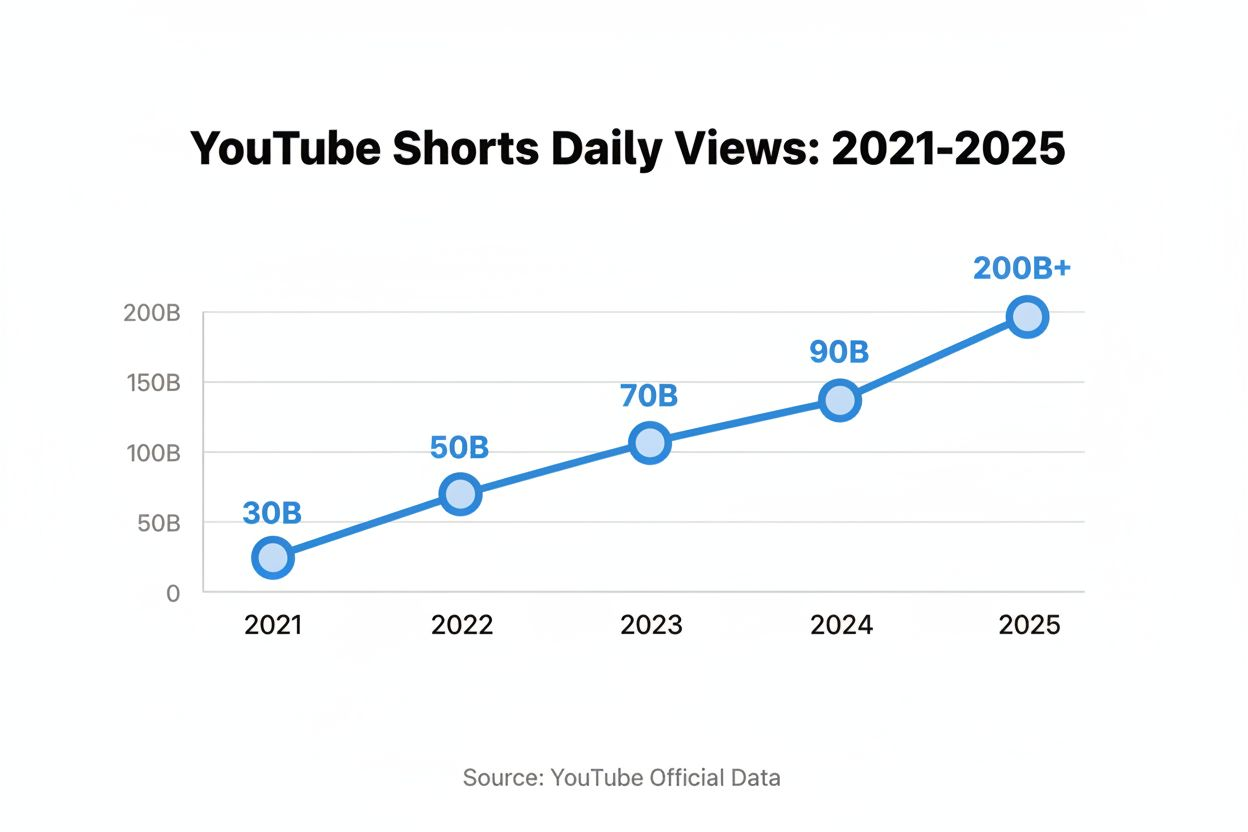
According to SendShort, daily views climbed from 30 billion in 2021 to 50 billion in 2022, then 70 billion in 2023, and 90 billion in 2024. By 2025, Loopex Digital reports that YouTube Shorts now generates over 200 billion views per day.
That is not a typo. 200 billion views. Every single day.
To put this in perspective, YouTube Shorts went from 70 billion daily views in March 2024 to 200+ billion by 2025. That is nearly triple the view count in less than a year. No other content format on any platform has shown this kind of acceleration.
What does this mean for creators? Every Short you upload enters a pool where hundreds of billions of views are distributed daily. The algorithm is actively pushing Shorts to users who have never heard of your channel. This is discovery at scale that long-form content simply cannot match.
User Base: 2 Billion Monthly Active Users and Growing
YouTube Shorts has crossed a threshold that defines platform dominance. According to DemandSage, YouTube Shorts has over 2 billion monthly active users as of 2025.
For context, that is roughly the same size as YouTube's entire user base when Shorts launched. The format has effectively created a second YouTube inside the first one.
In the United States alone, Loopex Digital reports that 175.1 million users watched Shorts in 2025, with projections reaching 192 million by 2027. That is more than half the U.S. population engaging with this format.
SendShort notes that the YouTube Shorts user base surpassed 1.058 billion as of January 2024. By 2025, that number has nearly doubled. The growth curve is not flattening. It is steepening.
For creators, this means your potential audience is not just large. It is expanding faster than you can create content for it.
Who Is Watching: Demographics That Matter
Understanding who watches Shorts helps you tailor content for maximum impact.
According to DemandSage, users aged 25-34 represent the largest demographic at 21.3% of YouTube Shorts viewers. This is not a teen platform. The core audience is working professionals, young parents, and people with disposable income.
Geographically, SendShort reports that India leads with 24.0% of the global YouTube Shorts user base, followed by the United States at 12.0%. If you create content in English, you are reaching both the largest and second-largest markets simultaneously.
This demographic spread matters because it means Shorts is not a niche. It is mainstream. Your mother-in-law watches Shorts. Your boss watches Shorts. The person deciding whether to hire you for a brand deal watches Shorts.
Engagement Rates: YouTube Shorts Beats TikTok and Instagram
Here is where the data gets interesting for creators focused on building real audience relationships.
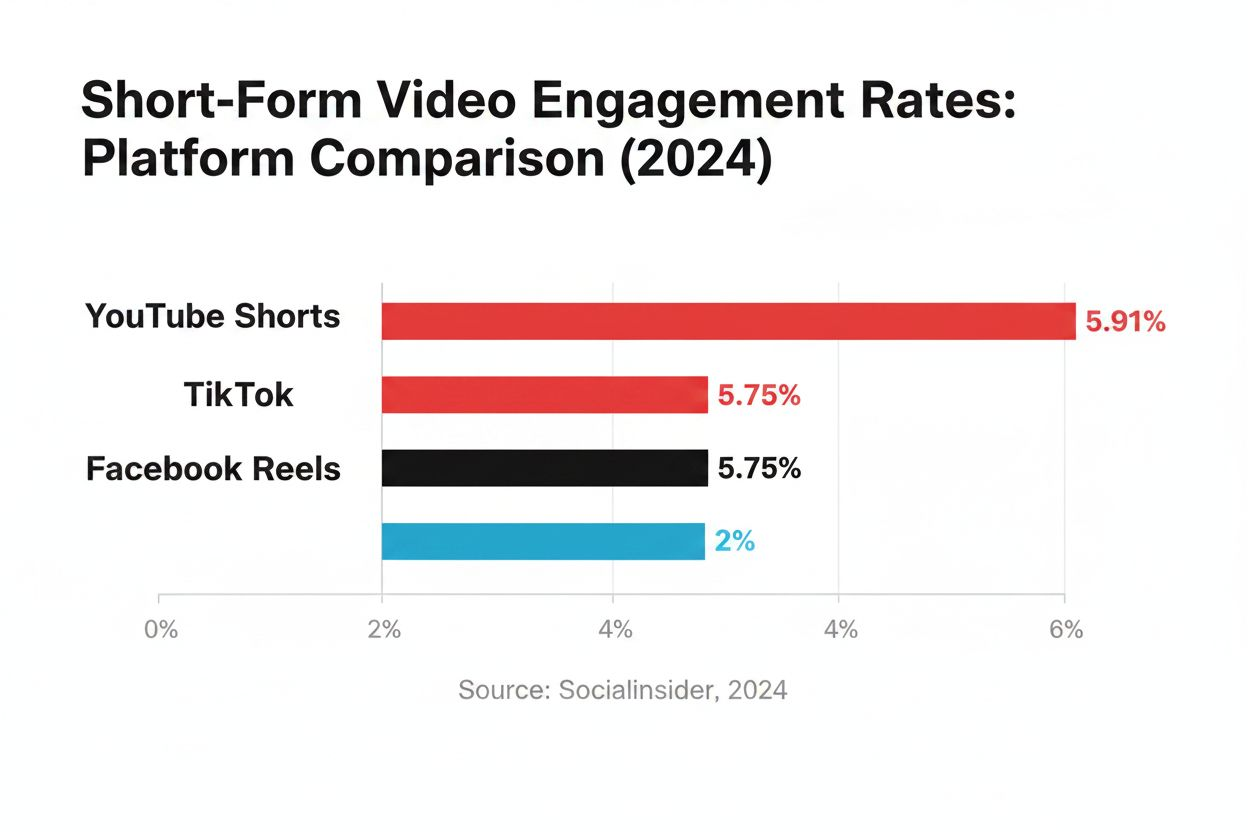
Loopex Digital reports that YouTube Shorts has an average engagement rate of 5.91%, leading all major short-form video platforms. SendShort confirms that in Q1 2024, YouTube Shorts became the top short video platform in user engagement, surpassing TikTok and Facebook Reels. The engagement rate of 5.91% outperforms TikTok's 5.75% and Facebook Reels' approximately 2%.
This is critical. Engagement rate measures how often viewers like, comment, share, or subscribe after watching. A higher engagement rate means your content is not just being consumed. It is creating action.
Why does YouTube Shorts outperform TikTok on engagement? The integration with the broader YouTube ecosystem plays a role. When someone watches your Short, they can immediately click through to your channel, subscribe, and watch your long-form content. TikTok does not have that seamless pathway to deeper content.
Additionally, Loopex Digital notes that YouTube Shorts has a strong average viewer retention rate of 73%. Nearly three-quarters of viewers watch your Short all the way through. That retention rate gives the algorithm confidence to push your content further.
Session Duration: 14 Minutes and 12-18 Videos Per Session
Shorts are not quick hits that users scroll past. They are creating sustained viewing sessions.
According to Loopex Digital, the average Shorts session lasts 14 minutes and includes 12-18 videos. That is not passive scrolling. That is active consumption.
For creators, this means your Short is not competing for a single swipe of attention. It is part of a 14-minute session where users are actively looking for more content to watch. If your Short hooks them, the algorithm will serve more of your Shorts in that same session.
This session behavior also explains why Shorts can drive subscribers so effectively. A viewer who watches three or four of your Shorts in one session is far more likely to subscribe than someone who sees a single piece of content.
The 3-Minute Shift: YouTube Expands Shorts Length
On October 15, 2024, YouTube made a move that changed the Shorts format. According to DemandSage, YouTube increased the maximum length of Shorts to 3 minutes, up from the previous 60-second limit.
This change is huge for creators who felt constrained by the one-minute cap. You can now tell more complete stories, deliver full tutorials, or build narrative tension without cutting off mid-thought.
But the data shows that shorter is still often better. DemandSage reports that Shorts with an average view duration of 50-60 seconds receive around 4 million views. That is the sweet spot: long enough to deliver value, short enough to maintain retention.
The 3-minute limit gives you flexibility, but the algorithm still rewards tight, focused content. Use the extra time when you need it, but do not pad your Shorts just because you can.
Creator Adoption: 70% of Active Channels Post Shorts
YouTube creators are not just testing Shorts. They are committing to them.
According to DemandSage, around 70% of channels uploading each month are posting Shorts. That is a massive shift in creator behavior. Shorts have gone from experimental to essential.
This adoption rate tells you two things. First, creators who are in the trenches every day see Shorts as worth their time. Second, if you are not posting Shorts, you are in the minority, and that minority is shrinking.
The creators who started posting Shorts early built audiences that now give them a built-in advantage. But the platform is still growing fast enough that new creators can gain traction. The window is open, but it will not stay this wide forever.
Why Shorts Drive Subscribers Better Than Long-Form
The conventional wisdom used to be that long-form content builds loyal audiences while short-form content generates empty views. The data shows that is wrong.
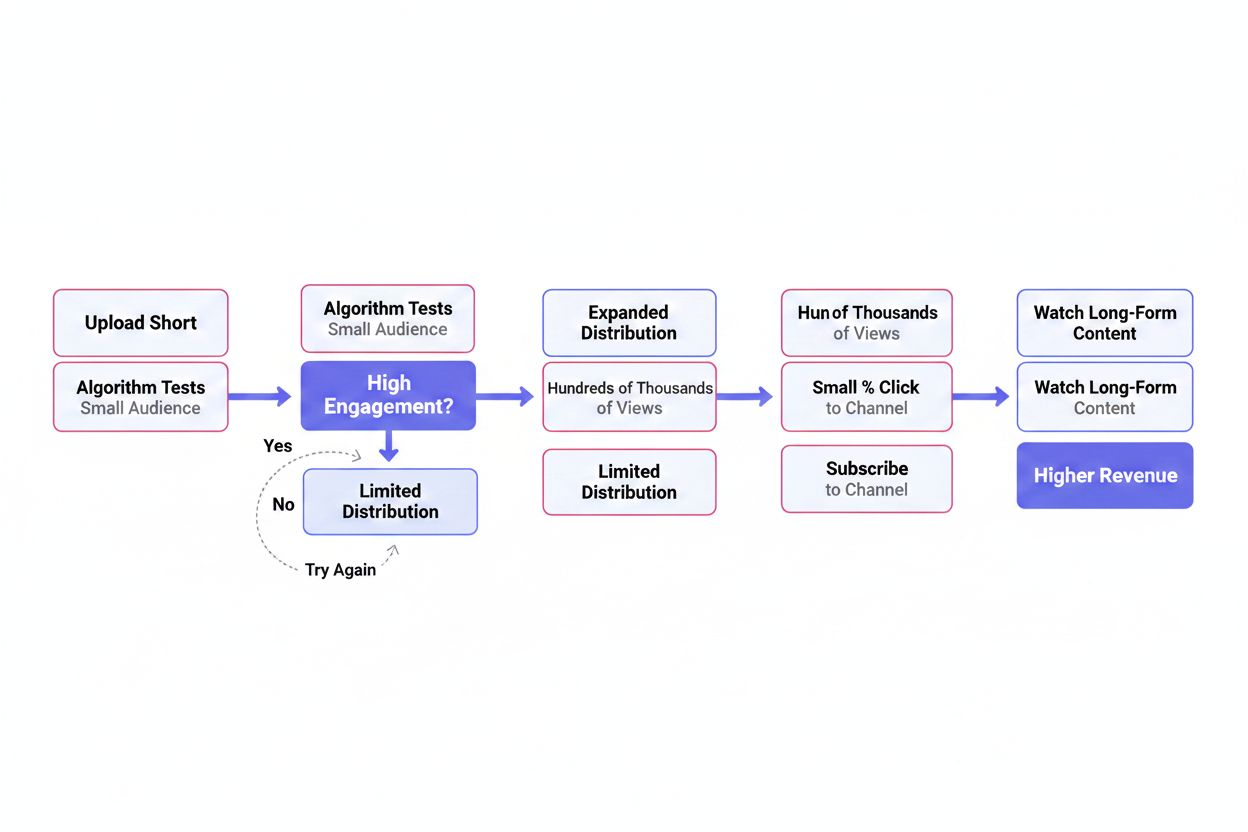
Shorts are discovery engines. They put your content in front of people who would never find your channel through search or suggested videos. When a Short performs well, it reaches hundreds of thousands or millions of viewers. A small percentage of those viewers will click through to your channel. Even 1% of 500,000 views is 5,000 potential subscribers.
The key is the click-through. Your Short needs to make viewers curious about what else you create. End screens, verbal calls to action, and content that teases your long-form videos all increase click-through rates.
Creators who treat Shorts as standalone content miss the point. Shorts are the top of the funnel. Long-form is where you build the relationship. But you need the funnel to get the audience in the first place.
The Algorithm Favors Shorts in Recommendations
YouTube's recommendation algorithm has shifted to prioritize Shorts in ways that benefit creators.
Shorts appear in multiple places: the Shorts feed, the home page, search results, and suggested videos. That is four separate discovery paths for a single piece of content. Long-form videos typically appear in two: search and suggested.
The algorithm also tests Shorts more aggressively. When you upload a Short, YouTube will push it to a small audience to measure engagement. If that test group watches, likes, and shares, the algorithm expands distribution. This happens faster with Shorts than with long-form content.
This testing mechanism means a brand-new creator can get a Short in front of a million people within 24 hours if the content resonates. That was nearly impossible with long-form content unless you had an existing audience or got lucky with search.
Monetization: Shorts Fund and Ad Revenue
Monetization for Shorts has evolved. YouTube initially paid creators through the Shorts Fund, a pool of money distributed based on performance. In 2023, YouTube shifted to ad revenue sharing for Shorts, similar to long-form content.
Creators in the YouTube Partner Program can now earn ad revenue from Shorts. The revenue per view is lower than long-form content, but the volume of views can compensate. A Short with 5 million views can generate meaningful income even at lower CPMs.
The real monetization value of Shorts is indirect. Shorts grow your subscriber base, which increases your long-form views, which drives higher ad revenue. Shorts also make you more attractive to sponsors because they prove you can reach large audiences.
If you are focused purely on revenue per video, long-form still wins. But if you are focused on total channel revenue over time, Shorts are a growth multiplier.
What Creators Should Do With This Data
The numbers make the case. YouTube Shorts is not a trend. It is the primary way new audiences discover creators in 2025.
If you are not posting Shorts, start. Aim for at least three per week. Repurpose clips from long-form videos, create original Shorts, or film quick tips in your niche. Consistency matters more than perfection.
If you are already posting Shorts, double down. Analyze which Shorts drove the most subscribers, not just the most views. Replicate the topics, formats, and hooks that convert viewers into channel followers.
Focus on the 50-60 second sweet spot for view duration. Use the first three seconds to hook attention. End with a clear reason to visit your channel.
Track your Shorts performance separately from long-form. Watch time, click-through rate to your channel, and subscriber conversion rate are the metrics that matter. Views are great, but subscribers are what build a channel.
The Competitive Advantage Is Narrowing
YouTube Shorts grew from 30 billion daily views in 2021 to over 200 billion in 2025. The user base doubled in a year. Engagement rates beat TikTok. Seventy percent of active channels are posting Shorts.
The creators who started early have built audiences that give them momentum. But the platform is still growing fast enough that new creators can gain traction. The data shows that Shorts are not just a feature. They are the engine driving YouTube's growth.
The question is not whether you should invest time in Shorts. The data answers that. The question is whether you will start now, while the growth curve is still steep, or wait until the competitive advantage narrows further.
The views are there. The audience is there. The algorithm is pushing Shorts harder than any other format. What you do with that information is up to you.