Top Trends Shaping the Future of YouTube Sponsorships
YouTube sponsorships have matured considerably since the early days of a creator awkwardly reading a brand script mid-video. What started as a simple transaction has become a sophisticated, data-driven industry with its own norms, expectations, and power dynamics. The brands investing in creator partnerships today are thinking differently about what they want, how they measure success, and which creators are worth working with long-term.
Several forces are reshaping how these deals get structured, negotiated, and executed. Understanding them matters whether you are a creator looking to build a sustainable business, a brand trying to allocate its marketing budget wisely, or simply someone curious about where the money in online video actually flows.
Performance Metrics Are Replacing Vanity Numbers
Subscriber count used to be the first thing a brand asked about. That era is ending. Brands have learned, often the hard way, that a channel with three million subscribers can deliver fewer actual conversions than one with 200,000 if the latter has a more engaged, trust-based audience.
The shift is toward metrics that actually predict whether a viewer will act. Brands are now asking for:
- Average view duration and retention curves
- Click-through rates on previous sponsor links
- Comment sentiment and community engagement patterns
- Conversion data from past campaigns, where creators can share it
This change benefits mid-size creators significantly. A channel in a specific niche, say, woodworking, personal finance, or competitive gaming, can demonstrate that its audience takes action. That specificity is worth more to the right advertiser than raw reach.
The practical consequence is that creators who track their own performance data and can present it clearly are winning better deals. YouTube's audience retention segments report lets creators compare new versus returning viewers, subscribers versus non-subscribers, and organic versus paid traffic - exactly the kind of granular data that makes a stronger pitch than any subscriber milestone.
Long-Term Partnerships Are Becoming the Default
The one-off integration is not disappearing, but the most valuable sponsorship relationships are increasingly structured as ongoing partnerships. Brands have figured out that repeated exposure through a trusted voice compounds in ways that a single mention cannot. Still, single-activation influencer relationships account for 49% of YouTube brand collaborations, which shows how much room the shift toward longer arrangements still has to run.
From the brand's side, this makes sense for several reasons. Audience trust builds over time. A viewer who sees a creator mention a product once might be skeptical. The same viewer who sees that creator use and reference the same product across six months starts to believe it is genuinely part of their life.
From the creator's side, long-term deals offer income stability and reduce the time spent pitching and negotiating. They also allow for more authentic integration since the creator has time to actually use the product and develop genuine opinions about it.
The structure of these deals varies. Some are quarterly retainers with a set number of integrations. Others are annual contracts with performance bonuses. A growing number include equity or revenue-share components, particularly in the software and fintech categories where brands are comfortable tying compensation to outcomes.
> The creator who can demonstrate audience loyalty over time, not just peak viewership, is the one brands want to lock in.
Niche Channels Are Commanding Premium Rates
The conventional wisdom used to be that bigger channels charge more. That is still true in absolute terms, but the rate per thousand views tells a different story. Niche creators in high-value categories are now charging, and getting, rates that would have seemed unrealistic five years ago.
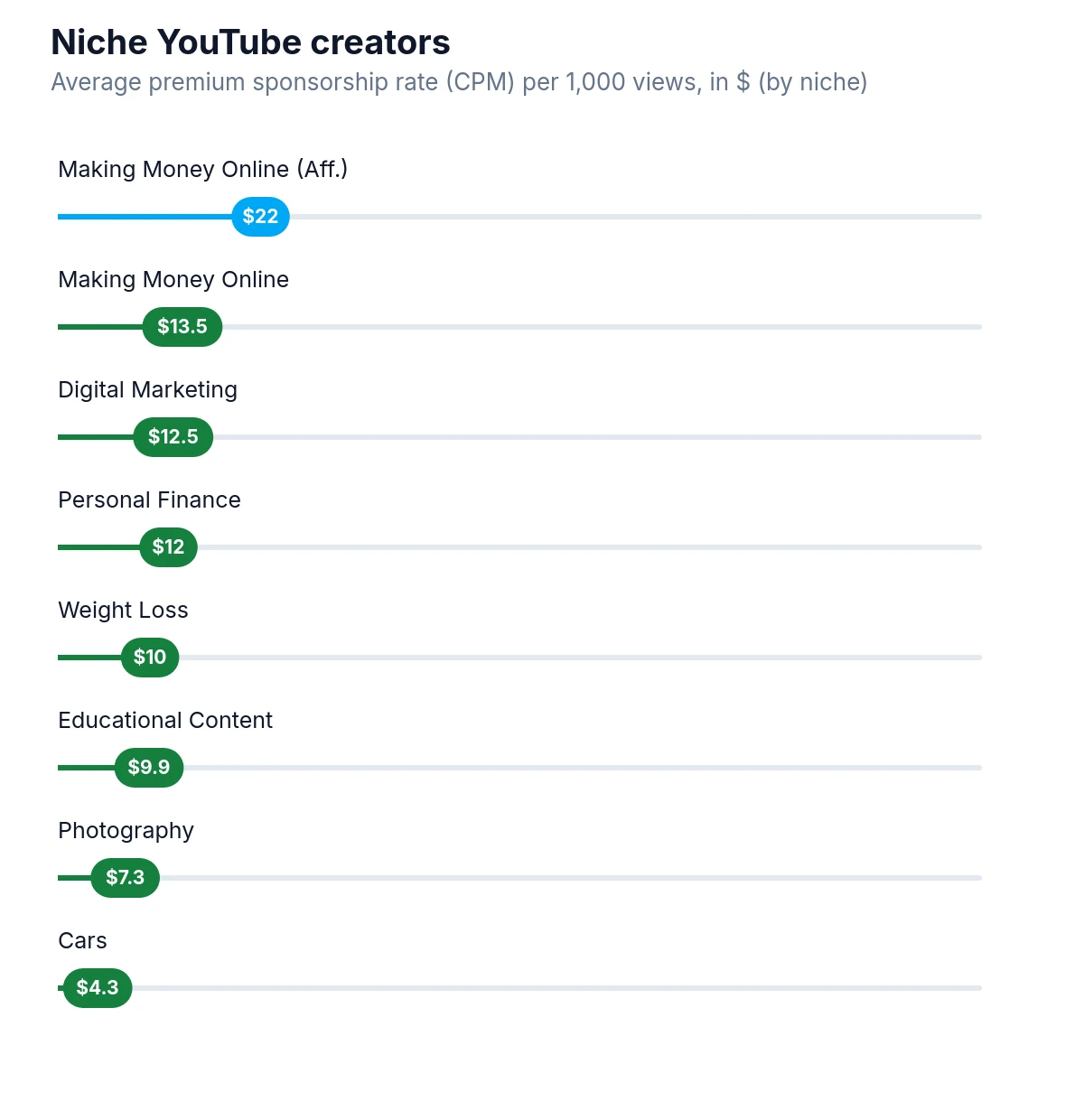
Affiliate “Making Money Online” channels have the highest average sponsorship rate at $22 per 1,000 views, compared with low-paying niches like Cars at $4.32.
The categories where this is most pronounced include personal finance, software and productivity tools, health and wellness, and professional skill development. These audiences skew toward people with disposable income and a demonstrated willingness to spend on products that improve their lives or work.
A creator teaching spreadsheet automation to accountants has an audience that is extremely valuable to software companies, even if that channel has a fraction of the subscribers of a general entertainment channel. The math works out in the niche creator's favor because the brand is paying for qualified attention, not just eyeballs.
This trend is also pushing more creators to deliberately narrow their focus rather than chasing broad appeal. The creator economy has started to reward depth over breadth in a way it did not when YouTube's primary revenue model was AdSense.
Authenticity Requirements Are Getting Stricter
Audiences have developed sharp instincts for detecting when a creator does not actually use or believe in what they are promoting. The backlash when this happens has become severe enough that brands are now factoring it into their risk assessments.
This has produced a few concrete changes in how deals are structured. More brands are sending products months before a campaign launches, giving creators time to form genuine opinions. Some are explicitly building in the right for creators to decline the integration if they do not like the product after testing it, accepting that this is cheaper than a public controversy.
Creators, for their part, are becoming more selective about category fit. Taking a sponsorship from a brand that conflicts with your channel's values or your audience's expectations is increasingly seen as a short-term gain with long-term costs. The creators who have built the most durable sponsorship businesses tend to have consistent category alignment across their partnerships.
This does not mean every integration needs to be a passionate endorsement. But the days of reading a script for a product you have never touched, in a category completely unrelated to your content, are becoming harder to sustain without audience erosion.
The Rise of Performance-Based Deal Structures
A growing portion of YouTube sponsorships now include some form of performance component. Rather than flat upfront payments, many marketers have shifted toward sales-based (affiliate) payment models that tie creator compensation directly to tracked conversions. This might be a base fee plus a commission on tracked sales, a tiered payment structure based on click volume, or a bonus triggered when a campaign exceeds a conversion threshold.
Brands like this structure because it aligns incentives and reduces the risk of paying for an integration that generates no measurable return. Creators with strong track records like it because it gives them a path to earn significantly more than a flat fee when their audience responds well.
The mechanics typically rely on unique discount codes or tracked links, which have become standard in most integrations. These tools give both parties visibility into how a campaign is actually performing, which makes the performance conversation possible in the first place.
Not every creator benefits equally from this shift. A channel whose audience tends to watch for entertainment rather than to make purchasing decisions may find that performance structures undervalue their influence. But for creators in categories where their recommendations drive real purchasing behavior, performance deals can be substantially more lucrative than flat rates.
AI and Data Tools Are Changing How Deals Get Made
The process of matching brands with creators used to rely heavily on personal relationships, agency rolodexes, and gut instinct. That is changing as data tools and platforms make the matching process more systematic.
Several platforms now allow brands to search for creators by audience demographics, engagement rates, content category, and historical sponsorship performance. This has lowered the barrier for smaller brands to run influencer campaigns and has given creators without agency representation more access to deal flow.
On the creator side, tools that analyze audience data, benchmark rates, and track campaign performance are becoming part of the standard toolkit for anyone running a serious channel business. Knowing what your audience demographics look like, and being able to present that data clearly, has become a basic expectation in sponsorship conversations.
AI tools are also starting to appear in content analysis, helping brands assess whether a creator's content style and audience sentiment are a good fit before reaching out. This is still early, but the direction is toward more data-informed decisions on both sides of the negotiation.
Regulatory Pressure Is Tightening
Disclosure requirements for sponsored content have existed for years, but enforcement and audience expectations around them are both increasing. Regulatory bodies in multiple countries have clarified and in some cases strengthened their rules around how sponsorships must be disclosed, and platforms including YouTube have their own disclosure tools and requirements layered on top.
The practical effect is that the casual, ambiguous integration that might have passed without comment a few years ago is now a liability. Creators who do not disclose clearly risk both regulatory consequences and audience backlash, which brands are increasingly aware of when selecting partners.
Some brands have started including explicit brand-relationship disclosures in their contracts, specifying where and how the sponsorship must be labeled. This is partly legal protection for the brand, but it also reflects a genuine understanding that transparent disclosure, done well, does not significantly reduce campaign effectiveness and avoids the reputational risk of appearing deceptive.
For creators, the cleaner approach is to treat disclosure as a non-negotiable baseline rather than something to minimize. The FTC also advises creators not to rely on YouTube's built-in tools alone, recommending that platform disclosure tools be used alongside your own clear disclosure rather than instead of it. Audiences have largely accepted sponsored content as part of how creators sustain their work. What they have not accepted is feeling misled about it.
What This Means for the Next Few Years
The YouTube sponsorship market is not contracting. If anything, the money flowing through creator partnerships is growing as brands shift budgets away from traditional advertising formats that audiences increasingly ignore. But the market is becoming more sophisticated, which means the strategies that worked in 2018 or 2020 are not necessarily the ones that will work now.
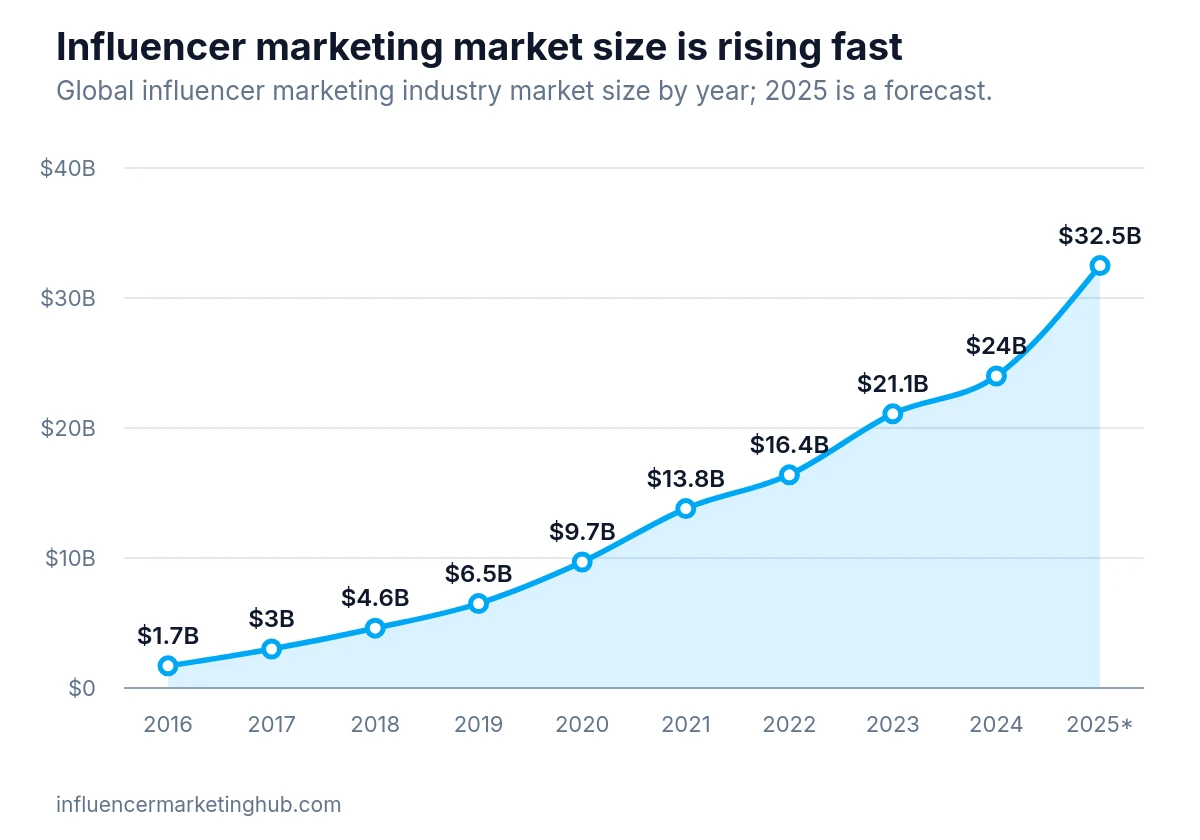
Global influencer marketing spending rose from $1.7 billion in 2016 to $24 billion in 2024 and is forecast to reach $32.5 billion in 2025.
Creators who will do best are those who treat their audience relationship as the actual product they are selling to brands, and who protect it accordingly. That means being selective about partnerships, delivering genuine integrations, and building the kind of track record that justifies long-term deals at premium rates.
Brands that will get the most from creator partnerships are those willing to invest in real relationships rather than transactional one-offs, to share performance data openly, and to give creators enough creative latitude to make integrations feel natural to their specific audience.
The creators and brands that figure out how to build genuine, data-informed, long-term partnerships are the ones who will define what YouTube sponsorships look like five years from now. The transactional model had a good run. What replaces it is more work to build, but considerably more durable.