Top Trending YouTube Topics of 2025: What Every Creator Needs to Know Right Now

YouTube's landscape shifts faster than most creators can keep up. One month, everyone's talking about a new game. The next, a completely different format dominates the algorithm. If you're creating content in 2025, you need to know what's actually working right now, not what worked six months ago.
The data from YouTube's 2025 year-end summary reveals some surprising patterns. The top songs on regular YouTube didn't cross over to YouTube Shorts at all. Roblox UGC games exploded in ways nobody predicted. And the creator who's been number one for six straight years shows no signs of slowing down.
This isn't about chasing every trend. It's about understanding where audience attention is concentrated so you can make informed decisions about your content strategy. Some of these trends might fit your channel perfectly. Others won't. But knowing what's working helps you spot opportunities before they become oversaturated.
MrBeast and iShowSpeed Continue Dominating Creator Rankings
According to RouteNote Blog, MrBeast topped the list as the most popular creator in the US for the sixth year in a row. That's not a typo. Six consecutive years at number one while the platform, the algorithm, and audience preferences have all transformed multiple times.
What makes this remarkable is that MrBeast's content hasn't stayed static. His production values have increased, his challenges have gotten more elaborate, and his philanthropic angle has expanded. But the core formula remains: high-stakes scenarios with clear outcomes that keep viewers watching until the end.
Right behind him, iShowSpeed ranked #2 thanks to his 24/7 IRL livestreams from around the world. Speed's approach is the opposite of MrBeast's heavily produced content. His streams are raw, unpredictable, and built around his personality rather than elaborate setups. The fact that both styles can coexist at the top tells you something important: there's no single path to YouTube success in 2025.
For creators, the lesson isn't to copy either of them. It's to recognize that consistency matters more than perfection, and authenticity can compete with production budgets if your personality connects with viewers.
Roblox UGC Games Created Unexpected Viral Moments
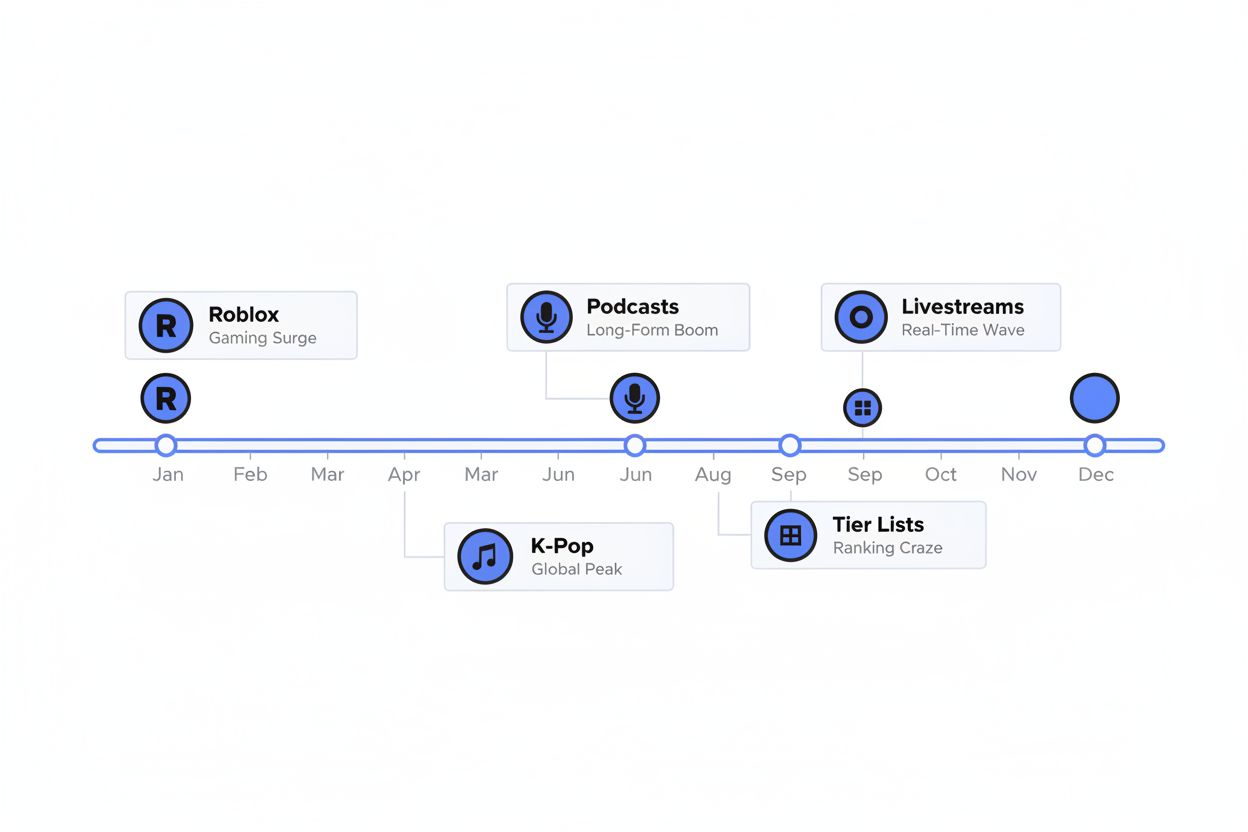
YouTube's official blog reports that Roblox UGC games like "Grow a Garden" and "Steal a Brainrot" were among the most-talked-about games of 2025. If you're not familiar with Roblox's UGC (user-generated content) system, these are games created by players within the Roblox ecosystem, not by professional studios.
The virality of these games on YouTube happened because they were weird, accessible, and easy to create content around. "Steal a Brainrot" in particular became a meme format where creators would play the game while reacting to increasingly absurd scenarios. The low barrier to entry meant thousands of creators could jump on the trend quickly.
Gaming content on YouTube has always been popular, but 2025 showed a shift toward games that are inherently social and collaborative. Roblox UGC games fit this perfectly because they're designed for multiplayer experiences and often include built-in moments that make for good clips.
If you create gaming content, the takeaway is to pay attention to what's emerging in user-generated game platforms. These games often trend on YouTube before they hit mainstream gaming news sites. By the time IGN writes about them, the initial wave of views has already happened.
KPop Crossovers Reached New Heights
The KPop presence on YouTube in 2025 wasn't just about music videos. According to YouTube's blog, "APT." by Rosé and Bruno Mars became the fastest KPop music video to reach one billion views on YouTube. That's a record that demonstrates how KPop has moved beyond niche audiences into mainstream global culture.
But the more interesting trend is how KPop Demon Hunters and Squid Game became larger cultural moments because of how creators expanded their worlds on YouTube. These weren't just shows people watched. They became content universes where reaction channels, theory videos, dance covers, and fan animations all fed into each other.
The crossover between KPop and Western artists like Bruno Mars signals something bigger: genre boundaries are dissolving on YouTube faster than anywhere else. Audiences don't care about traditional music industry categories. They care about what sounds good and what their favorite creators are talking about.
For music creators and channels that cover entertainment, this means there's value in being early to crossover moments. When a KPop artist collaborates with a Western artist, or when a Korean show gets picked up by English-speaking creators, there's a window where demand for content outpaces supply.
Podcasts Solidified Their Place on YouTube
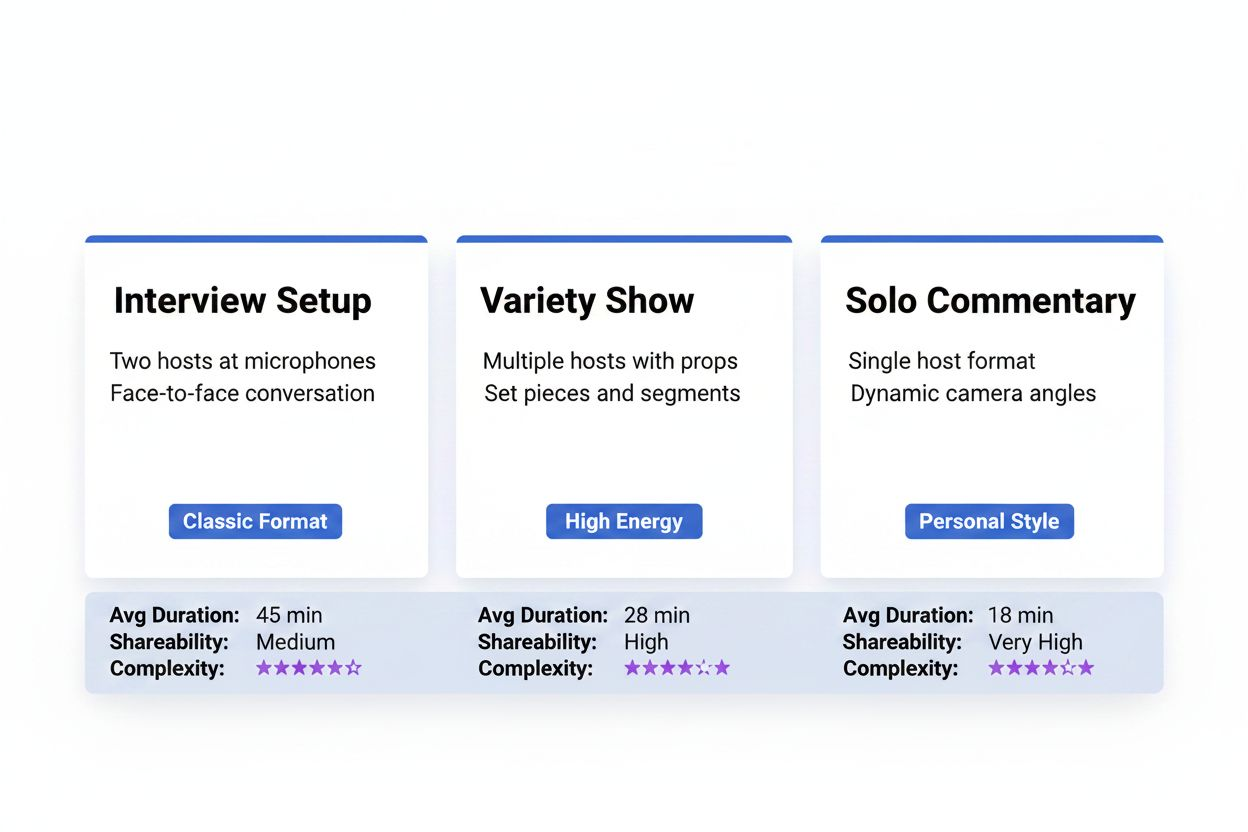
RouteNote Blog notes that The Joe Rogan Experience topped YouTube's podcast chart, followed by Kill Tony and Good Mythical Morning. This confirms what many creators already suspected: YouTube has become the primary platform for podcast discovery and consumption, not just audio-only apps.
The visual element matters more than podcast purists want to admit. Viewers want to see facial expressions, set design, and guest interactions. They want to clip moments and share them. They want to watch their favorite podcasters react to things in real time.
Good Mythical Morning's presence in the top three is particularly interesting because it's not a traditional interview podcast. It's a variety show that happens to release daily episodes. The fact that YouTube's algorithm and audiences treat it as a podcast shows how flexible the format has become.
If you're considering starting a podcast in 2025, launching it as a YouTube-first show with video makes more sense than audio-only. You can always strip the audio for Spotify and Apple Podcasts, but you can't easily add video after the fact.
Tier Lists Became a Content Format, Not Just a Meme
According to YouTube Trends, in the first six months of 2025, there were more than 1 billion views of videos with "tier list" in the title. One billion views in six months for a single content format is massive.
Tier lists work because they're inherently debate-friendly. When a creator ranks items from S-tier to F-tier, viewers immediately have opinions about what's ranked too high or too low. This drives comments, which signals engagement to the algorithm, which pushes the video to more people.
The format also scales across every niche. Gaming tier lists, food tier lists, movie tier lists, productivity app tier lists. If you can rank it, someone will watch it. The low production barrier helps too. You need a template, some images, and your opinions. No elaborate filming or editing required.
For creators looking to experiment with new formats, tier lists offer a low-risk way to test audience engagement. They're also excellent for channels trying to establish authority in a niche. Ranking things requires knowledge and invites discussion, both of which help build community.
YouTube Shorts and Long-Form Content Diverged Completely
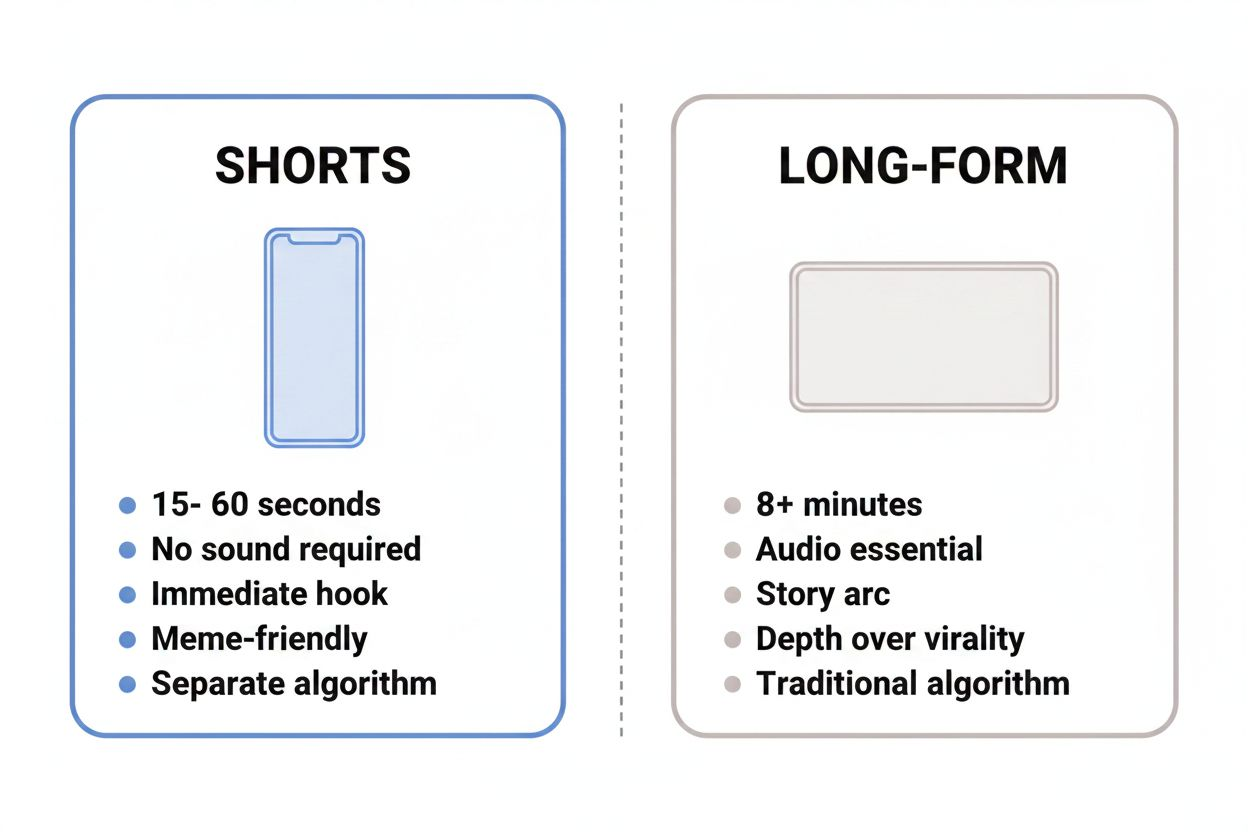
One of the most revealing findings from RouteNote Blog is that none of YouTube's top songs crossed over into the top songs for YouTube Shorts in 2025. This isn't a small detail. It means Shorts and regular YouTube have become separate ecosystems with different audiences and different content preferences.
Shorts audiences want quick hits, meme-worthy moments, and content that works without sound. Long-form audiences want depth, personality, and content they can get invested in. The same song that works in a 10-minute music video might completely fail as a 30-second Short, and vice versa.
This has major implications for content strategy. You can't just chop up your long-form videos into Shorts and expect them to perform. You need to create native Shorts content that's designed for that format from the start. Different hooks, different pacing, different payoffs.
Some creators are succeeding by treating Shorts as a discovery tool that funnels viewers to their long-form content. Others are building entire channels around Shorts exclusively. Both approaches work, but trying to do both half-heartedly doesn't.
Personalized Recaps Changed How Viewers Reflect on Their Habits
YouTube's blog mentions that YouTube launched its first-ever personalized Recap feature in 2025, similar to Spotify Wrapped. This might seem like a small feature update, but it has significant implications for creators.
Spotify Wrapped became a cultural phenomenon because it gave users shareable data about their listening habits. People love seeing their own patterns quantified and comparing them with friends. YouTube's Recap does the same thing for video consumption.
For creators, this means viewers are becoming more aware of their own watching patterns. They can see which channels they watched most, which topics they gravitated toward, and how their interests evolved over the year. This self-awareness could lead to more intentional content consumption, which means your content needs to deliver consistent value to stay in someone's top channels.
The social sharing aspect also matters. When viewers share their Recaps, they're essentially giving free promotion to their favorite creators. If your content makes it into someone's Recap, you're getting exposure to their entire social network.
IRL Livestreaming Proved It's Here to Stay
iShowSpeed's success with 24/7 IRL livestreams from around the world isn't an isolated case. It represents a broader shift toward real-time, unscripted content that feels authentic even when it's chaotic.
IRL streaming works because it taps into something traditional YouTube content can't replicate: the feeling that anything could happen. Viewers tune in not knowing what they'll see, and that unpredictability keeps them watching longer than they planned.
The technical barriers to IRL streaming have also dropped significantly. Reliable mobile hotspots, better smartphone cameras, and improved streaming software make it possible to go live from almost anywhere. You don't need a studio or even a stable internet connection anymore.
For creators considering IRL content, the key is having a strong enough personality to carry unscripted moments. Production value matters less than authenticity and the ability to react to situations in real time. If you're comfortable being yourself on camera without a script, IRL streaming might be worth testing.
Cultural Moments Expanded Beyond Their Original Platforms
YouTube's blog points out that KPop Demon Hunters and Squid Game became larger cultural moments because of how creators expanded their worlds on YouTube. This is a pattern worth understanding.
Shows and music don't just exist on their original platforms anymore. They become cultural phenomena when creators build secondary content ecosystems around them. Reaction videos, analysis breakdowns, theory discussions, parody sketches, and fan animations all contribute to keeping a show or song in the cultural conversation longer than it would last on its own.
This creates opportunities for creators who can move quickly. When a new show drops, there's a brief window where demand for related content exceeds supply. The creators who can produce quality reactions, analyses, or related content in that window capture significant views.
The same applies to music. A song doesn't just trend because it's good. It trends because creators find ways to use it, remix it, dance to it, or build content around it. The song becomes a tool for other creators, which amplifies its reach exponentially.

What This Means for Your Content Strategy
Looking at these trends together reveals a few consistent patterns. Authenticity beats perfection. Consistency beats sporadic viral hits. Niche communities are more valuable than broad, shallow audiences.
The creators succeeding in 2025 aren't necessarily the ones with the biggest budgets or the most subscribers. They're the ones who understand their audience deeply, show up regularly, and create content that serves a specific need or interest.
If you're a gaming creator, pay attention to emerging games in user-generated platforms before they hit mainstream coverage. If you cover music or entertainment, watch for crossover moments between genres or cultures. If you're building a podcast or commentary channel, commit to the video format and treat it as primary, not secondary.
Shorts and long-form content require separate strategies. Don't expect one to automatically boost the other. Treat them as different products for different audiences, even if those audiences overlap.
Most importantly, don't try to chase every trend. Pick the ones that align with your strengths and your audience's interests. A tier list video might get a million views, but if your audience doesn't care about tier lists, those views won't convert to subscribers or long-term engagement.
The Algorithm Rewards Depth and Retention
One thread connecting many of these trends is watch time. MrBeast's elaborate challenges keep people watching. Podcasts keep people engaged for 60+ minutes. IRL streams can hold attention for hours. Even tier list videos work because people watch all the way through to see where their favorite item ranks.
YouTube's algorithm in 2025 cares less about clicks and more about whether people actually watch your content. A video with a lower click-through rate but higher average view duration will often outperform a video with a high click-through rate but poor retention.
This means your thumbnails and titles need to accurately represent your content, not trick people into clicking. Misleading hooks might get initial views, but poor retention will kill your video's reach.
It also means pacing matters more than ever. The first 30 seconds determine whether someone stays or leaves. The first three minutes determine whether the algorithm considers your video worth promoting. Structure your content accordingly.
Looking Ahead: What to Watch in the Coming Months
These trends won't last forever. YouTube's landscape will shift again as new formats emerge, new creators rise, and audience preferences evolve. But understanding what's working now gives you a foundation for adapting to what comes next.
Watch for new user-generated game platforms beyond Roblox. Pay attention to which traditional media properties are getting secondary content ecosystems on YouTube. Notice which podcast formats are growing fastest. Track how Shorts and long-form content continue to diverge or potentially reconverge.
The creators who thrive long-term aren't the ones who perfectly execute one viral trend. They're the ones who develop a sense for where attention is moving and adapt their content accordingly while maintaining their core identity.
Your job isn't to become MrBeast or iShowSpeed. It's to understand what makes their content work for their audiences and apply those principles to your own niche in your own voice. That's how you build something sustainable instead of just chasing temporary spikes in views.