How Video Genres Influence Sponsorship Opportunities on YouTube

The Genre Problem Most Creators Overlook
A gaming channel with two million subscribers might earn less from sponsorships than a personal finance channel with two hundred thousand. A cooking channel can command rates that a reaction content channel cannot, even with identical view counts. This is not about audience size or production quality. It comes down to genre, and the specific combination of audience demographics, purchase intent, and brand safety that each genre carries.
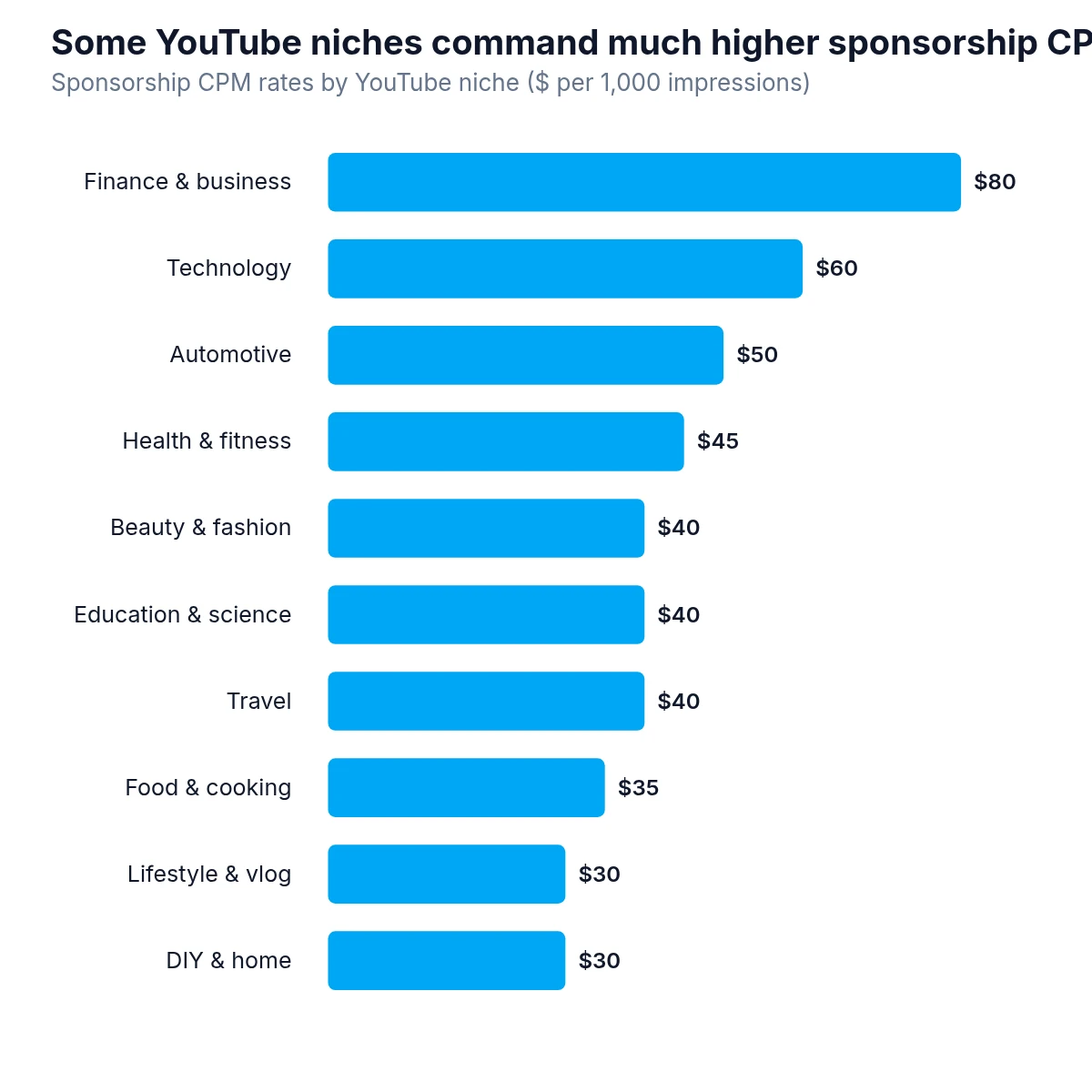
Finance and business has the highest listed sponsorship rate at $80 per 1,000 impressions, compared with $30 for lifestyle and vlog.
Creators who understand this dynamic can make smarter decisions about their content direction, their pitch strategy, and their long-term earning potential. Those who ignore it often wonder why their sponsorship inquiries go unanswered or why the deals they do land pay far less than they expected.
What Sponsors Are Actually Buying
When a brand pays a YouTuber to mention their product, they are not buying views. They are buying access to a specific type of person at a specific moment in their decision-making process.
This is why genre matters so much. Genre is a reliable signal of who is watching and why. A person watching a video titled "How I Paid Off $40,000 in Debt" is in a completely different mental state than someone watching a highlight reel of a video game. Both might be the same age, same income, same city. But the first person is actively thinking about money. The second is relaxing.
Brands pay a premium for audiences in active decision-making mode. They pay less for audiences in passive entertainment mode. Genre is the clearest indicator of which mode your viewers are in.
Beyond mindset, brands also evaluate:
- Whether the genre attracts the income bracket their product targets
- Whether the content environment is safe for their brand image
- Whether the genre has a track record of driving actual purchases
- How long viewers typically watch (a tutorial holds attention longer than a compilation)
High-Value Genres and Why They Command Premium Rates
Personal Finance and Investing
This is one of the most lucrative genres on the platform, and the reason is straightforward: the audience self-selects for financial engagement. Someone watching videos about index funds, budgeting apps, or tax strategies is, by definition, thinking about money. Financial products, investment platforms, tax software, and banking apps all want this audience badly, and there are enough of them competing for the same viewers that rates stay high.
The typical viewer skews older and earns more than the platform average. That combination is rare and valuable.
Software, Tech Reviews, and SaaS Tools
Tech review channels attract buyers. Someone watching a 20-minute review of a project management tool is often in the process of evaluating whether to buy it. That purchase intent is exactly what software companies want to reach, and they have the marketing budgets to pay for it.
The SaaS industry in particular has embraced YouTube sponsorships aggressively. Password managers, VPN services, productivity apps, and web hosting companies have become fixtures of tech content because the audience converts well. These deals often come with performance bonuses tied to promo codes, which means creators with highly engaged audiences can earn significantly above the base rate.
Business and Entrepreneurship
Channels focused on building businesses, freelancing, or professional skills attract an audience that is actively trying to improve their earning potential. This makes them attractive to a wide range of sponsors: course platforms, legal services, accounting software, email marketing tools, and more. The audience is motivated, and motivated audiences buy things. Consumer purchases influenced by endorsements back this up: 58% of consumers over 18 have bought products because of an influencer recommendation, according to the National Advertising Division of BBB National Programs.
Health, Fitness, and Nutrition
Fitness content commands strong rates because the supplement, equipment, and wellness product industries are enormous and competitive. A channel with a dedicated fitness audience can attract sponsorships from protein powder brands, gym equipment companies, fitness apps, and meal delivery services simultaneously.
The key variable here is audience trust. Fitness viewers tend to follow specific creators for extended periods and act on their recommendations. That loyalty translates to conversion rates that brands notice.
Mid-Tier Genres: Solid but Inconsistent
Beauty and Skincare
Beauty is a high-spend category with a large pool of potential sponsors. The challenge is saturation. There are thousands of beauty channels, and brands have many options. This keeps rates competitive but not always in the creator's favor.
Channels that carve out a specific niche (skincare for darker skin tones, clean beauty, drugstore dupes) often outperform general beauty channels because they offer something more targeted. A brand launching a product for a specific audience will pay more to reach exactly that audience than to reach a broad, general one.
Gaming
Gaming is one of the most-watched genres on YouTube, and that scale attracts sponsors. But the audience demographics create a ceiling on certain types of deals. Gaming audiences skew younger and have less disposable income on average, which limits the pool of brands willing to pay premium rates. That said, the average video game player age in the US is now 37, up from 29 about two decades ago, which may gradually shift how brands assess this audience.
That said, gaming channels are not without strong sponsorship opportunities. Gaming peripherals, energy drinks, VPN services, and game publishers all spend heavily in this space. The deals are available; they just tend to pay less per thousand views than finance or tech content.
Cooking and Food
Food content has a broad, loyal audience, but the sponsorship market is fragmented. Grocery delivery services, kitchen equipment brands, and meal kit companies are the most active sponsors. Rates vary considerably based on how specific the channel's niche is. A channel focused on high-end home cooking will attract different sponsors than one focused on budget meals for college students, and the former will generally command higher rates.
Lower-Value Genres and the Reasons Behind It
Reaction and Commentary Content
Reaction videos and commentary channels often struggle to attract direct sponsorships despite sometimes having large audiences. The core issue is brand safety, which in the advertising industry means ensuring a brand's ad does not appear adjacent to content or in a context that can damage the advertised brand. Reaction channels are inherently unpredictable in this regard: the original content being reacted to may contain language, themes, or controversies that a brand does not want to be associated with.
Some commentary channels do land deals, particularly those with a consistent, clearly defined tone and audience. But the category as a whole is considered higher risk by brand safety teams.
Prank and Challenge Content
Similar brand safety concerns apply here. Brands have become more cautious about associating with content that could generate negative press, and prank content has a history of controversy. Poor influencer alignment with brand values can do more harm than good, and prank channels offer brands little control over what surrounds their message. Channels in this space often rely more heavily on AdSense revenue than direct sponsorships.
General Lifestyle and Daily Vlogs
Lifestyle vlogging is a difficult category to monetize through sponsorships because it is hard to define the audience clearly. Brands want to know who they are reaching. "People who watch someone's daily life" is not a useful demographic profile. Lifestyle channels that do well with sponsorships usually have a strong secondary identity: a lifestyle channel that is also clearly about sustainable living, or about raising kids in a specific way, gives brands a hook to work with.
How Audience Demographics Shape Deals Within a Genre
Genre sets the baseline, but demographics within that genre determine the actual rate. Two channels in the same genre can have dramatically different sponsorship value depending on where their audience is located.
Brands selling products in the United States, Canada, the United Kingdom, and Australia pay significantly more to reach viewers in those markets than viewers elsewhere. A finance channel with a primarily American audience will command higher rates than an identical channel whose audience is primarily in Southeast Asia, even if the second channel has more total subscribers.
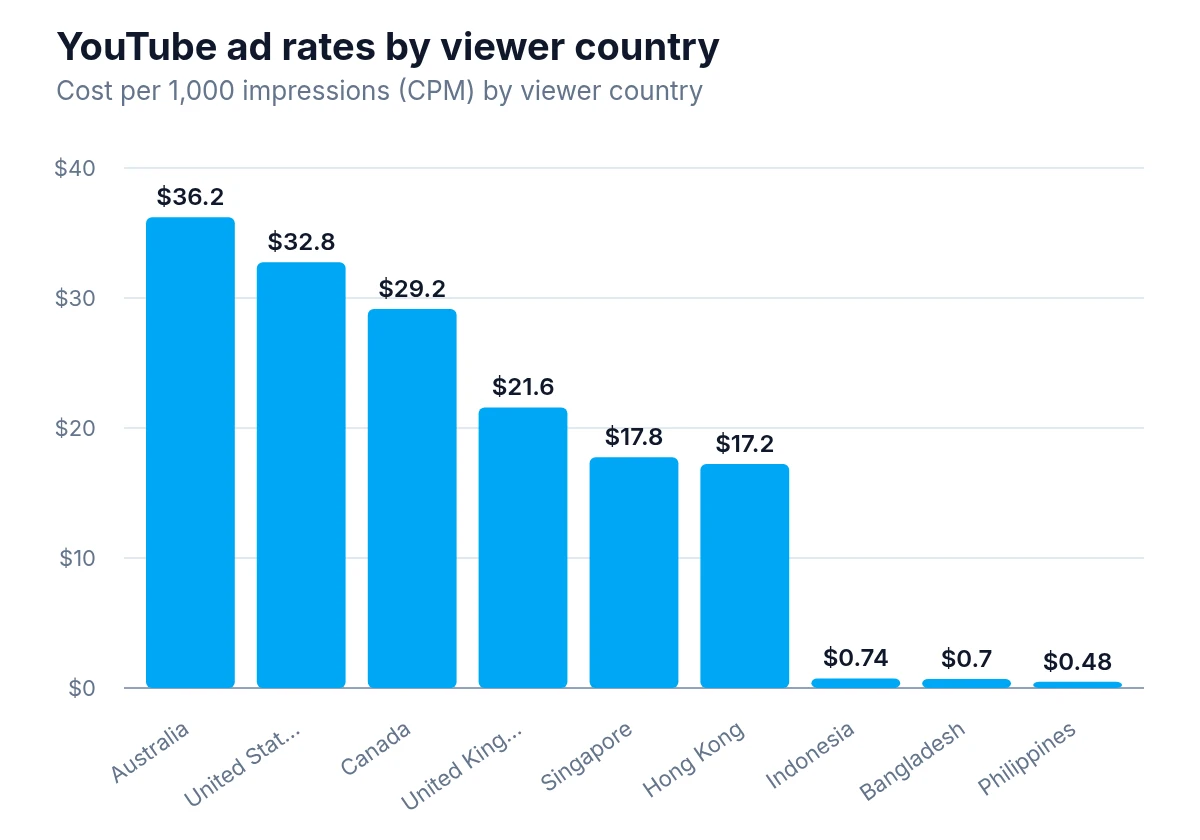
Australia has the highest YouTube ad rate at $36.21 per 1,000 impressions, while the United States, Canada, and the United Kingdom also rank above the other listed countries.
Age and income matter too. A personal finance channel that attracts viewers in their 30s and 40s with established careers is more valuable to a wealth management platform than one that primarily reaches college students, even though both channels cover similar topics.
Creators can check their audience demographics in YouTube Studio and use that data when pitching sponsors. Showing a brand that 65% of your audience is in the US, aged 25-44, with strong engagement metrics is a more compelling pitch than leading with subscriber count.
The Mechanics of a YouTube Sponsorship Deal
A sponsorship typically involves a brand paying a creator to mention or demonstrate their product within a video. The most common format is a mid-roll or end-roll segment, usually 60 to 90 seconds, where the creator talks about the product in their own voice.
Rates are generally calculated based on cost per thousand views (CPM), though many deals are flat fees negotiated directly. The actual numbers vary enormously based on genre, audience demographics, engagement rate, and the creator's negotiating position. There is no universal rate card.
Most deals include:
- A script or talking points provided by the brand
- A requirement to include a specific link or promo code
- An approval process where the brand reviews the segment before the video goes live
- A minimum view guarantee in some cases
Exclusivity clauses are common in higher-value deals. A brand may require that you do not promote a direct competitor for a set period before or after the video goes live.
Disclosure Requirements
Creators are legally required to disclose when a video contains paid promotion. In the United States, the Federal Trade Commission requires clear and conspicuous disclosure. YouTube also has its own built-in disclosure tool, a checkbox in the upload settings that adds a visible label to the video. Both YouTube and the FTC require creators and their partner brands to follow paid promotion disclosure requirements under applicable legal and local rules.
The disclosure needs to be clear to a viewer who might not read the description. Saying "this video is sponsored by X" at the start of the video, or at the start of the sponsored segment, satisfies this requirement. Burying it in the description does not, at least not on its own. The FTC has clarified that endorsement disclosure visibility is the key test: if a disclosure is hidden behind a "more" link while the endorsement itself is visible without clicking, the disclosure is not unavoidable and therefore does not meet the clear and conspicuous standard.
YouTube's policy and FTC guidelines align on this: the disclosure must be prominent enough that a reasonable viewer would notice it. Channels that skip disclosure risk both platform penalties and regulatory attention.
Building a Channel Strategy Around Sponsorship Value
If sponsorship revenue is a meaningful goal, genre choice is a strategic decision, not just a creative one. This does not mean every creator should pivot to personal finance. It means understanding the trade-offs.
A creator who is genuinely passionate about gaming will produce better gaming content than they would produce if they forced themselves into finance videos. Authenticity matters for audience retention, and audience retention matters for sponsorship value. A disengaged audience does not convert, and brands notice.
The more practical approach is to think about positioning within your genre. A gaming channel that focuses specifically on productivity tools for game developers occupies a different sponsorship market than a general gaming channel. A cooking channel that focuses on meal prep for busy professionals is more attractive to certain sponsors than a general recipe channel.
Specificity is often more valuable than scale. A smaller, highly defined audience with strong purchase intent will attract better sponsorship terms than a large, diffuse audience that watches passively.
Beyond content focus, the production quality and consistency of a channel signal professionalism to potential sponsors. Brands want to work with creators who will represent them reliably. A channel with a consistent upload schedule, clean production, and a clear editorial voice is easier to pitch to a brand than one that uploads sporadically across different formats.
What This Means for Long-Term Channel Growth
Sponsorship income on YouTube is not purely a function of how many people watch your videos. It is a function of who watches them, why they watch, and what they are likely to do after watching.
Genre is the single biggest structural factor shaping those answers. A creator who understands this can make deliberate choices about content direction, audience development, and brand partnerships that compound over time. One who ignores it may build a large audience and still find that the sponsorship market treats their channel as an afterthought.
The channels that earn the most from direct sponsorships tend to share a few traits: they serve an audience with specific needs, they create content that puts viewers in an active rather than passive mindset, and they have built enough trust that their recommendations carry weight. Genre is the starting point for all three.