How YouTube's Search Algorithm Ranks Videos: The Signals That Actually Matter
You upload a video. You wait. Nothing happens.
Meanwhile, someone with half your subscribers ranks first for the same keyword. Their video gets thousands of views while yours collects dust at the bottom of page three.
This is not random. YouTube's search algorithm follows specific rules, and understanding those rules changes everything. According to Hootsuite, YouTube's recommendation algorithm drives 70% of what people watch on the platform. But search is different. Search is where intent lives. Someone types a question, and YouTube decides which video best answers it.
This article breaks down exactly how YouTube ranks videos in search results, which signals matter most, and how to use that knowledge to get your content in front of people actively looking for it.
YouTube Search Is Not Google Search
YouTube search works differently than Google. Google wants to send you to the best webpage. YouTube wants to keep you watching videos on YouTube.
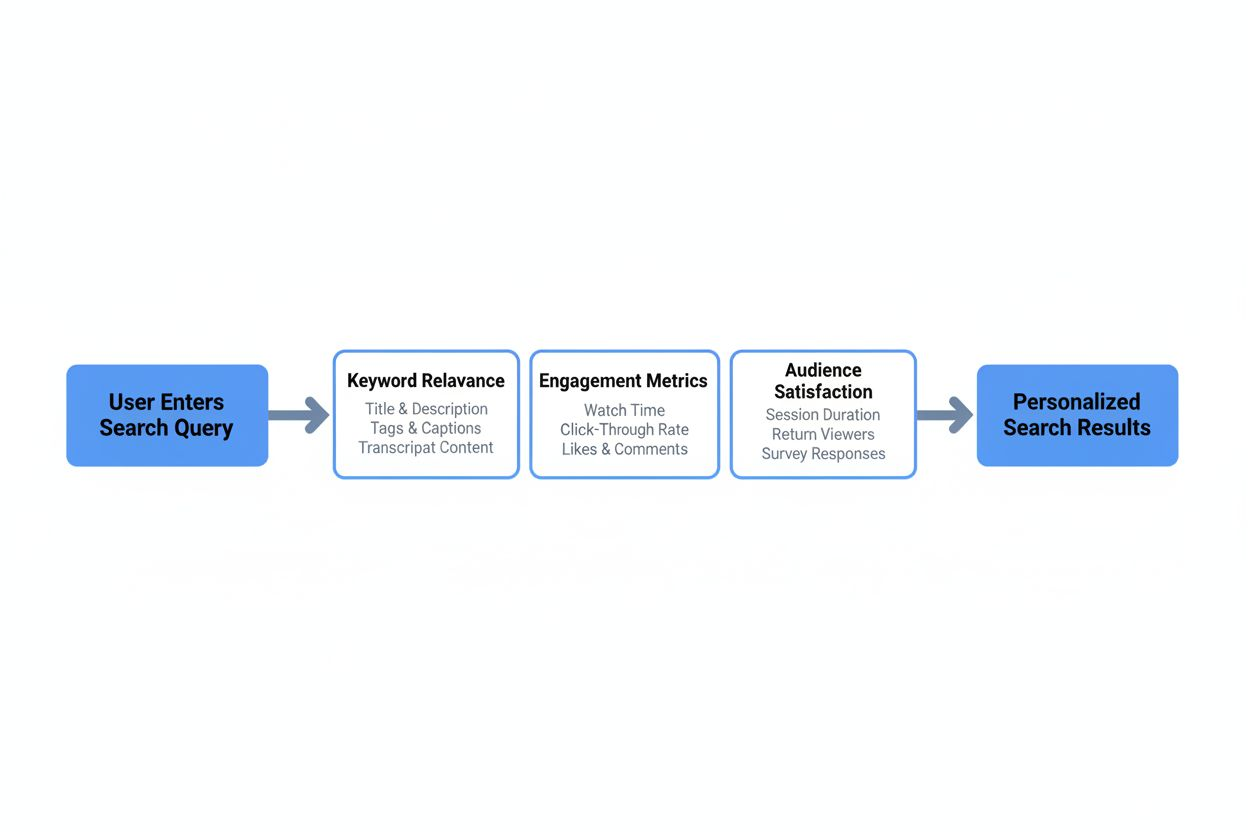
That distinction matters. A video can rank high in YouTube search even if it would not rank well on Google, because YouTube cares about different signals. According to Async, the YouTube search algorithm considers three main factors: keyword relevance, engagement metrics, and audience satisfaction.
These three categories contain multiple sub-signals. YouTube does not publish the exact formula, but years of creator testing and official statements have revealed the patterns.
Two people searching the same term will see different results based on their viewing habits, as Hootsuite notes. YouTube personalizes search results. If you watch a lot of tech reviews, your search for "best laptop" will show different videos than someone who watches gaming content.
This means there is no single "number one" spot. But there are videos that rank consistently well across different viewer profiles. Those videos nail the core ranking signals.
The Three Pillars of YouTube Search Ranking
Keyword Relevance: Teaching YouTube What Your Video Is About
YouTube cannot watch your video the way a human does. It reads metadata.
Your title, description, tags, and captions tell YouTube what your video covers. If someone searches "how to change a tire" and your video is titled "Car Maintenance Tips," YouTube has no strong signal that your video answers that specific question, even if you spend 10 minutes explaining tire changes.
Keyword relevance is the first filter. YouTube looks at:
- Title: The most important metadata field. Put your target keyword here, preferably near the beginning.
- Description: The first 150 characters matter most because they show in search results. Include your keyword naturally.
- Tags: Less important than they used to be, but still a signal. Use 5-8 relevant tags, including your main keyword.
- Captions: YouTube's automatic captions are decent, but uploading your own transcript with proper keyword usage helps.
- Filename: Before uploading, rename your video file to include your keyword. "tire-change-tutorial.mp4" instead of "VID_20250315.mp4."
According to vidIQ, small channels can outrank big channels in search if their videos better satisfy the query. Keyword relevance is how you get into the game. A 500-subscriber channel with a perfectly optimized title can outrank a 500,000-subscriber channel with a vague one.
But keyword stuffing backfires. YouTube penalizes videos that repeat keywords unnaturally. Write for humans first, then check that your keyword appears in the right places.
Engagement Metrics: Proving Your Video Deserves Attention
Once YouTube knows what your video is about, it needs to know if people actually want to watch it.
Engagement metrics answer that question. These are the numbers YouTube tracks to measure how viewers interact with your video:
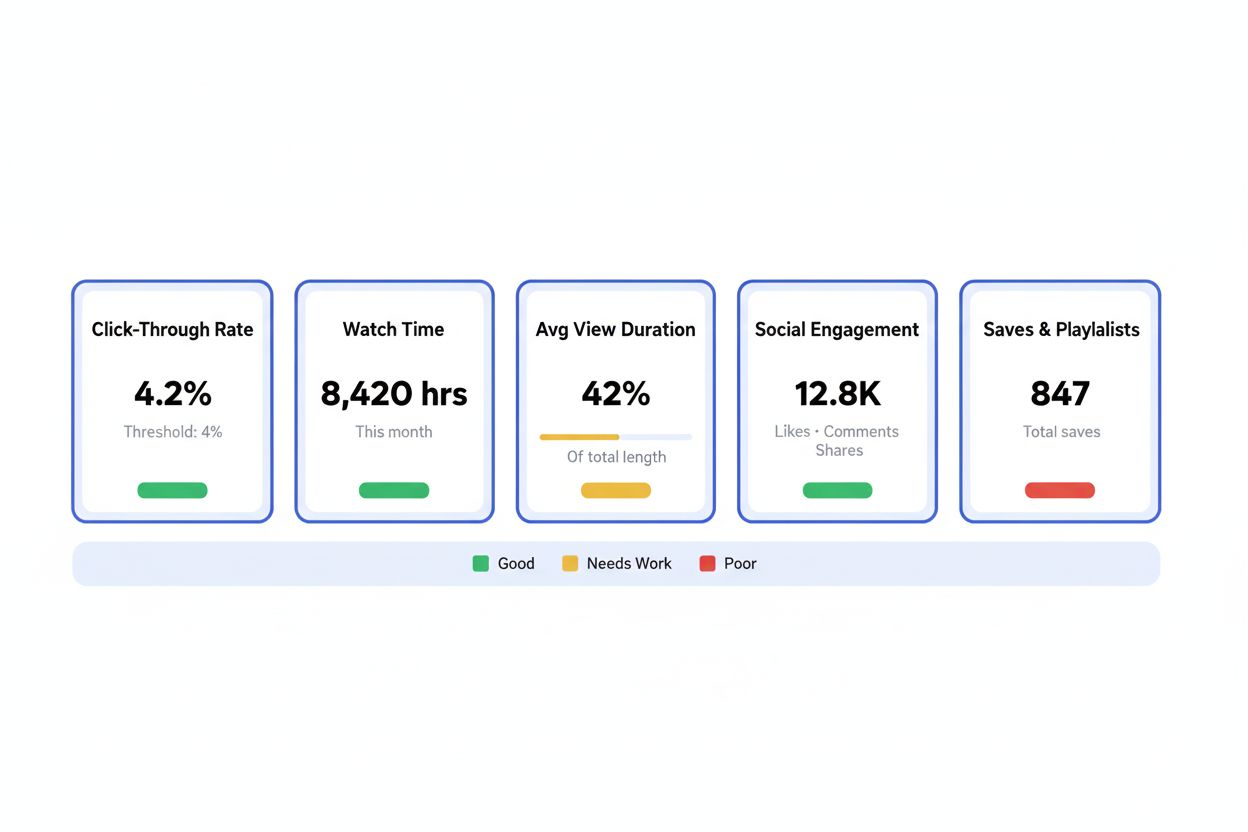
Click-Through Rate (CTR): The percentage of people who see your video in search results and click on it.
According to vidIQ, if CTR is below 4%, your thumbnail or title is not clear enough. A 10% CTR means your packaging works. A 2% CTR means people scroll past your video even when it shows up.
Your thumbnail and title work together. The thumbnail grabs attention. The title promises value. If either fails, your CTR drops, and YouTube stops showing your video.
Watch Time: Total minutes people spend watching your video.
YouTube wants to keep people on the platform. A 10-minute video that people watch for 8 minutes generates more watch time than a 5-minute video people watch completely. But watch time alone does not tell the whole story.
Average View Duration: The average percentage of your video that people watch.
A 10-minute video with 40% average view duration (4 minutes) signals that people lose interest. A 5-minute video with 80% average view duration (4 minutes) signals that people stay engaged. YouTube prefers the second video.
Likes, Comments, Shares: Social engagement signals.
These matter less than watch time, but they still count. A video with 1,000 views and 50 comments shows higher engagement than a video with 1,000 views and 2 comments. Comments especially matter because they increase session time (people return to YouTube to check replies).
Adds to Playlist and Saves: Underrated signals.
When someone adds your video to a playlist or saves it to watch later, YouTube interprets that as high value. These actions suggest your video is reference material people want to return to.
Hootsuite reports that YouTube pulls videos using factors like watch time, click-through rate, satisfaction surveys, and viewing habits. All these signals combine to create an engagement score.
Audience Satisfaction: The Signal Most Creators Ignore
This is where YouTube's algorithm gets sophisticated.
According to vidIQ, in 2025, the algorithm places more weight on user satisfaction, long-term retention, and nuanced feedback. YouTube does not just track whether people watched your video. It tracks what they did after.
Session Start vs. Session End: Did your video start a viewing session or end one?
If someone searches for "sourdough bread recipe," watches your video, then watches three more baking videos, YouTube sees your video as a session starter. That is good. You kept someone on the platform.
If someone watches your video and immediately leaves YouTube, your video ended the session. That is bad. YouTube interprets this as dissatisfaction.
Surveys: YouTube randomly surveys viewers after they watch videos.
The survey asks if the video satisfied their search query. These responses directly influence rankings. If 70% of surveyed viewers say your video answered their question, YouTube ranks it higher. If 30% say it did not, YouTube demotes it.
Repeat Views: Do people come back to your video?
A video that people watch multiple times signals lasting value. Tutorial videos, reference guides, and educational content benefit from this signal.
Viewer History Alignment: Does your video match what this viewer usually watches?
YouTube personalizes search results based on viewing history. If someone watches a lot of beginner tutorials, YouTube will rank beginner-focused videos higher in their search results, even if an advanced video technically has better engagement metrics overall.
According to Async, videos that keep people engaged after watching are more likely to show up in search results. This is the satisfaction signal in action.
How YouTube Personalizes Search Results for Each Viewer
Search results are not the same for everyone.
Two people typing "best camera for YouTube" will see different videos ranked differently. YouTube uses viewing history to predict which video will best satisfy each individual searcher.
Hootsuite confirms that two people searching the same term will see different results based on their viewing habits. This personalization happens through several mechanisms:
Channel Affinity: If you watch a lot of videos from a specific creator, YouTube ranks that creator's videos higher in your search results. This is why subscribers often see your videos more easily than non-subscribers.
Topic Clusters: YouTube groups videos by topic. If you watch a lot of fitness content, YouTube will rank fitness-related videos higher, even for ambiguous searches.
Engagement Patterns: If you typically watch long videos, YouTube ranks longer videos higher for you. If you usually watch short videos, YouTube adjusts accordingly.
Language and Location: YouTube factors in your language settings and location. A search for "football highlights" shows different results in the US (American football) versus the UK (soccer).
Device Type: Mobile viewers see different results than desktop viewers because viewing behavior differs by device.
This personalization means you cannot game the system by optimizing for a single "perfect" viewer. Instead, you need to clearly define what your video offers and who it serves. YouTube will then match your video to the right searchers.
The Competition Factor: Why Search Volume Matters
Some keywords are easier to rank for than others.
According to vidIQ, every minute, creators upload 500+ hours of video to YouTube. That is 30,000 hours per hour, 720,000 hours per day. You are competing against an ocean of content.
High-volume keywords like "how to lose weight" or "iPhone review" have thousands of videos competing for attention. Even if your video has good engagement metrics, it might not crack the top 20 results because the competition is fierce.
Low-volume keywords like "how to replace a 2015 Honda Civic headlight bulb" have fewer competing videos. A well-optimized video can rank first even with modest engagement metrics because there are not many alternatives.
This is why keyword research matters. Tools like TubeBuddy, vidIQ, and YouTube's own search suggestions help you find keywords with:
- Enough search volume to generate views
- Low enough competition that you can actually rank
The sweet spot is specific, long-tail keywords that indicate clear intent. "Camera" is too broad. "Best budget camera for YouTube beginners 2025" is specific enough to rank.

Practical Signals You Can Control Right Now
You cannot directly manipulate YouTube's algorithm, but you can optimize the signals it measures.
Before You Upload
Keyword Research: Find a specific keyword with search volume and manageable competition. Use YouTube's autocomplete to see what people actually search for.
Title Crafting: Put your keyword in the title, preferably in the first half. Make it clear what the video delivers. "How to Change a Tire in 5 Minutes" beats "Car Tips You Need to Know."
Thumbnail Design: Create a thumbnail that clearly communicates your video's topic. Use high contrast, readable text, and a compelling image. Test thumbnails with friends before uploading.
Script Your Hook: The first 30 seconds determine whether people keep watching. Script an opening that immediately addresses the search query. Do not waste time with long intros.
In Your Metadata
Description Optimization: Write the first 150 characters as a compelling summary that includes your keyword. Then add a detailed description with timestamps, related keywords, and links.
Tags: Use 5-8 relevant tags. Include your exact keyword, variations, and related terms. Do not spam.
Captions: Upload an accurate transcript. This helps YouTube understand your content and improves accessibility.
Category Selection: Choose the most relevant category. This helps YouTube group your video with similar content.
After You Upload
Engagement Prompts: Ask viewers to comment with their own experiences or questions. Respond to comments to increase engagement signals.
Pin a Comment: Pin a helpful comment that adds value. This encourages more comments and increases session time as people read discussions.
End Screen Strategy: Use end screens to suggest related videos. If viewers click through to another video, you extend the session and boost satisfaction signals.
Community Tab: If you have 500+ subscribers, use the Community tab to promote your video. This drives initial views, which helps YouTube test your video with a broader audience.
Playlist Inclusion: Add your video to relevant playlists. This increases the chance viewers will watch multiple videos, boosting session time.
Long-Term Optimization
Update Old Videos: If a video ranks well but has outdated information, update the description and pin a comment with current details. YouTube rewards videos that stay relevant.
Create Series: Videos that reference each other create a web of related content. This helps YouTube understand your channel's focus and can boost rankings for all videos in the series.
Consistent Upload Schedule: Regular uploads train your audience to return. Returning viewers create stronger engagement signals.
The Snowball Effect: How Good Videos Get Better
According to Async, ranking high in search results means higher visibility, better engagement, and a snowball effect of new viewers.
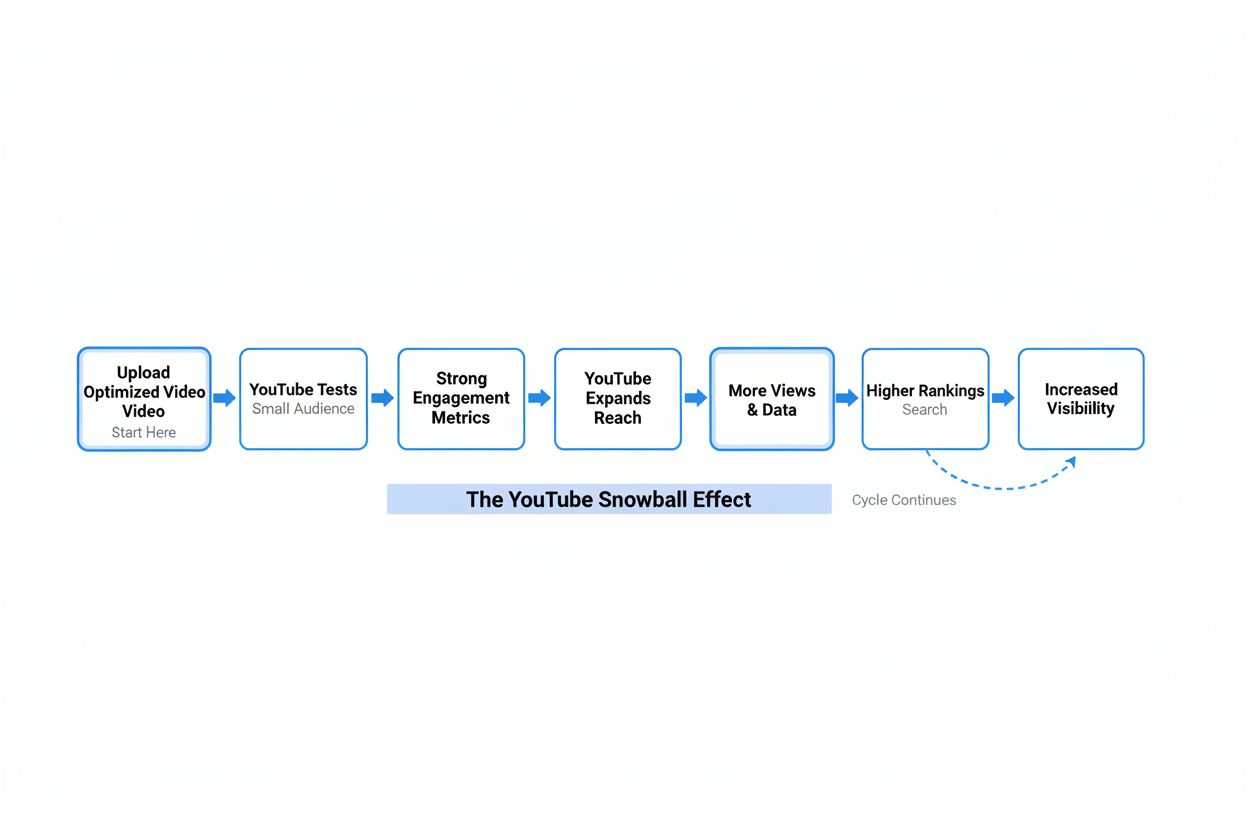
Here is how the snowball works:
- You upload a well-optimized video
- YouTube shows it to a small test audience in search results
- If engagement metrics are strong, YouTube shows it to more people
- More views generate more engagement data
- Strong engagement data pushes your video higher in search rankings
- Higher rankings generate more views
- The cycle continues
This is why the first 48 hours after upload matter. YouTube tests your video during this window. Strong early performance tells YouTube to push your video harder.
But the snowball can also work in reverse. If early engagement is weak, YouTube stops promoting your video. It drops in search rankings, gets fewer views, and eventually disappears from results.
This is not permanent. You can revive old videos by updating metadata, improving thumbnails, or promoting them through other channels. But it is easier to get it right the first time.
International Reach: The Language Multiplier
Most creators ignore this, but it matters.
According to Hootsuite, dubbed or translated content can increase international reach as YouTube tracks video performance separately per language.
If you add Spanish subtitles to your video, YouTube can rank it in Spanish search results. If you dub your video into multiple languages, you essentially create multiple ranking opportunities.
YouTube's automatic translation tools have improved dramatically. You can:
- Auto-generate subtitles in multiple languages
- Use YouTube's dubbing tools to create audio tracks in other languages
- Translate your title and description
Each language version competes in its own search ecosystem. A video that struggles to rank in English might dominate in Portuguese or Hindi.
This is especially valuable for evergreen content like tutorials, educational videos, and how-to guides. The effort of translation pays off over years as the video continues to rank in multiple languages.
What Changed in 2025 and What to Expect in 2026
The core ranking factors have not changed, but their weights have shifted.
vidIQ reports that in 2025, the algorithm places more weight on user satisfaction, long-term retention, and nuanced feedback. This means:
Less emphasis on raw view counts: A video with 10,000 views and high satisfaction beats a video with 50,000 views and low satisfaction.
More emphasis on session quality: YouTube cares more about what happens after someone watches your video. Did they keep watching videos? Did they leave satisfied?
Better detection of clickbait: Videos with high CTR but low watch time get penalized faster. The thumbnail and title must accurately represent the content.
Improved personalization: YouTube gets better at matching videos to individual viewers. Generic content struggles. Specific, well-defined content thrives.
Looking ahead to 2026, expect these trends to continue. YouTube will likely:
- Increase the weight of satisfaction surveys
- Better detect and penalize manipulative tactics
- Improve automatic translation and dubbing features
- Give more weight to viewer retention in the first 30 seconds
The algorithm is moving toward rewarding creators who genuinely help their audience, not creators who game metrics.
The Ranking Reality: What Success Actually Looks Like
Most creators have unrealistic expectations about search rankings.
You will not rank first for "how to cook" with your first video. You probably will not rank first for "how to cook pasta" either. But you might rank first for "how to cook pasta with canned tomatoes and no garlic."
That specific video might only get 50 views per month. But those 50 viewers are exactly the people who need your solution. They watch the whole video. They subscribe. They watch more videos. That is how channels grow.
vidIQ confirms that small channels can outrank big channels in search if their videos better satisfy the query. This is not theory. It happens daily.
Success in YouTube search means:
- Ranking for specific, long-tail keywords that match your content
- Gradually building authority in your niche
- Creating a library of videos that each rank for different search terms
- Letting the cumulative effect of many small wins build your channel
One viral video is not a strategy. Fifty well-optimized videos that each generate steady search traffic is a strategy.
Making Smarter Content Decisions
Understanding how YouTube ranks videos changes how you create content.
Instead of chasing trends or copying popular creators, you can:
Start with search intent: What questions do people actually ask? What problems do they need solved? Build content around those queries.
Optimize for satisfaction: Do not just get people to click. Make sure your video delivers on the promise. The first 30 seconds should confirm that viewers found the right video.
Build topic clusters: Create multiple videos around related topics. This helps YouTube understand your expertise and can boost rankings for all videos in the cluster.
Test and iterate: Use YouTube Analytics to see which videos rank well in search. Double down on those topics. Improve or remove videos that do not perform.
Think long-term: Search traffic builds slowly but lasts years. A video that ranks well can generate views for 5+ years with no additional work.
The creators who succeed in YouTube search are not the ones with the best cameras or the most subscribers. They are the ones who understand what viewers want, create content that delivers it, and optimize the signals YouTube uses to measure quality.
YouTube's search algorithm is not a mystery. It is a system with clear rules. Learn the rules, follow them, and your videos will find the people searching for them.