A Beginner's Guide to the YouTuber Sponsorship Workflow

The Money Behind the Videos
Most viewers assume their favorite YouTubers make money from ads. Some do. But for a large portion of creators, brand sponsorships are the bigger income stream, often by a significant margin. A single sponsored segment in a video can pay more than weeks of ad revenue from the same content.
Brand deals are the top earner for a meaningful share of the creator economy: according to data on creators' main income sources, 31% of creators cite them as their primary revenue, ahead of their own products (25%) and creator funds (15%). This sits inside a $24 billion influencer marketing industry, which gives you a sense of how much money is moving through these deals.
If you are a newer creator trying to figure out how sponsorships actually work, the process can feel opaque. Brands seem to appear out of nowhere in other people's videos, and nobody explains the steps that happen between "a company emails you" and "the check clears." This guide walks through the full workflow, from initial contact to final payment, so you know what to expect and how to handle each stage professionally.
How Sponsorships Actually Find You
There are two ways a sponsorship relationship starts: the brand reaches out to you, or you reach out to the brand.
Inbound Inquiries
There is no fixed subscriber count that unlocks brand deals. Sponsorship thresholds vary widely: channels in the 1,000-10,000 range attract deals regularly, especially in clear niches, while 10,000-100,000 subscribers is where brands most commonly focus their search. Once a channel hits a certain size, brands start sending emails. These often come from a marketing manager, a media buyer, or a talent agency that represents the brand's influencer budget. The emails range from professional and specific ("We've been watching your channel for three months and think our product fits your audience") to obviously templated ("Dear Content Creator, we love your videos!").
Both types are worth responding to, but treat them differently. A specific, personalized email suggests the brand has actually done research. A generic blast might still turn into a real deal, but expect more back-and-forth to figure out if it is a genuine fit.
Outbound Pitching
Smaller channels usually need to go looking. This means identifying brands whose products you already use or genuinely believe in, finding the right contact (usually someone in marketing or partnerships), and sending a short pitch.
A good pitch is not long. It covers who you are, what your channel is about, your key numbers (subscribers, average views, audience demographics if you have them), and a brief explanation of why your audience would respond to their product. Keep it to four or five short paragraphs. Attach a media kit if you have one.
Sponsorship Marketplaces
A third path exists through platforms that connect creators with brands directly. These marketplaces let you list your channel and browse available campaigns. The rates are often lower than direct deals, and you have less negotiating power, but they are a practical starting point when you are building your first track record.
Understanding What Brands Actually Want
Before you can negotiate well, you need to understand what a brand is buying when they sponsor a YouTube video.
They are buying access to your audience. Not just the number of people who watch, but the specific people, their trust in you, and their likelihood of acting on a recommendation. A channel with 50,000 highly engaged subscribers in a specific niche can be more valuable to the right brand than a general channel with 500,000 passive viewers.
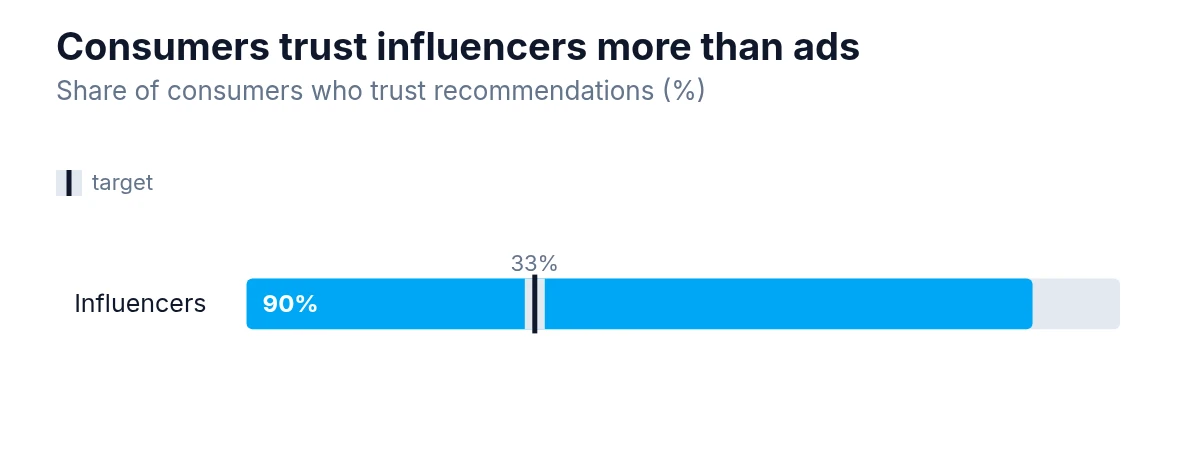
Nine in ten consumers (90%) say they trust influencer recommendations, compared with one-third (33%) for ads.
Brands also care about brand safety. With brand safety recognition among brands now sitting at 76%, it is a near-universal concern. Before any serious conversation, most brands will review your recent uploads, your comment section, and sometimes your social media presence.
What they are looking for in a sponsorship placement:
- A natural integration that does not feel forced
- Clear verbal and visual mention of the product
- A call to action (usually a discount code or a specific URL)
- A set window of time for the segment (often 60 to 90 seconds for a mid-roll)
- Sometimes specific claims they want made, and specific claims they want avoided
Understanding this helps you position yourself correctly and avoids surprises when the brief arrives.
Negotiating Rates: What to Know Before You Quote a Number
Pricing is where most beginners stumble. Either they quote too low out of fear and leave money on the table, or they quote a number with no basis and lose the deal.
A few things shape what you can reasonably charge:
Your average view count matters more than your subscriber count. A channel with 200,000 subscribers but 8,000 average views per video is worth less to a brand than a channel with 80,000 subscribers and 25,000 average views. Brands are paying for eyeballs on their message, not for a follower number.
Your niche affects your rate. YouTube sponsorship CPMs vary dramatically by category: finance channels routinely command $50-$200 per thousand views, while gaming and entertainment sit at $3-$15. A personal finance channel with 30,000 average views might charge more than a vlogging channel with 100,000 average views.
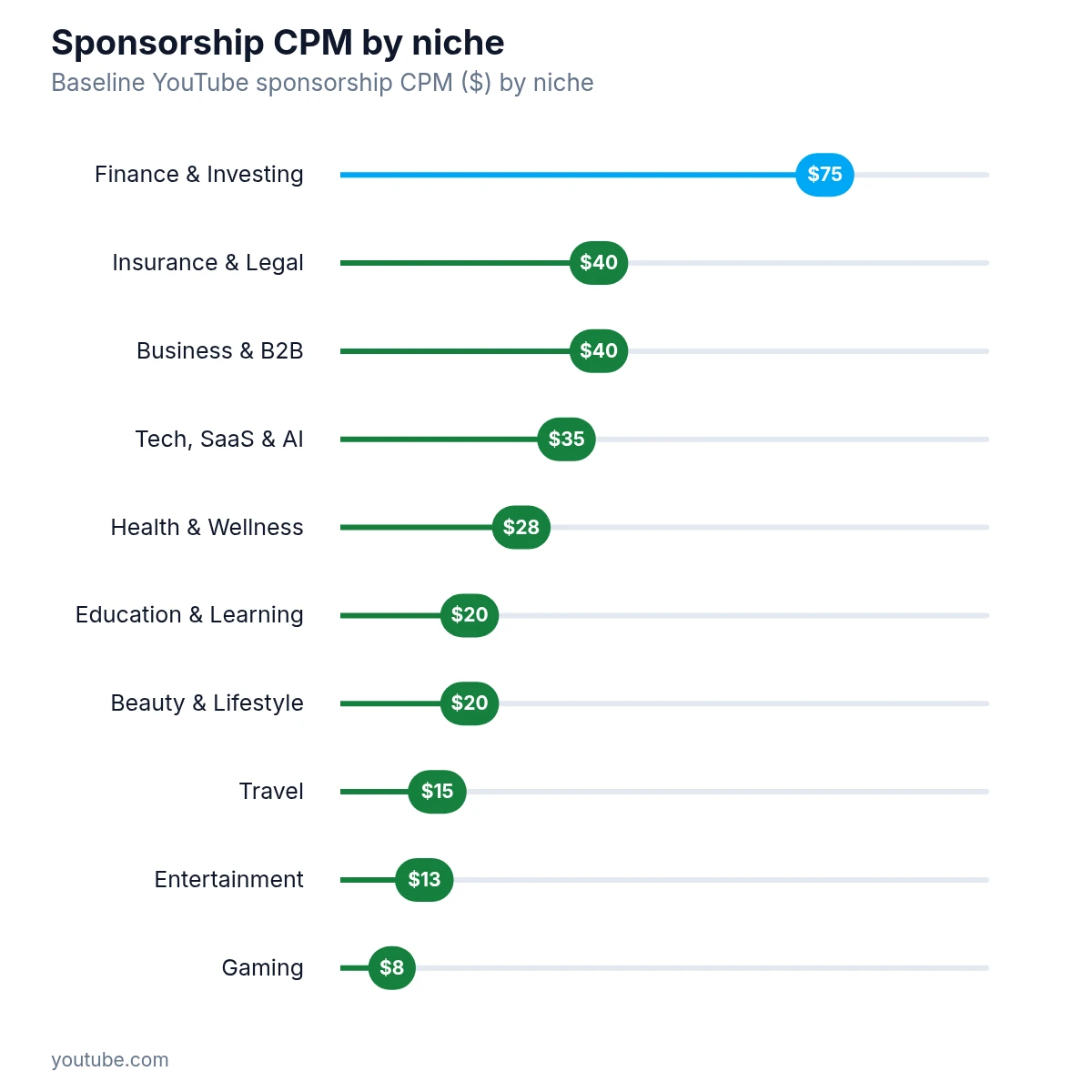
Finance & Investing has the highest YouTube sponsorship CPM at $75, and tech and business niches earn substantially more than entertainment and gaming.
Placement type changes the price. A dedicated video (the entire video is about the brand) costs more than an integration (a sponsored segment within a regular video). An end card mention costs less than a mid-roll. Know what you are quoting.
A rough starting framework many creators use is a CPM-based calculation: estimate how many views the video will likely get, then apply a rate per thousand views based on your niche. But treat this as a floor, not a ceiling. Experienced creators often charge significantly more because they bring production quality, audience trust, and a proven track record of driving results.
When a brand asks for your rate first, give a number. Saying "what's your budget?" before offering any figure can come across as evasive. Give your rate, explain briefly what it includes, and let them respond.
Reading and Signing the Contract
Never start work without a signed agreement. This applies even when the brand seems trustworthy, even when the deal is small, and especially when someone says "we can skip the contract for this one."
A standard sponsorship contract will cover:
- The deliverables (exactly what content you are creating and where it will be published)
- The timeline (when the draft is due, when approval happens, when the video goes live)
- The fee and payment terms (how much, and when you get paid)
- Exclusivity clauses (whether you are blocked from working with competitors for a set period)
- Usage rights (whether the brand can repurpose your content in their own ads)
- A kill fee (what you get paid if the brand cancels after you have done the work)
- FTC disclosure requirements (the contract should confirm you will disclose the sponsorship)
Pay close attention to exclusivity clauses. A brand might ask you not to work with any competitor for 30, 60, or even 90 days after the video goes live. If you have other deals in the pipeline, this could cost you money. You can negotiate the exclusivity window down, or charge more to compensate for the restriction.
Usage rights are another area worth reading carefully. If a brand wants to run your footage as a paid ad on YouTube or other platforms, that is a separate value from the organic placement in your video. Many creators charge an additional fee for extended usage rights.
If the contract is long or confusing, it is worth having someone with legal knowledge look it over before you sign. Some creator communities have resources for this, and the cost of a quick review is almost always worth it.
The Brief: Your Creative Instructions
Once the contract is signed, the brand will send a creative brief. This document tells you what they want from the sponsored segment.
A typical brief includes:
- Key messages they want communicated
- Product features to highlight
- Claims you are not allowed to make (often for legal or regulatory reasons)
- Tone guidance (professional, casual, humorous, etc.)
- Required elements (discount code, specific URL, branded hashtag)
- Segment length requirements
- Any visual requirements (showing the product on screen, demonstrating a feature)
Read the brief carefully before you film anything. If something is unclear, ask before you shoot, not after. It is much easier to clarify a talking point in an email than to reshoot a segment because you missed a required element.
You do not have to follow every creative suggestion in the brief if it conflicts with your style or would feel inauthentic to your audience. But you do need to hit the required elements. There is usually room to negotiate the tone and delivery while still meeting the brand's core requirements.
Creating the Sponsored Segment
The actual filming is where your instincts as a creator take over, but a few principles apply specifically to sponsored content.
Write a script or at least a detailed outline for the sponsored segment, even if you normally speak off the cuff. You need to hit specific points, and improvising through a brand message often leads to rambling or missing required information.
Keep it natural. Your audience can tell when you are reading from a teleprompter or reciting a list of product features without any personal connection to them. The best integrations feel like a recommendation from a friend who happens to have tried the product. Talk about how you actually use it, or why it fits into the context of the video.
Be honest about what you do not know. If you have not personally used the product extensively, do not pretend otherwise. You can still deliver a genuine integration by focusing on what you do know and framing it appropriately.
Disclose clearly and early. The FTC requires that viewers know they are watching sponsored content. A quick "this video is sponsored by [Brand]" at the start of the segment is the standard approach. Do not bury it at the end, and do not use vague language like "thanks to our partner" that obscures the commercial relationship.
The Review and Approval Process
Most brands require you to submit a draft before the video goes live. This might mean sending the full edited video, or just the sponsored segment cut separately, depending on what the contract specifies.
Build this review window into your timeline. Brands typically ask for several business days to review, and they may come back with revision requests. Common revision requests include:
- Adjusting a claim that conflicts with their legal guidelines
- Re-recording a segment where the product name was mispronounced
- Adding a required element that was missed
- Changing the tone of a specific part
Most revision requests are minor. Occasionally a brand will ask for significant changes that feel at odds with your creative style. If that happens, refer back to the contract. If the brief was followed and the required elements are present, you have grounds to push back on requests that go beyond what was agreed.
Once the brand approves, you have a green light to publish. Some contracts specify an exact publish date or a window. Stick to it. Missing a publish date can affect the brand's broader campaign timing and damages your reputation as a reliable partner.
Getting Paid
Payment terms vary. Common structures include:
- 50% upfront, 50% on publication
- 100% on publication
- Net 30 or Net 60 (payment due 30 or 60 days after the video goes live)
Net 60 is common with larger brands and their agencies. It is frustrating but normal. Budget accordingly, especially if sponsorships are a significant part of your income.
Submit your invoice promptly after the video goes live. Include the video URL, the agreed fee, your payment details, and the invoice date. Keep a copy of every invoice and track payment due dates. If a payment is late, follow up politely but directly. Most late payments are administrative oversights, not bad faith.
For ongoing relationships with brands that pay reliably, you can sometimes negotiate better terms over time. Some creators eventually move to upfront payment for repeat partners.
Building Long-Term Brand Relationships
A single sponsorship is a transaction. A long-term brand relationship is an asset.
Brands that sponsor you once and see good results (views, click-through on the code, positive audience reception) will often come back. When they do, you have more leverage. You know their brief style, they know your process, and the negotiation is faster. You can also charge more for a returning partner because you have proven results.
After the video goes live, send the brand a performance report. Include the view count at the 30-day mark, click data if you have it from the link or code, and any notable audience comments. This is not required by most contracts, but it is the kind of thing that makes you memorable as a professional creator rather than just another vendor.
Treat every sponsorship as an audition for the next one.
What to Do When Things Go Wrong
Sponsorships do not always go smoothly. A few scenarios worth knowing how to handle:
If a brand ghosts you after you have done the work, refer to the contract. If there is a kill fee clause, invoice for it. If there is no kill fee and the brand simply stops responding, you may need to decide whether the amount is worth pursuing formally.
If a brand asks you to make claims you are not comfortable with, you can decline. You are not obligated to say things you believe are misleading, regardless of what the brief says. If the request crosses a line, it is better to walk away from the deal than to publish content you will regret.
If your audience reacts negatively to a sponsorship, take the feedback seriously. One bad fit can erode trust that took years to build. Going forward, be more selective. The best sponsorships are ones where your audience's reaction is "that actually makes sense for this channel."
Building a Sustainable Sponsorship Practice
The creators who do well with sponsorships long-term share a few habits. They are selective about who they work with, choosing brands that genuinely fit their content and audience. They treat every deal as a professional engagement, with clear communication and reliable delivery. They track their rates, their results, and their payment history so they can negotiate from a position of knowledge rather than guesswork.
They also protect their audience relationship above everything else. Your viewers are the reason brands want to work with you. The moment they stop trusting your recommendations, the sponsorship income follows.
Start with one deal. Do it well. Learn from the process. The workflow gets faster and more comfortable with each one, and the rates tend to follow.