How to Write Sponsorship Outreach Emails That Get Responses
Most sponsorship emails get deleted in under ten seconds. The person reading them has seen hundreds of identical messages asking for money in exchange for a logo placement and a "great opportunity." If your email looks like every other pitch in their inbox, it will end up in the same place they all do.
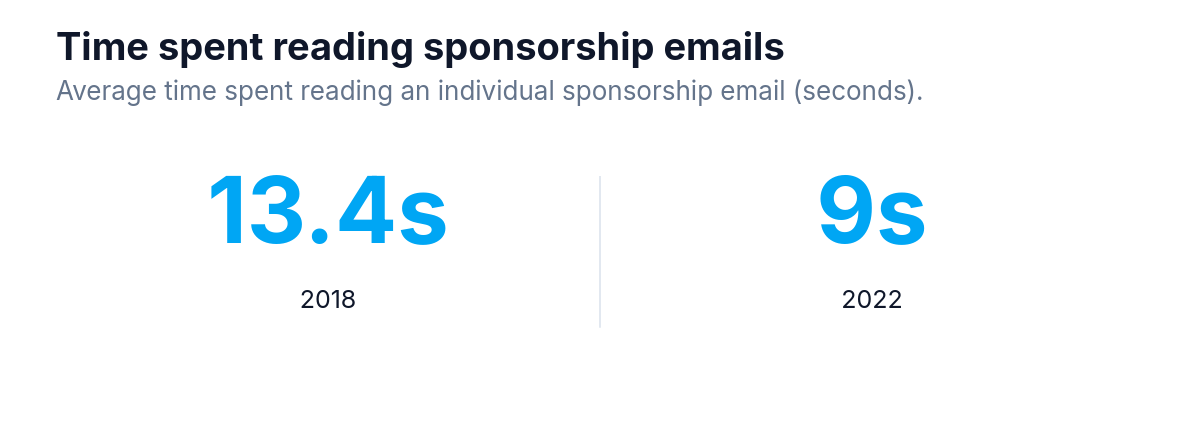
Average time spent reading a sponsorship email fell from 13.4 seconds in 2018 to 9 seconds in 2022, meaning the typical message now gets less than ten seconds of attention.
Getting a response requires more than good writing. It requires understanding what sponsors actually want, doing real research before you type a single word, and making an offer that is genuinely worth considering. The email itself is almost the last step. Everything that happens before you hit send determines whether it works.
This guide covers the full process: how to think about sponsorship outreach, how to structure your email, what kills otherwise decent pitches, and how to follow up without being annoying.
What Sponsors Are Actually Looking For
Before writing anything, you need to understand the decision you are asking someone to make. A sponsorship is a business investment. The person you are emailing answers to someone, has a budget they are accountable for, and needs to justify every dollar they spend. They are not doing you a favor. They are looking for a return.
That return might be brand awareness, access to a specific audience, lead generation, community goodwill, or association with a particular event or creator. Different companies prioritize different things. A local law firm sponsoring a community 5K wants visibility and goodwill. A software company sponsoring a developer podcast wants leads. A consumer brand sponsoring a lifestyle event wants to reach a demographic they are trying to grow.
Your email needs to speak to what they want, not to what you need. This sounds obvious, but the vast majority of sponsorship emails do the opposite. They describe the event or platform in glowing terms, explain how much money is needed, and then ask for it. That is not a pitch. That is a request for charity.
The shift that makes sponsorship emails work is moving from "here is what I need" to "here is what I can do for you." Every sentence should be answering the question the sponsor is silently asking: what do I get out of this?
Research Before You Write
Sending a generic sponsorship email to a list of companies is a waste of time for everyone involved. The companies that respond to cold outreach do so because the pitch was clearly written for them, not for whoever happened to be next on a spreadsheet.
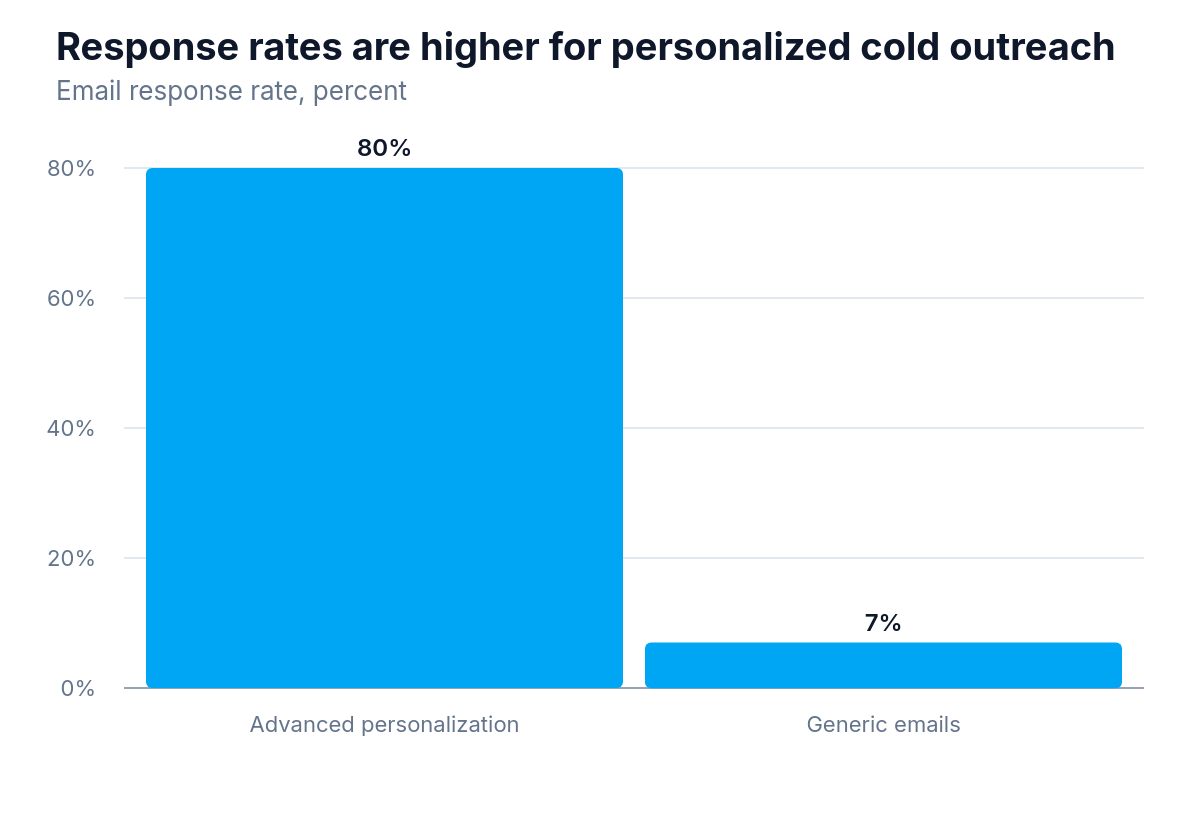
Personalized outreach gets a much higher reply rate: 80% for advanced personalization versus 7% for generic emails.
Good research takes time, but it changes the conversion rate dramatically. Here is what to look for before you write to any potential sponsor:
- What products or services are they currently promoting? If a company just launched a new product aimed at a specific demographic, and your audience matches that demographic, that is your opening.
- Have they sponsored similar things before? If yes, you know they are open to this type of partnership. If no, you need to make a stronger case for why they should start.
- Who is the right person to contact? Sending to a general inbox or the CEO when there is a marketing manager or partnerships coordinator is a sign that you did not do your homework.
- What does their marketing messaging look like? Understanding their tone and priorities helps you frame your pitch in language that resonates with how they already think about their brand.
Even ten minutes of research per company will separate your email from the pile. You do not need to write a dissertation. You need one or two specific details that prove you actually know who you are writing to.
The Structure of a Sponsorship Email That Works
A good sponsorship email is short. Shorter than you think. The goal of the email is not to close the deal. It is to earn a conversation. Sponsors who are interested will ask for more information. Your job is to give them enough to be intrigued without overwhelming them.
Subject Line
The subject line determines whether the email gets opened. Avoid vague lines like "Partnership Opportunity" or "Exciting Sponsorship Proposal." These are the subject lines of emails people delete without reading.
A better approach: be specific and lead with value. An analysis of numbers in subject lines across 115 million emails found they consistently lift open and reply rates, so something like "Reaching 8,000 cyclists in Denver - sponsorship opening for [Event Name]" tells the reader exactly what they are getting and whether it is relevant to them. If they sell cycling gear and want Denver customers, they will open it. If they do not, they will not, and that is fine. You want qualified interest, not high open rates from people who will never say yes.
Opening Line
Do not open with "My name is..." or "I am reaching out because..." Both are wasted words. The reader already knows they are reading an email from you.
Open with something that shows you know them. Reference a recent campaign, a product launch, a piece of content they published, or something specific about their brand. One sentence is enough: "I noticed [Company] recently expanded into the Pacific Northwest market, which overlaps directly with our audience."
This does two things. It proves you did research, and it immediately frames the email as relevant to them rather than a mass blast. The speed of first impressions means readers form an opinion about your email within three seconds, so that opening line is doing more work than any other sentence you write.
The Core Pitch
After your opening, explain who you are and what you are offering in two to three sentences. Be specific about your audience. Numbers matter here: how many people, what demographics, what geography, what interests. Do not pad this section with adjectives. "Our engaged community of 12,000 outdoor enthusiasts in Colorado" is better than "our passionate, dedicated, and rapidly growing community of outdoor lovers."
Then explain what the sponsor gets. Be concrete. Logo placement is the bare minimum. Think about what else you can offer: dedicated email mentions, social posts, speaking opportunities, product sampling, exclusive access, or whatever is genuinely available and valuable. If you have tiered packages, mention that options exist but do not paste a full rate card into the email. Save that for the follow-up conversation.
Social Proof
If you have had sponsors before, name them. If you have relevant metrics (open rates, engagement rates, past event attendance), include one or two. If you have a testimonial from a previous sponsor, a single sentence quote is powerful. Social proof answers the question "has anyone else trusted this person?" before the reader has to ask it.
If you are new and have no previous sponsors, focus on your audience data and any comparable benchmarks you can point to. Be honest about where you are. Overselling and then underdelivering destroys relationships.
The Ask
End with a clear, low-friction ask. Do not ask them to commit to a sponsorship in the first email. Ask for a call, a meeting, or permission to send a full proposal. Something like: "Would you have 20 minutes in the next few weeks to discuss whether this could be a fit?"
This is easy to say yes to. It does not require budget approval or a long decision process. It just requires someone to agree to a conversation.
Signature
Include your name, title, organization, website, and a phone number. Make it easy for them to look you up and verify that you are legitimate.
Common Mistakes That Kill Good Pitches
Even well-intentioned sponsorship emails fail for predictable reasons. These are the patterns that appear most often in pitches that go unanswered.
Writing about yourself instead of them. The email is about the sponsor's goals, not your financial needs. If your pitch reads like a funding request, it will be treated like one, which means it gets ignored or declined.
Being vague about the audience. "We have a large and engaged audience" tells a sponsor nothing. Large compared to what? Engaged how? Give real numbers. If your numbers are modest, that is fine. A small, highly specific audience is often more valuable to the right sponsor than a large, diffuse one.
Sending the same email to everyone. Sponsors can tell when an email is a template with their name swapped in. The lack of personalization signals that you do not actually know their brand, which means you probably cannot deliver what they need. Data backs this up: preference for longer personalized cold emails was the top response in one survey, with 36% of people saying a personalized email containing their name would make them most likely to reply.
Attaching a 20-page media kit to the first email. A long attachment in a cold email is friction. It also looks like you are trying to overwhelm them into saying yes. Send the media kit after they express interest.
Asking for too much too soon. Requesting a large sponsorship commitment in a cold email is like proposing marriage on a first date. Start with a conversation.
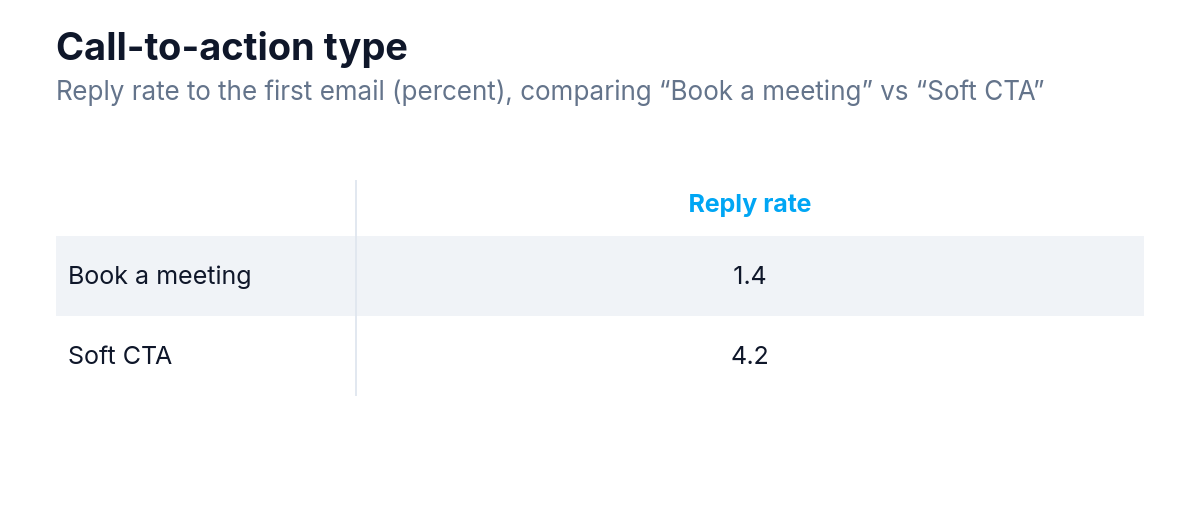
A soft, low‑friction CTA had the higher reply rate — 4.2% — versus asking recipients to book a meeting.
Following up aggressively. Research on the number of follow-up emails suggests three follow-ups outperform one, but a fourth actively damages reply rates and triggers spam complaints. It signals desperation and makes the sponsor less likely to want to work with you, even if they were initially interested.
Spelling errors and wrong names. This should not need to be said, but it does. Sending an email to "Sarah" that opens with "Hi Michael" is an immediate delete. Proofread everything, and double-check every name and company name before sending.
Tone and Length
The right tone for a sponsorship email is professional but human. You are not writing a legal document, and you are not writing a casual text. You are writing to a business professional who is busy and has no particular reason to help you. Be respectful of their time.
Keep the email under 300 words if possible. An analysis of email length and reply rates across 34 million cold emails found that messages under 100 words averaged a 3.9% reply rate, slightly ahead of longer emails at 3.7%. Sponsors are not going to read a wall of text from someone they have never heard of. If they are interested, they will ask questions. Give them something short and compelling enough to want to ask those questions.
Avoid exclamation points and superlatives. "This is an incredible opportunity you won't want to miss!" reads like a spam email. Confidence and specificity do more work than enthusiasm.
How to Follow Up
If you send a well-crafted email and hear nothing after seven to ten days, one follow-up is reasonable. Keep it short. Reference your original email, acknowledge that they are busy, and restate the ask in a single sentence.
Something like: "I wanted to follow up on the email I sent last week about [Event/Platform]. I know your inbox is full, so I'll keep this brief. If there's any interest in connecting, I'm happy to work around your schedule."
If you still hear nothing after that, move on. Sending a third email to someone who has not responded twice is rarely productive and can damage your reputation with that company for future outreach.
Some sponsors will say no. Some will say not now. Some will ask for more information. All of these are useful responses. Even a no tells you something about fit, and a polite, professional response to a rejection keeps the door open for the future.
Building a Relationship Before You Need One
The best sponsorship outreach is not cold. Sponsors who already know your name, have seen your work, or have heard of you from someone they trust are far more likely to respond positively.
If you know you will be looking for sponsors in six months, start building relationships now. Follow the companies you want to approach on social media. Comment thoughtfully on their posts. Attend industry events where their marketing teams show up. If you have a mutual connection, ask for an introduction.
None of this is manipulation. It is how business relationships work. People are more likely to say yes to people they recognize, and recognition takes time to build.
When you do send your email, you can reference the connection honestly: "We met briefly at [Conference] last spring" or "I've been following [Company]'s work in [area] for a while and think there could be a real fit here." This is not the same as pretending to know someone. It is acknowledging a real, if limited, connection.
Putting It Together
A sponsorship email that gets a response does four things: it proves you know the sponsor's business, it makes a clear case for what they get, it asks for something small and easy to say yes to, and it is short enough to read in under a minute.
Everything else, the media kit, the full proposal, the contract, comes later. The email's only job is to open a door.
Write it like you are making a business case to someone who has no obligation to listen. Because that is exactly what you are doing.