Securing Tech Sponsorships for Gadget Review Channels
Why Most Channels Never Land Their First Deal
With more than 51 million YouTube channels in existence, gadget review content competes for attention across YouTube and other platforms. Only a fraction of them ever receive a meaningful sponsorship offer, and an even smaller number build lasting relationships with tech brands. The gap between those who do and those who don't rarely comes down to subscriber count. It comes down to how creators position themselves, how they approach brands, and whether they understand what a sponsorship actually means from the company's side of the table.
If you've been waiting for brands to come to you, you're playing a passive game in an active market. Tech companies, especially mid-size and emerging ones, are actively looking for review channels that can move product and build credibility. The challenge is making sure they find you, and that when they do, they see something worth paying for.
Understanding What Tech Brands Actually Want
Before you write a single outreach email, you need to understand the sponsor's perspective. Tech brands aren't looking for a place to park their marketing budget. They're looking for specific outcomes: product awareness, credibility transfer, search visibility, and ideally, direct conversions.
Awareness vs. Conversion Sponsorships
Not every tech company wants the same thing. A well-established brand like a major laptop manufacturer might sponsor a review channel primarily for awareness, wanting their product in front of a relevant audience even if viewers don't immediately buy. A newer brand launching a smart home device, on the other hand, often cares deeply about conversion, meaning they want viewers to click a link and make a purchase.
Knowing which type of brand you're talking to changes how you pitch yourself. For awareness-focused brands, your reach and audience demographics matter most. For conversion-focused brands, your engagement rate and the trust you've built with your audience are the deciding factors. This matters more than it might seem: product discovery on YouTube accounts for 24% of users on the platform, which is exactly the behavior conversion-focused brands are trying to reach.
The Trust Problem in Gadget Reviews
Tech sponsorships carry a specific tension that doesn't exist in the same way for, say, a cooking channel. Viewers of gadget review content are often skeptical by nature. They know that sponsored reviews can be biased. A brand that sponsors your channel is essentially borrowing your credibility, and they know it. This means brands prefer channels where the host has a track record of honest, critical reviews, because a channel that praises everything is worth less to them, not more.
This is counterintuitive to many new creators who think being positive about products makes them more attractive to sponsors. The opposite is often true. Brands want to be featured on a channel where a positive review means something.
Building a Channel That Attracts Sponsors
Sponsorships don't start with outreach. They start with the decisions you make before you ever contact a brand.
Niche Specificity Over Broad Coverage
A channel that reviews "tech" covers too much ground to be useful to most sponsors. A channel focused on budget Android phones, or smart home devices under a certain price point, or productivity tools for remote workers, tells a brand immediately whether their product fits. Specificity also builds a more loyal audience, which is exactly what sponsors want to reach.
You don't need to cover only one product category forever, but your channel should have a clear center of gravity. Viewers should be able to describe what you cover in one sentence.
Engagement Metrics Matter More Than Subscriber Count
A channel with 8,000 subscribers and a comment section full of genuine questions and discussions is more valuable to most tech sponsors than a channel with 80,000 subscribers and minimal engagement. Brands have become much more sophisticated about this, with authentic engagement now the priority for brands selecting influencers, regardless of follower count.
Focus on building a community that actually talks back. Ask specific questions at the end of videos. Respond to comments, especially in the first few hours after posting. Create content that invites debate, like comparison videos or "is it worth it" breakdowns, because these naturally generate more interaction than straightforward unboxings.
Consistency and Publishing Cadence
Brands want to know you'll still be around in six months. A channel that posts sporadically signals risk. Even if your content quality is high, irregular publishing makes it harder for brands to plan campaigns around you. A consistent schedule, even if it's only one video every two weeks, signals professionalism and staying power.
Creating a Media Kit That Does the Work for You
A media kit is the document you send to a brand when you reach out or when they ask for more information. Most creator media kits are either too sparse to be useful or so cluttered they're impossible to read. Neither works.
What to Include
Your media kit should answer the questions a brand manager will ask before they can approve a deal:
- Who watches your channel? Include age range, gender breakdown, and top geographic locations. You can pull this from YouTube Studio or your platform's analytics dashboard.
- How large is your audience? List your subscriber count, average monthly views, and average views per video.
- How engaged is your audience? Include your average comment count per video and your like-to-view ratio.
- What do you cover? A one-paragraph description of your channel's focus and editorial approach.
- What have you done before? If you have previous sponsorships, list them. If you don't, list any brand collaborations, affiliate partnerships, or notable press coverage.
- What are you offering? Describe your sponsorship formats clearly: dedicated video, integrated mention, social post, newsletter mention, or whatever you actually offer.
- What do you charge? Some creators leave pricing out of the initial media kit and negotiate separately. Others include a rate card. Either approach works, but be prepared to discuss numbers quickly if a brand asks.
Keep the whole document to two or three pages. Use real screenshots of your analytics rather than typed numbers, since these are harder to fake and more credible.
Presentation Matters
Your media kit is also a sample of your production quality. A poorly designed PDF suggests your video thumbnails and graphics might look the same way. Use a clean template, consistent fonts, and your channel's visual identity. If design isn't your strength, there are plenty of simple templates available through tools like Canva that work well for this purpose.
Finding the Right Brands to Approach
Random outreach is a waste of time. The brands most likely to sponsor your channel are the ones that already understand the value of creator marketing and whose products genuinely fit your content.
Start With Brands That Already Sponsor Similar Channels
Watch the channels in your niche that are slightly larger than yours. Note which brands they're working with. Those brands have already decided that your type of content is worth sponsoring. They're not a hard sell. They just need to find you.
Make a list of these brands. Check their websites for a "partnerships" or "creators" page, which many tech companies now maintain specifically for inbound creator inquiries.
Target Emerging Brands With Marketing Budgets
Established brands like major smartphone manufacturers often work through agencies and have formal processes that are hard to access without a large following. Emerging brands, particularly those that launched in the last few years and are trying to build awareness, are often more accessible and more willing to work with mid-size channels.
Look at crowdfunding platforms, tech product launch sites, and startup news sources to find companies that recently raised funding or launched new products. These companies often have money to spend on marketing and haven't yet locked into exclusive agency relationships.
Affiliate Programs as a Starting Point
If a brand you want to work with has an affiliate program, join it before you pitch a paid sponsorship. Create content featuring their product, include your affiliate link, and let the results speak for you. When you reach out for a paid deal, you can show them actual conversion data from your channel. This is a far stronger pitch than a cold email with no track record.
Writing Outreach That Gets Responses
Most creator outreach emails fail for the same reasons: they're too long, they focus on the creator rather than the brand, and they don't make a clear ask.
The Structure of an Effective Pitch
Keep your initial email short. Three to four paragraphs is enough. The goal of the first email is not to close a deal. It's to start a conversation.
Start by showing that you've done your homework. Mention a specific product they make, a recent launch, or something specific about their brand that connects to your channel. This immediately separates you from the mass-outreach emails they receive constantly.
Then explain who you are and why your audience is relevant to them. Don't list every metric you have. Pick the two or three numbers that are most relevant to their likely goals.
Make a specific ask. "I'd love to explore a potential partnership" is vague. "I'm putting together a dedicated review of wireless earbuds under $100 and think your [product name] would be a strong fit for my audience" is specific and actionable.
Close by offering to send your media kit and making it easy for them to respond with a simple yes or no.
Who to Contact
Don't email a generic info@ address. Find the person responsible for influencer marketing, creator partnerships, or brand marketing. LinkedIn is useful for this. So is checking the company's website for a team page. A direct email to the right person, even if it's slightly harder to find, converts far better than a contact form submission.
Follow Up Once
If you don't hear back after a week, send one follow-up. Keep it brief: a single sentence referencing your previous email and reiterating your interest. After that, move on. Persistent follow-up beyond one reminder damages your reputation and wastes your time.
Negotiating and Structuring Deals
Once a brand expresses interest, the conversation shifts to terms. Many creators undervalue themselves here, either by accepting the first offer without negotiation or by agreeing to terms that create problems later.
Pricing Your Sponsorship
Pricing varies widely based on niche, audience size, engagement, and what you're delivering. Rather than accepting whatever a brand offers, do some research. Talk to other creators in your niche about general rate ranges. Look at what similar channels charge by checking creator rate databases or communities where creators share this information.
A useful starting point is calculating your cost per thousand views (CPM) based on your average video performance. Tech sponsorships typically command higher CPMs than general lifestyle content because the audience is more targeted and more likely to purchase.
What to Negotiate Beyond Price
Price is only one part of a sponsorship agreement. Also clarify:
- How long the brand has exclusivity, if any, in their product category
- Whether you retain editorial control over the content
- What approval process exists for the video before it goes live
- How long the sponsored segment or video must remain live
- Whether the brand can repurpose your content in their own marketing
Getting these terms in writing protects both parties. Even for small deals, a simple written agreement or email confirmation of terms is worth having.
Protecting Your Editorial Voice
The most important thing you can negotiate is the right to give your honest opinion. Some brands will push back on this, wanting approval rights over your script or the ability to request edits. Be cautious here. A sponsorship that requires you to say things you don't believe will cost you audience trust, which is worth more in the long run than any single deal.
A reasonable middle ground is allowing the brand to review the video before publication to check for factual errors about their product, while retaining your right to express your own assessment.
Turning One Deal Into an Ongoing Relationship
A single sponsorship is useful. A recurring relationship with a brand is genuinely valuable. The difference comes down to what happens after the video goes live.
Send the brand a performance report within two weeks of publishing. Include views, click-through rate on any links you provided, comment sentiment, and any notable feedback from your audience. Most creators never do this. The ones who do stand out immediately.
Ask for feedback on the integration. Did the segment feel natural? Was the call to action clear? Brands appreciate creators who treat the partnership as a collaboration rather than a transaction.
If the results were strong, say so directly and propose a follow-up campaign. If the results were modest, be honest about why and suggest what you'd do differently. Brands respect honesty and are more likely to continue working with a creator who communicates clearly than one who disappears after cashing a check.
Building Long-Term Sponsorship Income
The goal isn't to land one sponsorship. It's to build a pipeline where you have consistent brand relationships, a reputation in your niche that attracts inbound interest, and enough leverage to be selective about the deals you take.
This takes time. Most channels that build meaningful sponsorship income do so over years, not months. The creators who get there are the ones who treat their channel as a business from the start: tracking outreach, maintaining relationships, delivering on their promises, and consistently producing content that makes brands want to be associated with them.
The influencer marketing market size tells part of the story here: Statista projects it will reach $32.55 billion by 2025, up from $1.7 billion in 2015, and 25% of marketers now use influencer marketing to promote their products and services. Meanwhile, YouTuber income streams have expanded well beyond ad revenue to include brand deals, exclusive content, and their own products, which means sponsorships are increasingly central to how serious creators build sustainable businesses.
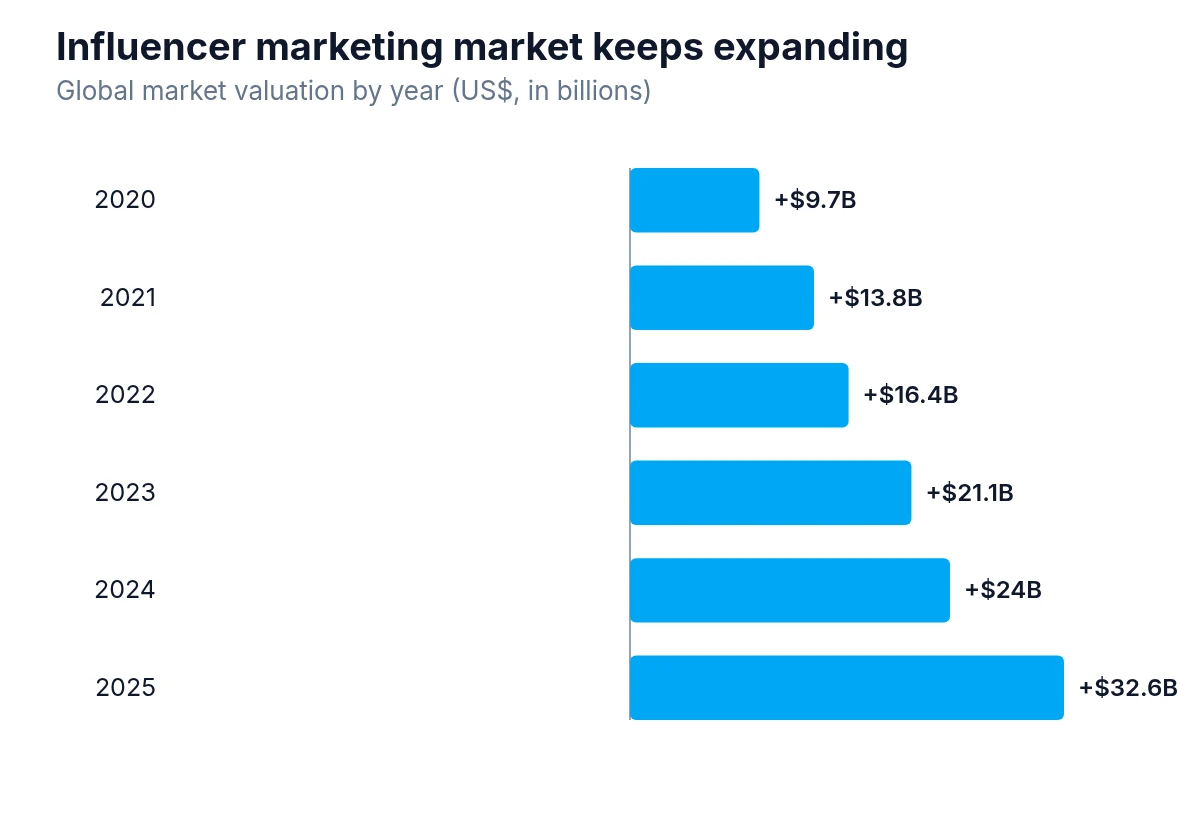
The global influencer marketing market more than tripled, rising from $9.7 billion in 2020 to about $32.6 billion in 2025.
The tech space rewards creators who know their audience deeply and can speak to them honestly. That combination, a specific audience and genuine credibility, is what brands are actually paying for. Build those two things, and the sponsorships follow.