How Small YouTubers Can Secure Meaningful Sponsorships
The Myth of the Subscriber Threshold
Most small YouTubers believe the same thing: sponsors only care about channels with hundreds of thousands of subscribers. It is an understandable assumption. The biggest creators are the most visible, so their brand deals are the most visible too. But this belief stops a lot of creators from even trying, and that is a mistake.
Brands are not simply buying eyeballs. They are buying access to specific audiences, and a channel with 3,000 highly engaged subscribers in a niche can be more valuable to the right sponsor than a general entertainment channel with 300,000 passive viewers. The global influencer market size was estimated at approximately $33 billion in 2025, having more than tripled since 2020, and much of that growth has come from brands learning to think beyond raw reach. Your job is to find the ones who do, and make a compelling case.
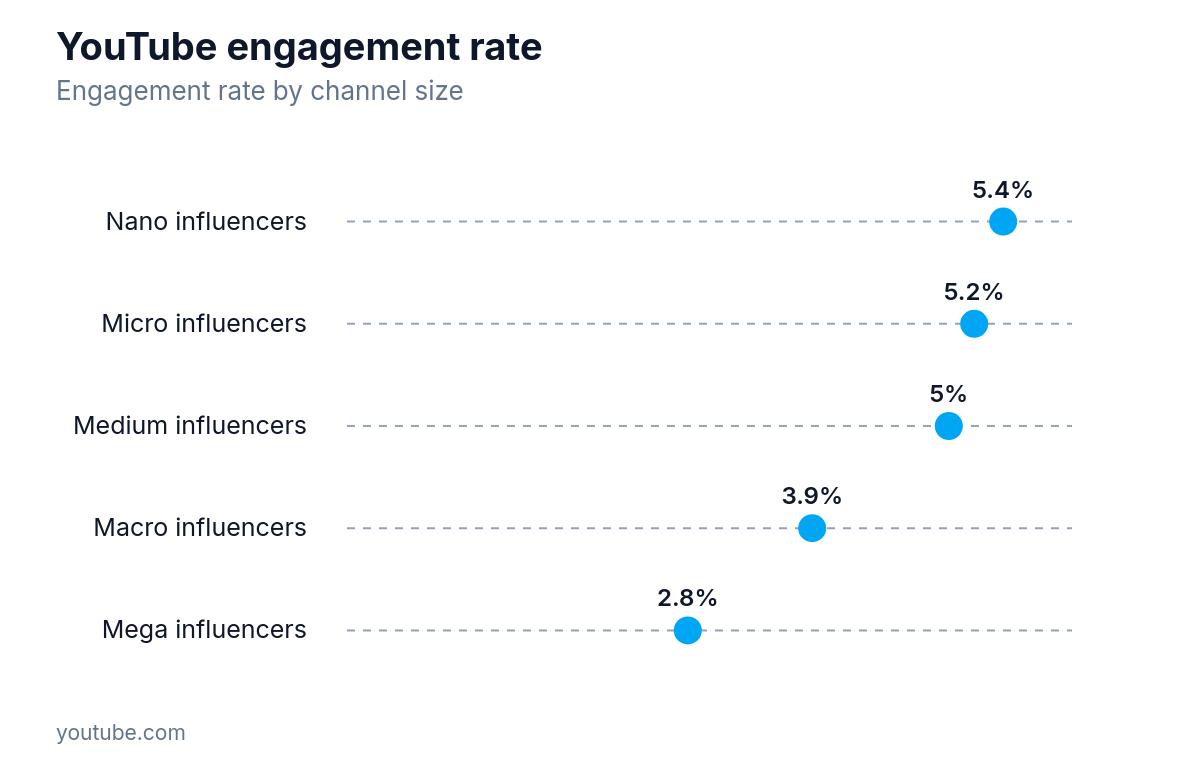
Smaller YouTube channels have higher engagement: nano influencers average 5.43% engagement while mega influencers average 2.82%.
What Sponsors Actually Look For
Before you pitch anyone, it helps to think like a brand manager deciding where to spend a limited budget.
The first thing they check is not subscriber count. It is engagement. A channel where 15% of viewers leave comments, share videos, and click links is far more attractive than one where 0.5% do. Engagement rate is the ratio of interactions to views, and it is something small channels often have in abundance. Research published in a peer-reviewed journal found that micro-influencers and nano-influencers outperform mega- and macro-influencers on user trust and interaction, which is exactly what brand managers are starting to pay attention to.
The second thing they look for is audience fit. A sponsor selling specialty coffee equipment does not need a million viewers. They need viewers who care about coffee. If your channel is about home espresso, pour-over techniques, or cafe culture, your 5,000 subscribers are worth more to that brand than a lifestyle channel's 200,000 subscribers who happen to include a few coffee drinkers.
Third, they look at consistency. A channel that posts regularly and has maintained a steady presence for at least six months signals reliability. Brands do not want to pay for a sponsorship and then watch the creator disappear.
Finally, they look at brand safety. Your content should be something a company can comfortably associate its name with. This does not mean sanitized or boring, but it does mean no controversy that could create PR problems.
Building the Foundation Before You Pitch
Sending sponsorship pitches before you have the right foundation in place is like applying for a job with a blank resume. A few things need to be in order first.
Know Your Numbers
You need to be able to speak confidently about your channel's performance. This means knowing your average views per video, your watch time, your subscriber growth rate over the past three to six months, and your engagement rate. The YouTube Studio key reach metrics include impressions, impressions click-through rate, views, and unique viewers, all available in the Reach tab. Pull it, understand it, and be ready to share it.
Audience demographics matter too. If your viewers are predominantly 25-to-44-year-olds with disposable income, that is worth knowing and communicating. If a significant portion are from a specific country or region, that is relevant for brands targeting that market.
Create a Media Kit
A media kit is a one-to-two page document (or a clean PDF) that summarizes your channel for potential sponsors. Think of it as a professional introduction. It should include your channel name and a short description of what you cover, your key metrics, your audience demographics, examples of past content, and your contact information.
Keep it clean and specific. A well-designed media kit signals that you take your channel seriously as a business, not just a hobby. You do not need to be a graphic designer to make one. Simple, readable, and accurate beats flashy and vague.
Have Relevant Content Already Published
If you are approaching a brand that sells outdoor gear, your channel should have videos about hiking, camping, or adventure travel already on it. Sponsors want to see that the partnership makes sense in context. They want to imagine their product appearing naturally in your content, not awkwardly inserted into something unrelated.
Finding the Right Brands to Approach
Spray-and-pray pitching, sending the same generic email to fifty brands, almost never works. Targeted outreach to a smaller number of genuinely relevant brands works much better.
Start With What You Already Use
The easiest pitch to make is an honest one. If you already use a product and genuinely like it, say so. Brands hear from creators who want money all the time. They hear less often from creators who are actual customers with real opinions. That authenticity comes through, and it makes your pitch more credible.
Look at the products you reference in your videos, the tools you use in your workflow, and the brands you mention in passing. Those are your starting points.
Look at What Competitors Are Promoting
Find channels in your niche that are a bit larger than yours, maybe two to five times your subscriber count, and see which brands are sponsoring them. Those brands are already spending money in your niche and are clearly open to YouTube partnerships. They may also be willing to work with smaller channels if the audience fit is strong.
Target Smaller Brands and Startups
Large consumer brands with massive marketing budgets tend to work through agencies and have established processes that favor bigger channels. Smaller brands and startups often have more flexible budgets, less bureaucracy, and a genuine need to reach specific audiences efficiently. They are also more likely to respond to a direct email from a creator.
Look for brands that are growing, have active social media presences, and sell products that align naturally with your content. A company that just launched a new product line is often actively looking for promotional channels.
Use Sponsorship Marketplaces
Several platforms exist specifically to connect creators with brands. These include places like Grapevine, Influencer.co, and similar services. The deals on these platforms tend to be smaller, but they are a legitimate way to build a track record when you are starting out. Having even one or two completed sponsorships on your record makes future pitches more credible.
Writing a Pitch That Gets Responses
Most sponsorship pitches from small creators fail for the same reasons: they are too long, too vague, too focused on the creator's needs rather than the brand's, or they make no specific proposal.
A good pitch email has five elements.
A specific subject line. "Partnership opportunity" gets ignored. "Sponsorship idea for [Brand Name] - [Your Channel Name], [Niche] audience" is specific enough to get opened.
A brief, credible introduction. Two or three sentences about who you are, what your channel covers, and one or two specific metrics. Not your life story.
A clear connection to their brand. Explain why your audience is relevant to them. Be specific. "My viewers are home cooks who regularly invest in kitchen equipment" is better than "I think my audience would love your products."
A concrete proposal. Tell them what you are offering. A dedicated video? A 60-second mid-roll integration? A series of three videos over six weeks? Give them something specific to react to rather than a vague expression of interest.
A simple next step. End with a clear call to action. Ask if they would like to see your media kit, or suggest a short call to discuss.
Keep the whole email under 200 words if possible. Brand managers are busy. The goal of the pitch is not to close a deal; it is to start a conversation.
Pricing Your Sponsorships
Knowing what to charge is one of the hardest parts for new creators, and undercharging is a common mistake that can undervalue your work and set a difficult precedent.
A rough starting point many creators use is a CPM-based calculation, where CPM stands for cost per thousand views. If your videos average 2,000 views and you apply a CPM of $20 to $30 (a reasonable range for niche content with strong engagement), that suggests a rate of $40 to $60 for a basic integration. This is a floor, not a ceiling. For context, Instagram influencer post rates range from $10 for nano-influencers to $10,000 or more for mega-influencers, which gives a sense of how wide the spread can be across the broader influencer market.
Other factors push rates up: exclusivity (agreeing not to work with competitors), longer integrations, dedicated videos rather than mid-rolls, and audience demographics that skew toward higher-income viewers.
Do not be afraid to ask what a brand's budget is before you propose a number. Many brands have a fixed amount allocated for influencer marketing and will tell you if you ask directly. This saves time for both sides.
Be cautious about accepting product-only deals unless the product has genuine value to you and your audience. Free products do not pay for equipment, editing time, or software subscriptions.
Delivering and Building Long-Term Relationships
Landing a sponsorship is one thing. Delivering well enough that a brand comes back is what builds a sustainable income stream.
Read the brief carefully. Understand what the brand actually wants communicated, not just what you want to say about them. Meet every deadline. If something changes on your end, communicate early rather than going silent.
After the video goes live, send the brand a performance report. Include views, watch time, click-through rates on any links, and any notable comments from viewers. Most small creators do not do this. Doing it makes you stand out and gives the brand concrete data to justify renewing the partnership.
A brand that has worked with you once and had a good experience is far easier to pitch again than a brand you are approaching cold. Treat every sponsorship as an audition for a long-term relationship, not a one-time transaction.
What to Do When You Hear Nothing
Most pitches do not get responses. This is normal and not a reflection of your channel's quality. Brand managers receive a lot of emails, priorities shift, and timing matters.
Follow up once, about a week after your initial email, with a short note. If there is still no response, move on. Do not send multiple follow-ups. Do not take it personally.
Keep a simple spreadsheet tracking who you have contacted, when, and what happened. This lets you see patterns over time, identify which types of brands respond, and avoid contacting the same person twice with the same pitch.
Rejection is not the end of the conversation either. A brand that says no today might say yes in six months when their budget resets or their product line changes. A polite, professional response to a rejection keeps the door open.
Growing Into Bigger Deals
The first sponsorship is the hardest to get. After that, each one becomes slightly easier because you have proof that brands trust you with their message.
As your channel grows, revisit your rates regularly. Many creators undercharge for years because they set a rate early and never updated it. If your views have doubled, your rates should reflect that.
Consider working with a talent manager or joining a creator network once your channel reaches a point where inbound interest is taking significant time to manage. These arrangements typically take a percentage of deals they bring in, but they can open doors to brands that do not respond to cold outreach.
The creators who build meaningful sponsorship income over time are not necessarily the ones with the biggest channels. They are the ones who treat their channel like a business, know their audience deeply, communicate professionally, and deliver consistently. Those qualities are available to any creator, regardless of subscriber count.
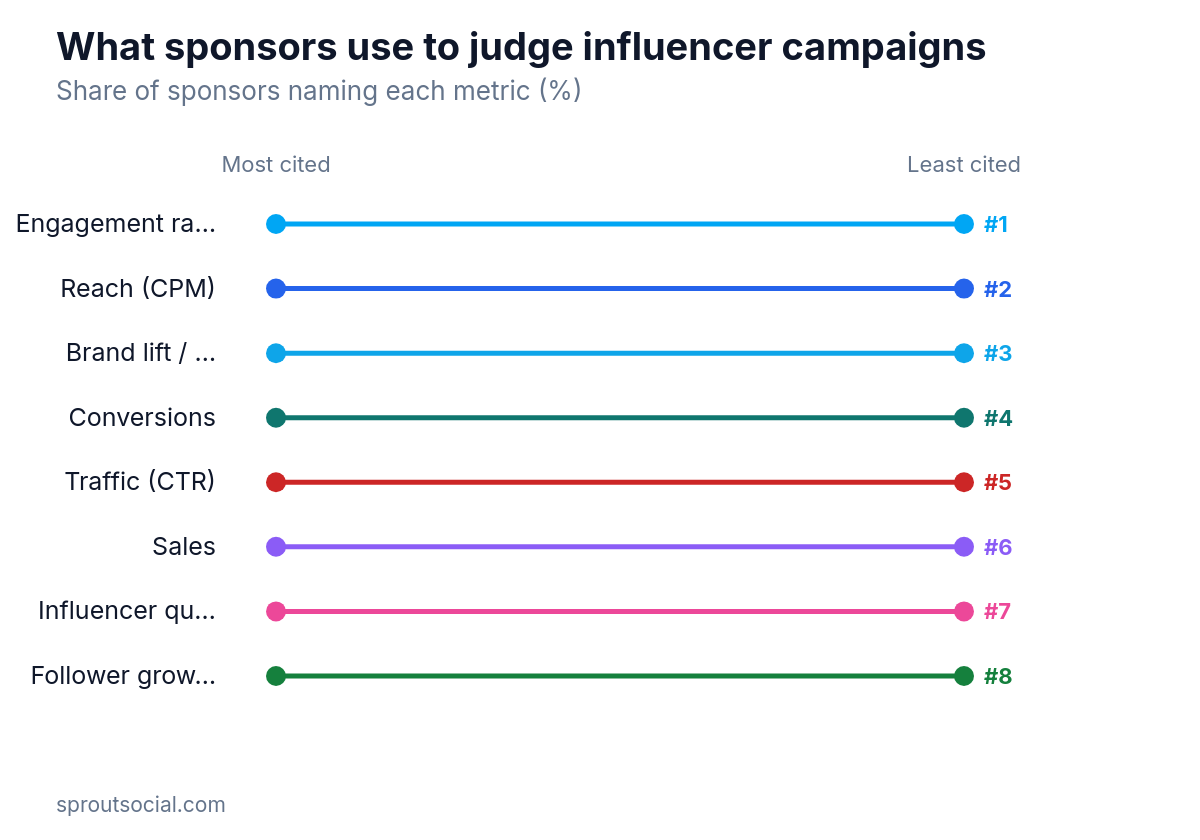
Sponsors most often cite engagement rate as the top metric, followed by reach (CPM) and brand lift, while follower growth and influencer quality are the least cited.
Starting Before You Feel Ready
There is no subscriber count that officially qualifies you to pursue sponsorships. Channels with a few thousand engaged subscribers in the right niche can and do land brand deals. The barrier is usually not size; it is preparation and confidence.
Get your metrics in order. Build a media kit. Identify five brands that genuinely fit your content. Write a specific, brief pitch for each one. Send them. See what happens.
The worst outcome is silence, and silence costs you nothing. The best outcome is the start of a business relationship that funds your channel and gives your audience products worth knowing about.